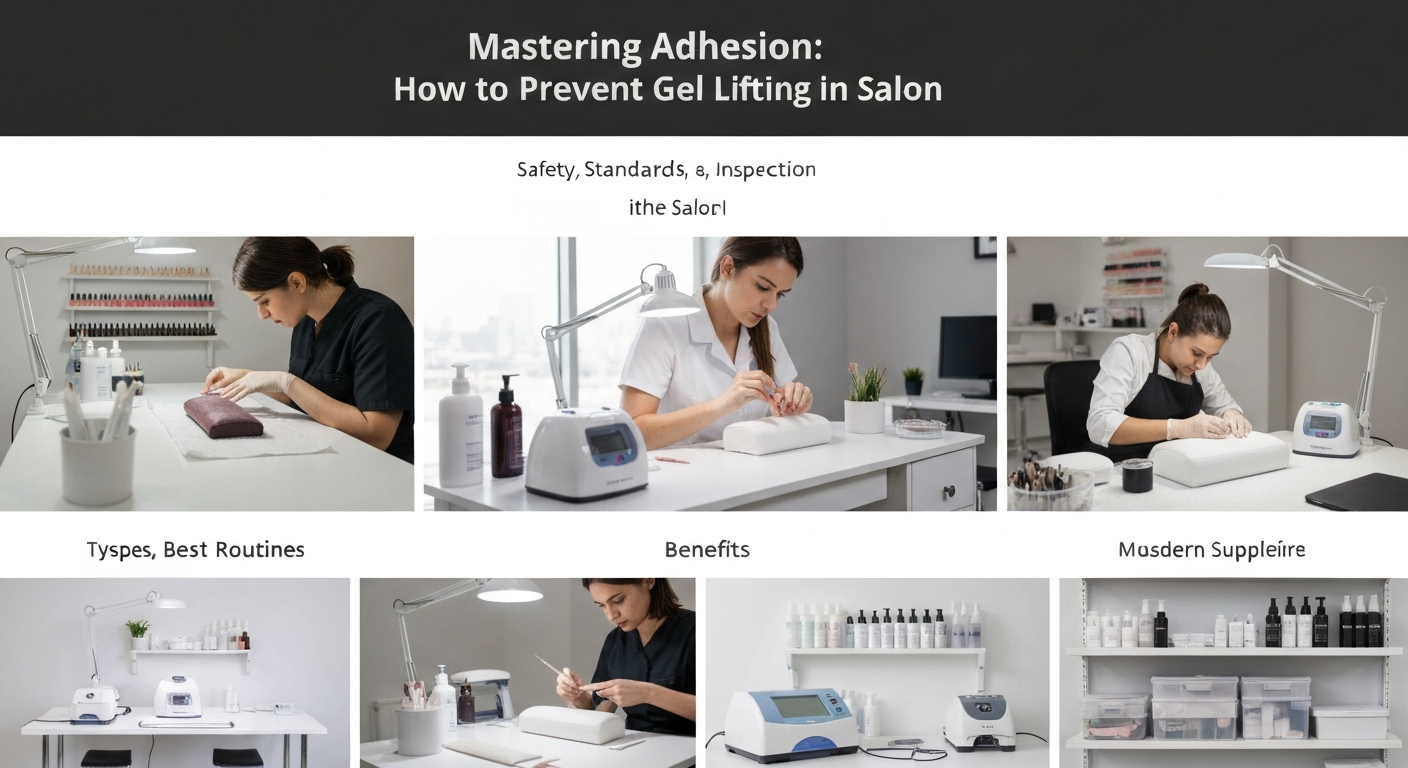
Mastering Adhesion: How to Prevent Gel Lifting in the Salon
For any professional nail technician, client retention relies heavily on the longevity of the service.
Nothing loses a client faster than a gel manicure that peels or lifts within a few days.
Lifting is rarely a product fault; it is almost exclusively an application or preparation error.
The Foundation: Why Dry Prep is Non-Negotiable
In a modern nail salon environment, water manicures are obsolete for gel services.
The nail plate acts like a sponge. When soaked in water, the keratin layers expand and flatten.
If you apply gel over a hydrated nail, the coating will cure to that expanded shape.
As the nail dries and returns to its natural C-curve, the gel product pulls away from the plate.
The Standard: Always perform a dry manicure or an e-file manicure before any gel application.
Step-by-Step Cuticle Work for Maximum Adhesion
Adhesion relies on a completely clean surface area.
The most common cause of lifting at the proximal nail fold is remaining non-living tissue.
Cuticle removing solvents can leave an oily residue if not neutralized properly.
Recommended E-File Bit Protocol
- Diamond Flame Bit: Use at low RPM (5,000-8,000) to lift the cuticle skirt and exfoliate the pterygium from the nail plate.
- Nippers or Ball Bit: Safely remove only the detached dead skin to polish the skin surrounding the nail.
- Buffing: Gently etch the surface of the nail plate to remove shine and create a mechanical bond.
Ensure you are removing the true cuticle (the thin layer of skin on the nail plate), not just the eponychium.
Any tissue left on the nail plate creates a barrier that prevents the base coat from bonding.
Chemical Preparation: Dehydrators and Primers
Once the physical prep is complete, chemical prep ensures the keratin is ready for polymerization.
Cleansing: Scrub the nail plate with 90% Isopropyl Alcohol or a pure cleanser using a lint-free wipe.
Focus on the sidewalls and the cuticle area where dust hides.
Using Primer Correctly
Acid-Free Primer: Acts like double-sided tape. Apply sparingly. Too much primer can actually cause slippage.
Acid Primer: Generally reserved for acrylics or problematic lifters. Use with caution to avoid chemical burns.
Allow your primer to dry completely before applying your base coat.
Base Coat Application Techniques
The application of the base coat is the anchor for the entire service.
Many technicians apply this layer too thickly, causing it to flood the sidewalls.
Flooded cuticles will cause immediate lifting once the product cures and the skin moves naturally.
The Scrubbing Method
For maximum adhesion on natural nails, use a separate brush for your clear base.
Take a small amount of product and “scrub” it into the keratin layers of the nail plate.
This ensures the gel penetrates the micro-grooves created during your buffing step.
Capping the Free Edge
Free edge lifting usually occurs from shrinkage or mechanical wear.
You must cap the free edge, but it must be done correctly to avoid bulk.
Run the brush along the distal edge of the nail to seal the keratin layers.
If you file the free edge after the top coat (common in Russian Manicure techniques), you remove this seal.
If you file after top coat, you must re-seal the edge or accept that the seal is broken.
Bulb Maintenance and Curing Issues
Undercuring is a silent killer of nail sets and a major allergy risk.
If your lamp is not powerful enough, the bottom layer of the gel remains uncured.
This uncured layer sits against the nail plate, causing the hard top layer to separate and lift.
Best Practice: Use the lamp recommended by your gel system manufacturer.
Check your lamp bulbs or diode strength every 6 months depending on salon volume.
Ensure clients place their hand correctly, with the thumb cured separately if necessary.
Summary Checklist for Lift-Free Nails
- Perform a completely dry manicure; avoid water absorption.
- Remove all non-living tissue (pterygium) from the nail plate using diamond bits.
- Remove all dust and dehydrate the nail plate thoroughly.
- Apply base coat thinly and scrub it into the nail surface.
- Keep product away from skin; clean up uncured floods immediately.
- Ensure your curing lamp is functioning at full capacity.
By strictly following these sanitation and application standards, you will see a drastic increase in retention.
High retention builds client trust and allows you to raise your service prices comfortably.
