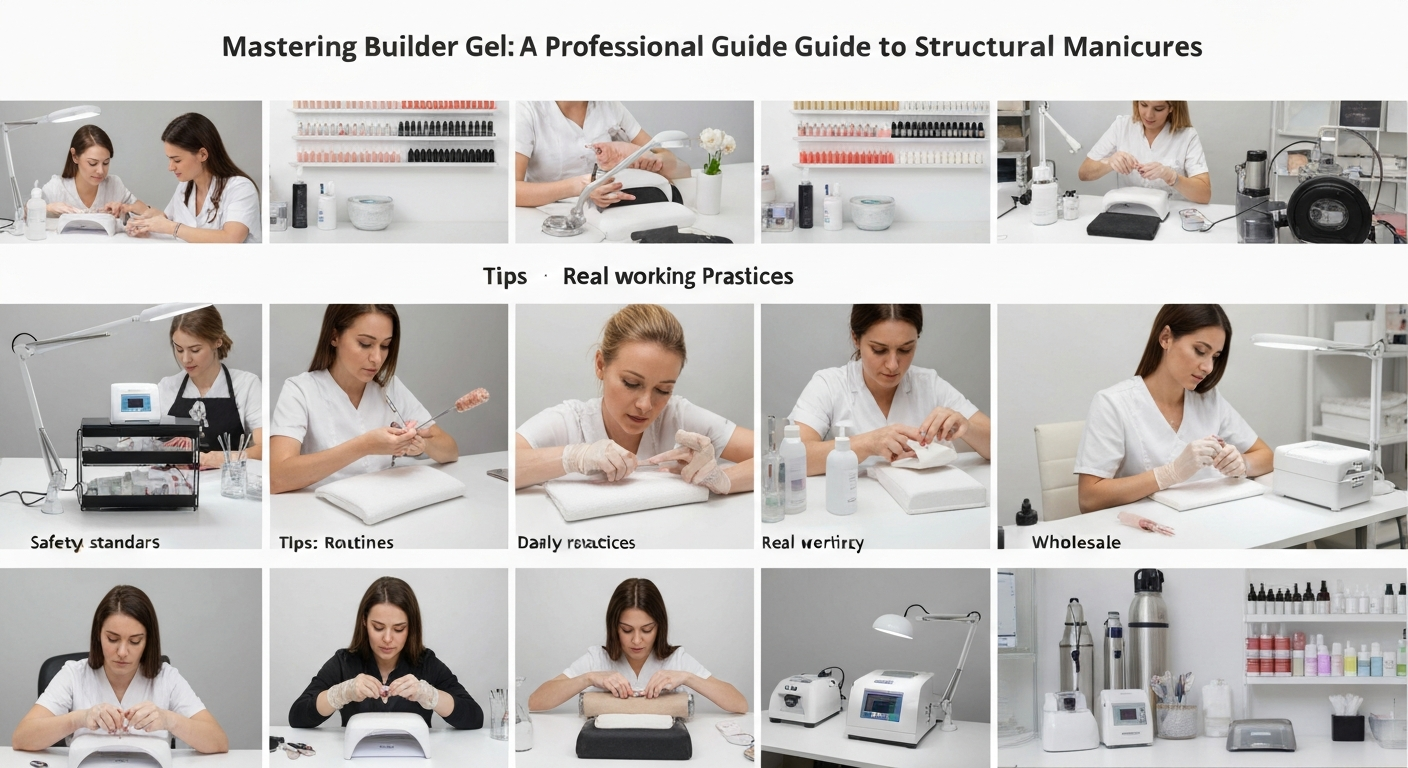
Mastering Builder Gel: A Professional Guide to Structural Manicures
Builder gel, often referred to as BIAB (Builder In A Bottle) or soft gel overlay, has revolutionized the nail industry. It offers the strength of acrylic with the flexibility of gel.
For professional nail technicians, mastering this medium is essential for increasing service revenue and client retention. This guide covers the technical standards for applying builder gel correctly.
Essential Nail Preparation for Builder Gel
Adhesion is the foundation of any long-lasting nail enhancement. Builder gel requires a pristine surface to bond effectively with the natural nail plate.
Improper preparation is the leading cause of service breakdown, including lifting at the cuticle area and pocket lifting at the free edge.
Dry Manicure Protocol
Perform a dry manicure (Russian or combi-manicure techniques) to remove non-living tissue from the nail plate. Water expands the nail plate, which can cause the gel to separate once the nail dries and shrinks.
Key Prep Steps:
- Push back the eponychium gently to expose the cuticle.
- Remove the cuticle on the nail plate using a diamond flame bit or curette.
- Remove surface shine using a 180-grit buffer or sanding band.
- Cleanse thoroughly with pure acetone or 99% Isopropyl Alcohol to remove dust and oils.
The Scrub Layer: Creating the Foundation
Before building structure, you must establish a chemical bond. While some builder gels contain base coat properties, applying a dedicated clear base improves longevity.
Apply a very thin layer of base gel or the builder gel itself. Use a “scrubbing” motion to work the product into the keratin layers of the natural nail. Cure fully according to the manufacturer’s lamp specifications.
Building the Apex and Structure
The apex is the highest point of the nail enhancement. It provides structural integrity and absorbs shock when the client uses their hands. Without a proper apex, the nail will break at the stress area.
The Slip Layer Technique
Do not cure immediately after applying your second layer. Apply a thin “slip layer” of uncured gel over the entire nail. Do not touch the skin.
Pick up a larger bead of builder gel. Place it near the cuticle area (Zone 3) without touching the skin. The uncured slip layer allows this bead to flow smoothly (self-level) without leaving brush marks.
Positioning the Apex
Guide the product down the center of the nail. Use a liner brush to pull the gel gently toward the sidewalls and free edge. Keep the bulk of the product in the upper third of the nail bed.
Pro Tip: Flip the client’s hand palm-up. Gravity will pull the gel to the center, creating a perfectly natural curve. Check the reflection line; it should be straight, not wobbling.
Refining and Finishing
Once the structure is cured, you must refine the shape. Unlike standard gel polish, builder gel adds bulk that may need correction.
Remove the inhibition layer (sticky layer) with a lint-free wipe and cleanser. If the product is not wiped, your file will clog immediately.
Filing Steps
- File the free edge to the desired shape (oval, almond, square).
- File the sidewalls straight out from the nail groove.
- Contour the surface near the cuticle area to ensure a flush growth-out.
- Buff the entire surface smooth before applying color or top coat.
Safety and Chemical Awareness
Builder gels are highly reactive to UV/LED light. Heat spikes (exothermic reactions) are common when curing thicker layers of gel. This can cause onycholysis (separation of the nail plate).
To prevent heat spikes, use the “Low Heat” mode on your professional lamp. Alternatively, have the client flash cure for 2-3 seconds outside the lamp before fully entering.
Never allow uncured gel to remain on the skin. This significantly increases the risk of contact dermatitis and permanent acrylate allergies for your clients.
