U.S. Med Spa Industry Statistics
U.S. med spa industry statistics indicate a market valuation of approximately $17.5 billion in 2023, with a projected compound annual growth rate (CAGR) of 10% through 2030. Revenue is primarily driven by minimally invasive procedures, particularly neuromodulators and dermal fillers, while evolving state regulations continue to shape medical supervision requirements.
Market Valuation and Economic Growth
The United States med spa sector has demonstrated consistent expansion despite broader economic fluctuations. Total industry revenue has nearly doubled over the last five years, reflecting a shift toward non-surgical aesthetic maintenance.
Average revenue per med spa location now exceeds $1.9 million annually. Higher-performing clinics often report profit margins between 20% and 25%, depending on the local competitive density and service mix.
Investment patterns show an increase in private equity involvement. Consolidation is a primary trend, as larger groups acquire independent practices to achieve economies of scale and standardized clinical protocols.
Top Growth Trends in Aesthetic Treatments
Injectable Dominance
Neuromodulators and soft tissue fillers remain the highest volume services in the U.S. market. Statistics show these treatments account for over 50% of total service revenue in most established med spa facilities.
Energy-Based Procedures
Laser hair removal, IPL treatments, and non-invasive body contouring represent the second-largest revenue segment. Data suggests high consumer demand for technologies that offer visible results with minimal clinical downtime.
Medical Grade Skincare
Retail sales of professional-grade skincare products contribute significantly to the bottom line. Med spas reporting high patient retention rates typically see 15% to 20% of total revenue from product sales.
Clinical Outcome Data and Complication Analysis
Industry data indicates that while non-surgical procedures are generally safe, the rate of minor complications ranges from 1% to 5% depending on the specific treatment modality and provider experience.
Adverse events such as vascular occlusions or thermal injuries are rare but remain a primary focus for risk management. Clinics prioritizing advanced training and ultrasound-guided injections report lower overall complication rates.
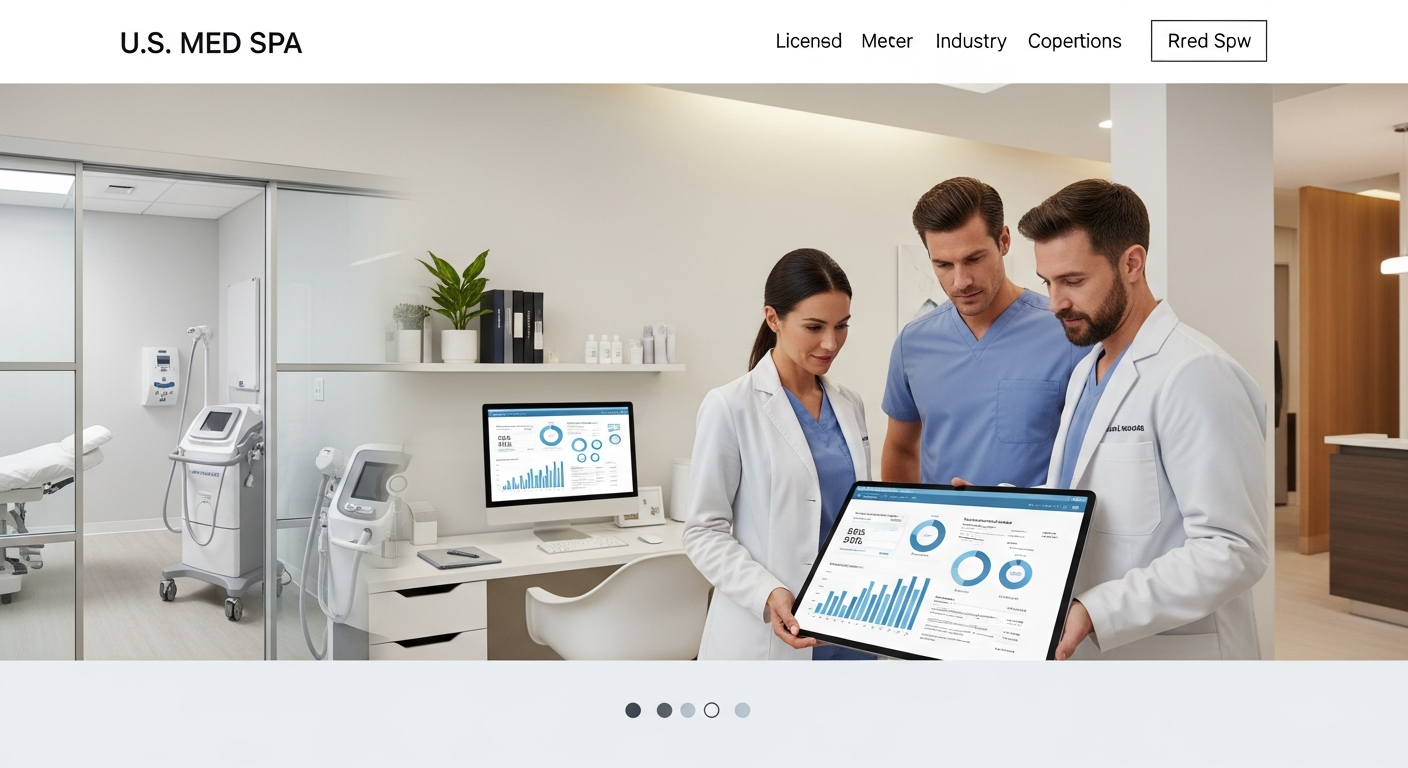
Statistical analysis shows that facilities with a full-time Medical Director on-site experience fewer clinical errors. Data-driven clinics utilize digital charting to track outcome metrics and improve patient safety protocols.
Regulatory Shifts in the United States
The regulatory landscape is becoming increasingly complex as state medical boards update “Good Faith Exam” requirements. Compliance data shows stricter enforcement of rules regarding who can legally perform specific procedures.
- Supervision Standards: Several states have recently clarified that a physician or NP/PA must perform an initial assessment before any prescription treatment.
- Scope of Practice: Changes in nursing board regulations are refining the roles of LPNs and RNs within the med spa environment.
- Facility Licensing: There is a growing trend toward requiring specific healthcare facility licenses for med spas offering Class IV laser treatments.
Market Development and Investor Insights
Med spa industry statistics highlight a shift in patient demographics, with a 20% increase in male patients over the last three years. This diversification is influencing service menus and clinical marketing spend.
Geographic data shows the highest concentration of med spas in Florida, California, and Texas. However, per-capita growth is currently strongest in secondary markets where overhead costs are lower and competition is less saturated.
Sustainability in the med spa industry is increasingly linked to data-driven operational efficiency. Investors are prioritizing clinics with high recurring revenue models, such as membership programs and subscription-based service plans.
