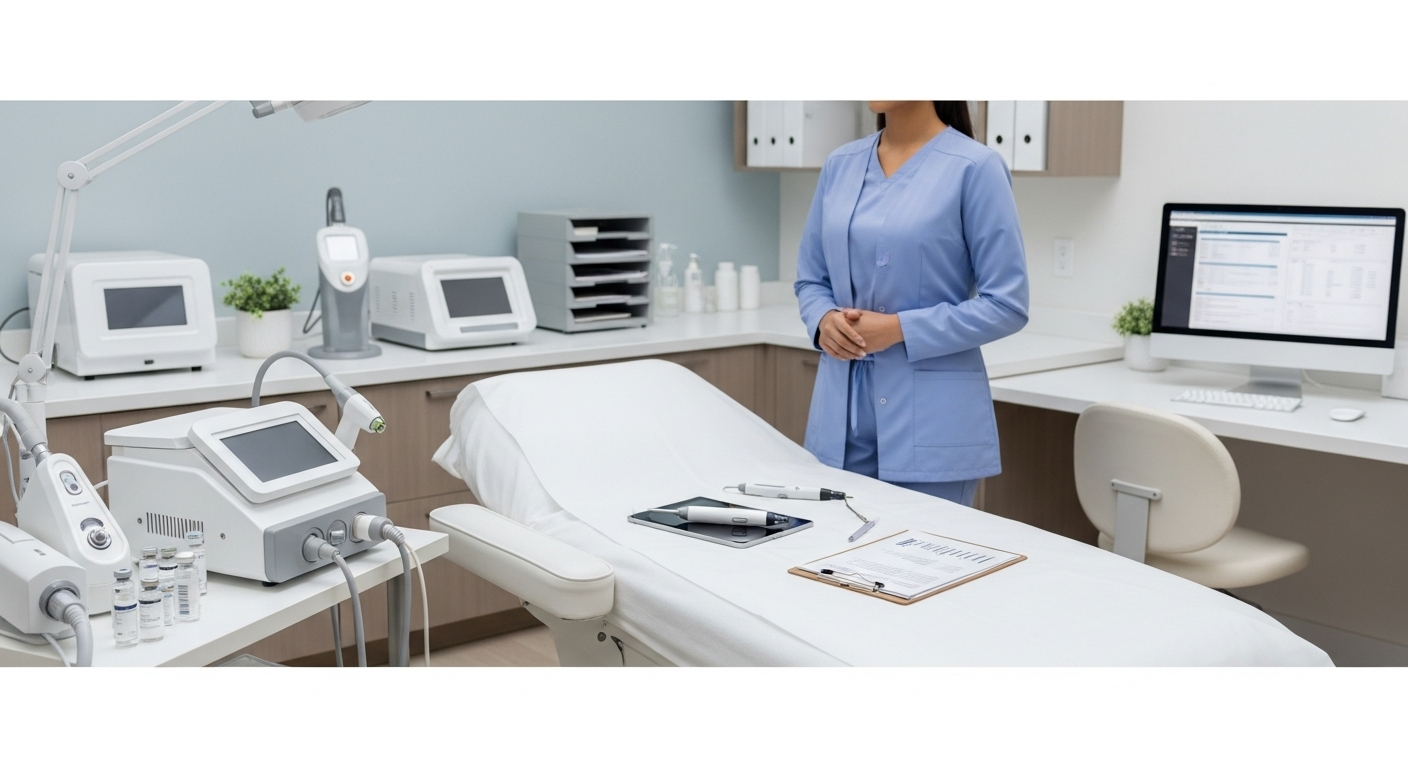
U.S. Med Spa Industry Statistics: Market Data and Insights
Current U.S. med spa industry statistics indicate a market valuation exceeding $17 billion, with a projected annual growth rate of 10-15%. Key data points highlight the dominance of aesthetic injectables and laser treatments, driven by increasing consumer demand for non-invasive clinical procedures across diverse demographic segments in the United States.
Market Valuation and Growth Trajectory
The U.S. med spa sector has maintained consistent double-digit expansion over the last five years. Recent industry reports value the average revenue per facility at approximately $1.9 million annually for established practices.
Geographically, Texas, California, and Florida remain the highest-density states for med spa operations. These regions account for a significant portion of the nationwide total of over 8,800 active facilities.
The total market size is expected to reach $25 billion by 2026. This growth is supported by a 20% increase in male clientele and a younger “prejuvenation” demographic entering the market.
High-Volume Treatment Trends
Injectables continue to serve as the primary revenue driver for the med spa industry. Neuromodulators and dermal fillers alone account for over 50% of total service revenue in most clinical settings.
- Neuromodulators: Over 7 million procedures are performed annually in the U.S.
- Dermal Fillers: Hyaluronic acid treatments show a 12% year-over-year increase.
- Body Contouring: Non-invasive fat reduction procedures have experienced a 20% growth rate.
Skin resurfacing treatments, including microneedling and chemical peels, show steady demand. These services often serve as entry-level offerings for new med spa patients.
Clinical Safety and Complication Rates
Clinical data suggests that vascular occlusion rates for dermal fillers occur in roughly 1 per 6,000 to 10,000 cases. Safety remains a critical metric for operational stability and risk management.
Analysis of adverse events reveals that 80% of clinical complications occur in facilities lacking an on-site medical director. Adherence to standardized clinical protocols significantly reduces post-treatment adverse events.
Reporting on laser-induced burns shows a direct correlation between provider training hours and outcome success. Facilities with mandatory ongoing education programs report 40% fewer patient complaints.
Regulatory and Oversight Shifts
State medical boards are increasingly enforcing strict supervision rules for non-physician injectors. Corporate Practice of Medicine (CPOM) compliance has become a primary focus for state-level regulators.
New legislation in several jurisdictions requires clearer disclosure of provider credentials. Patients must be informed whether their treatment is being performed by a nurse, physician assistant, or doctor.
Compliance costs for med spa owners have risen as states mandate more frequent equipment inspections. This regulatory shift aims to standardize the quality of care across the fragmented U.S. market.
Market Development and Investment Insights
Private equity interest in the med spa industry reached record levels in the previous fiscal year. Investors are targeting multi-location platforms that offer scalable operational models and high EBITDA margins.
Consolidation is a major trend as large clinical platforms acquire independent practices. This shift allows for centralized administrative functions and improved procurement power for medical supplies.
Profit margins in the med spa sector typically range between 20% and 30%. High-efficiency operations achieve these margins by maintaining high utilization rates for expensive aesthetic medical devices.
