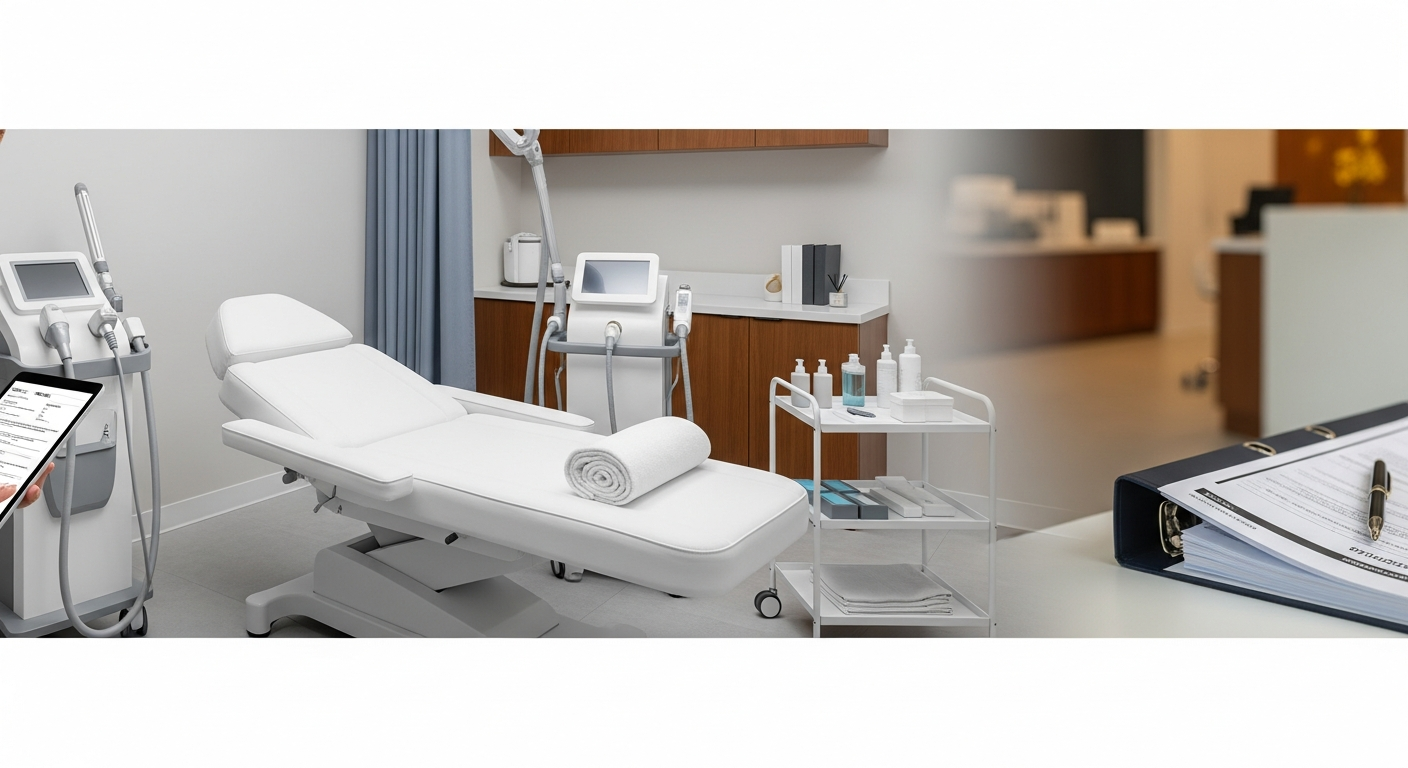
Med Spa Infection Control and Clinical Safety Protocols
Med spa infection control refers to the systematic implementation of sanitation, disinfection, and sterilization protocols designed to prevent the spread of pathogens during aesthetic treatments. These OSHA-aligned practices protect both clients and providers by eliminating cross-contamination risks through rigorous treatment room maintenance, proper PPE usage, and high-level disinfection of clinical tools.
Standard Precautions and PPE Requirements
Effective infection control begins with standard precautions, treating all blood and bodily fluids as potentially infectious. This approach is fundamental in a med spa environment where skin barrier breaches occur during various aesthetic procedures.
Personal Protective Equipment (PPE) serves as the primary barrier between the provider and potential contaminants. Clinical staff must utilize medical-grade gloves, protective eyewear, and fluid-resistant masks based on the specific risk level of the treatment being performed.
Hand hygiene remains the single most important practice for preventing the spread of germs. Providers should perform thorough handwashing before and after every client contact, following the removal of gloves, and after touching any contaminated surface.
Treatment Room Disinfection Systems
Every treatment room requires a systematic disinfection process between each client appointment to maintain a safe clinical environment. This involves cleaning and then disinfecting all “high-touch” surfaces, including treatment tables, stools, and product counters.
Providers must use EPA-registered, intermediate-level disinfectants that are specifically labeled for use in clinical settings. These solutions must remain wet on the surface for the full contact time specified by the manufacturer to ensure total microbial inactivation.
Environmental surfaces that cannot be easily disinfected, such as upholstery seams or complex equipment interfaces, should be protected with single-use disposable barriers. These barriers must be replaced immediately after every procedure to prevent surface-to-surface transfer.
Sterilization Standards for Aesthetic Tools
Any instrument that penetrates the skin or comes into contact with mucus membranes must undergo high-level sterilization rather than simple disinfection. This standard ensures that all microbial life, including highly resistant bacterial spores, is completely destroyed.
The use of a validated autoclave is the industry standard for heat-stable tools in the med spa. Sterilization cycles must be monitored through chemical indicators on every load and periodic biological spore testing to verify equipment functionality.
Single-use, disposable items are preferred for many med spa procedures to eliminate the risk of reuse. These items must be discarded immediately after use in appropriate waste containers and never repurposed for subsequent clients.
Cross-Contamination Prevention Strategies
Cross-contamination occurs when pathogens are transferred from one surface or person to another through contaminated hands, tools, or supplies. Preventing this requires a strict “clean to dirty” workflow during every clinical procedure.
Bulk product containers should never be accessed with used gloves or contaminated applicators. Staff should utilize sterile spatulas to transfer the necessary amount of product into a secondary, disposable container before the treatment begins.
Safe disposal of sharps is a critical component of med spa infection control and OSHA compliance. All needles, lancets, and blades must be placed in puncture-resistant sharps containers immediately at the point of use to prevent accidental needlesticks.
Compliance Monitoring and Staff Training
Maintaining high safety standards requires consistent oversight and regular training for all clinical personnel. Med spas should maintain detailed logs for sterilization cycles, equipment maintenance, and biological testing results.
Written protocols should be easily accessible to all staff members, outlining the specific steps for room turnover and instrument processing. Regular safety audits help identify potential gaps in technique before they lead to clinical complications or cross-contamination events.
Standardizing these safety processes creates a culture of clinical excellence. By prioritizing infection control, med spa facilities ensure a safe environment that meets professional regulatory requirements and protects the health of the community.
