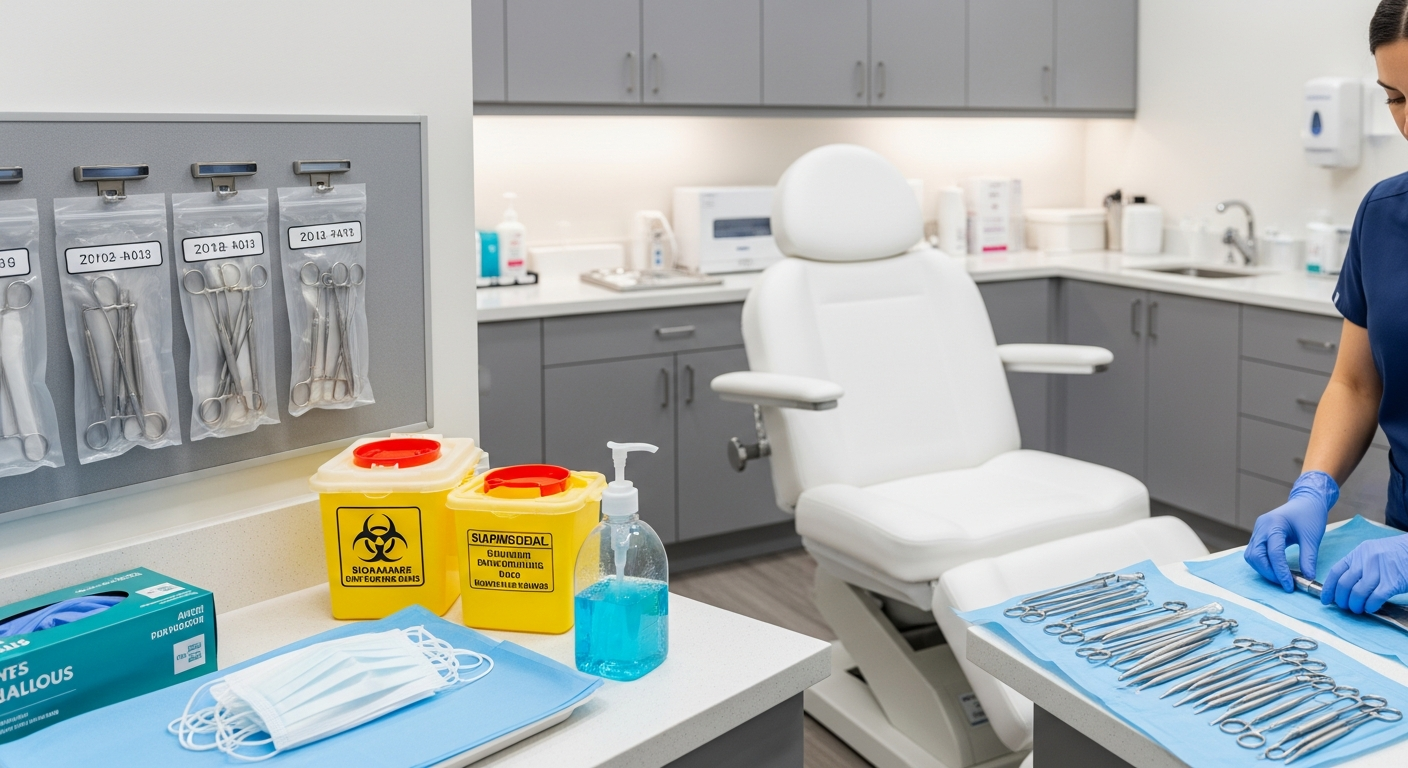
Med Spa Infection Control and Clinical Safety Standards
Med spa infection control is a systematic approach to sanitation and sterilization designed to prevent the spread of pathogens during aesthetic treatments. These protocols include OSHA-aligned bloodborne pathogen safety, correct use of personal protective equipment, and the rigorous decontamination of treatment rooms to maintain a sterile environment for both clients and clinical providers.
Fundamental Principles of Med Spa Infection Control
Establishing a culture of safety begins with standardized operating procedures that every staff member follows consistently. These systems reduce the risk of cross-contamination during high-contact aesthetic procedures.
Maintaining high hygiene standards protects the facility from legal liabilities and ensures a professional reputation. Safety protocols must be documented and updated regularly to reflect current regulatory requirements.
OSHA-Aligned Sanitation Practices
- Bloodborne Pathogen Training: All clinical staff must complete annual training to handle potential exposure safely.
- Hand Hygiene: Providers must perform thorough handwashing before and after every client contact using antimicrobial soap.
- Personal Protective Equipment: The use of gloves, masks, and eye protection is mandatory during any procedure involving skin penetration.
Treatment Room Disinfection Systems
The treatment room is the primary area where contamination can occur, making systematic cleaning essential. Every surface must be treated as a potential vector for bacteria and viruses.
Effective disinfection requires using hospital-grade cleaners that are approved for use in clinical settings. Staff must follow the specific contact time listed on disinfectant labels to ensure total pathogen elimination.
Pre-Treatment Preparation
- Surface Wiping: All counters, stools, and equipment touchpoints must be disinfected before the client enters.
- Barrier Protection: Use disposable plastic barriers on equipment that cannot be easily saturated with liquid disinfectants.
- Setup Safety: Layout all necessary sterile tools on a clean field to avoid reaching into drawers during the procedure.
Post-Treatment Decontamination
- Waste Disposal: Place all used sharps immediately into puncture-proof biohazard containers located within reach.
- Environmental Cleaning: Remove all linens and spray high-touch surfaces with an approved germicidal solution.
- Turnover Protocol: Allow the room to air dry for the required duration before bringing in the next client.
Sterilization and Cross-Contamination Prevention
Distinguishing between cleaning, disinfecting, and sterilizing is critical for med spa compliance. Sterilization is required for any tool that breaches the skin barrier or contacts sterile tissue.
Cross-contamination often occurs through “indirect contact,” such as touching a phone or doorknob with contaminated gloves. Strict movement protocols prevent pathogens from migrating out of the treatment zone.
Managing Reusable Instruments
- Ultrasonic Cleaning: Use mechanical cleaners to remove debris from tools before the sterilization process begins.
- Autoclave Standards: Process all reusable stainless steel tools in a steam autoclave that is tested weekly for efficacy.
- Storage Solutions: Keep sterilized instruments in sealed, dated pouches until they are ready for immediate use.
Single-Use Item Protocols
The safest way to prevent infection in a med spa is the use of disposable items whenever possible. This eliminates the variables associated with human error during the cleaning process.
Never attempt to clean or reuse items labeled for single-use, such as needles, lancets, or certain applicators. These items must be discarded in the appropriate waste stream immediately after a single application.
