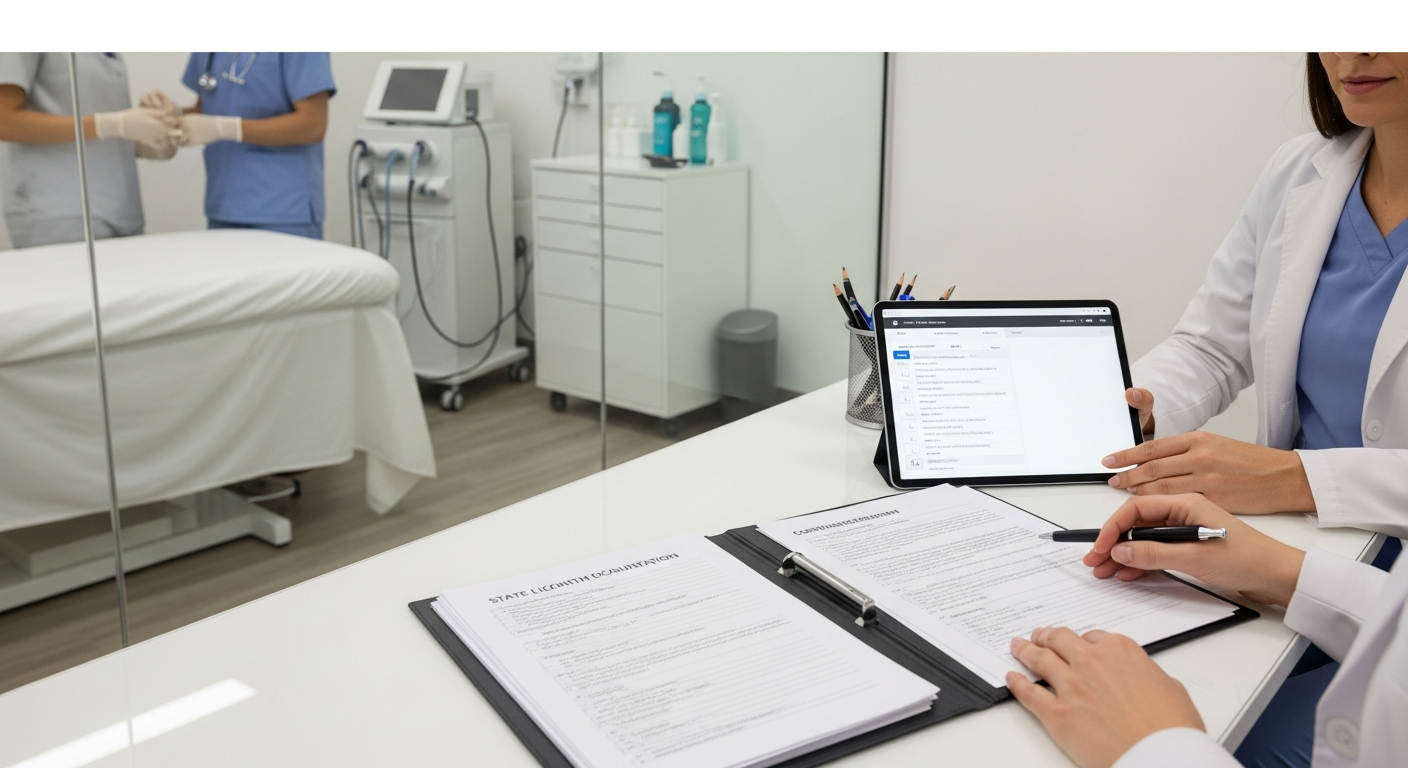
Med Spa Infection Control and Clinical Safety Standards
Med spa infection control is a set of clinical protocols designed to eliminate the transmission of pathogens during aesthetic treatments. These practices include rigorous hand hygiene, surface disinfection with EPA-registered agents, and the sterilization of reusable instruments to maintain a safe, compliant environment for both staff and clients.
OSHA-Aligned Hand Hygiene and PPE Protocols
Hand hygiene remains the most effective way to prevent the spread of bacteria in a med spa. Providers must wash hands thoroughly before and after every patient contact. When hands are not visibly soiled, medical-grade sanitizer may be used between steps.
Personal Protective Equipment (PPE) is mandatory for all minimally invasive procedures. This includes the use of single-use gloves, fluid-resistant masks, and eye protection. Gloves must be changed immediately if they become compromised or after touching non-sterile surfaces.
Proper donning and doffing sequences prevent the accidental spread of contaminants to the provider. Staff should receive regular training on how to remove soiled PPE without touching their skin. This systematic approach minimizes the risk of accidental exposure to bloodborne pathogens.
Treatment Room Disinfection and Surface Safety
Treatment rooms require a two-step cleaning and disinfection process between every client. First, all visible debris must be removed from surfaces like treatment tables and counters. This preparation allows the disinfectant to work effectively on the underlying material.
Clinicians must use EPA-registered, intermediate-level disinfectants on all non-porous surfaces. It is vital to follow the manufacturer’s required “dwell time,” which is the duration the surface must stay wet. Failure to meet this time frame may result in incomplete pathogen elimination.
High-touch zones, such as equipment dials, magnifying lamps, and sink handles, require specific attention. Using disposable barriers on these items can further reduce the risk of cross-contamination. All barriers must be discarded and replaced after every single procedure.
Sterilization Standards for Reusable Instruments
Any instrument that penetrates the skin or contacts mucous membranes must be sterile. Med spas must use a steam autoclave to achieve the high temperatures required to kill microbial life. Chemical cold sterilization is generally insufficient for critical aesthetic tools.
Instruments must be cleaned of all organic matter before being placed in sterilization pouches. Each pouch should feature a chemical indicator that changes color once the proper temperature is reached. This provides a visual confirmation that the sterilization cycle was completed correctly.
Maintaining a sterilization log is essential for clinical compliance and safety audits. This log should record the date, load number, and biological indicator results for every cycle. Regular biological monitoring ensures the autoclave is functioning according to federal safety standards.
Preventing Cross-Contamination in Aesthetic Settings
Cross-contamination often occurs when providers touch multi-use products with contaminated gloves. To prevent this, practitioners should use sterile tongue depressors or spatulas to remove products from jars. Never “double-dip” tools into a shared container during a treatment.
Workstations should be organized into “clean” and “dirty” zones to separate sterile supplies from used items. All used disposables should be moved immediately to the designated waste area. This physical separation prevents the accidental reuse of contaminated materials on a client.
Fluid management is another critical aspect of preventing contamination during skin-breaching procedures. Sterile drapes can help maintain a clean field around the treatment site. All liquids used during the process must be handled in a way that prevents splashing or aerosolization.
Biohazard Waste and Sharps Management Systems
Safe disposal of needles and lancets is a cornerstone of med spa infection control. Sharps containers must be puncture-resistant, leak-proof, and located as close as possible to the treatment area. Never recap needles or attempt to overfill a sharps container.
Biohazardous waste, including blood-soaked gauze or tissue, must be placed in red bags. These bags must be sealed and stored in a designated, secure area until professional pickup. Following these disposal steps protects the staff and the local community from environmental hazards.
Regular safety audits help ensure that all waste management systems meet local and federal regulations. Compliance managers should verify that all waste is labeled and transported by licensed medical waste haulers. Consistent documentation of this process is required for facility licensure and safety.
