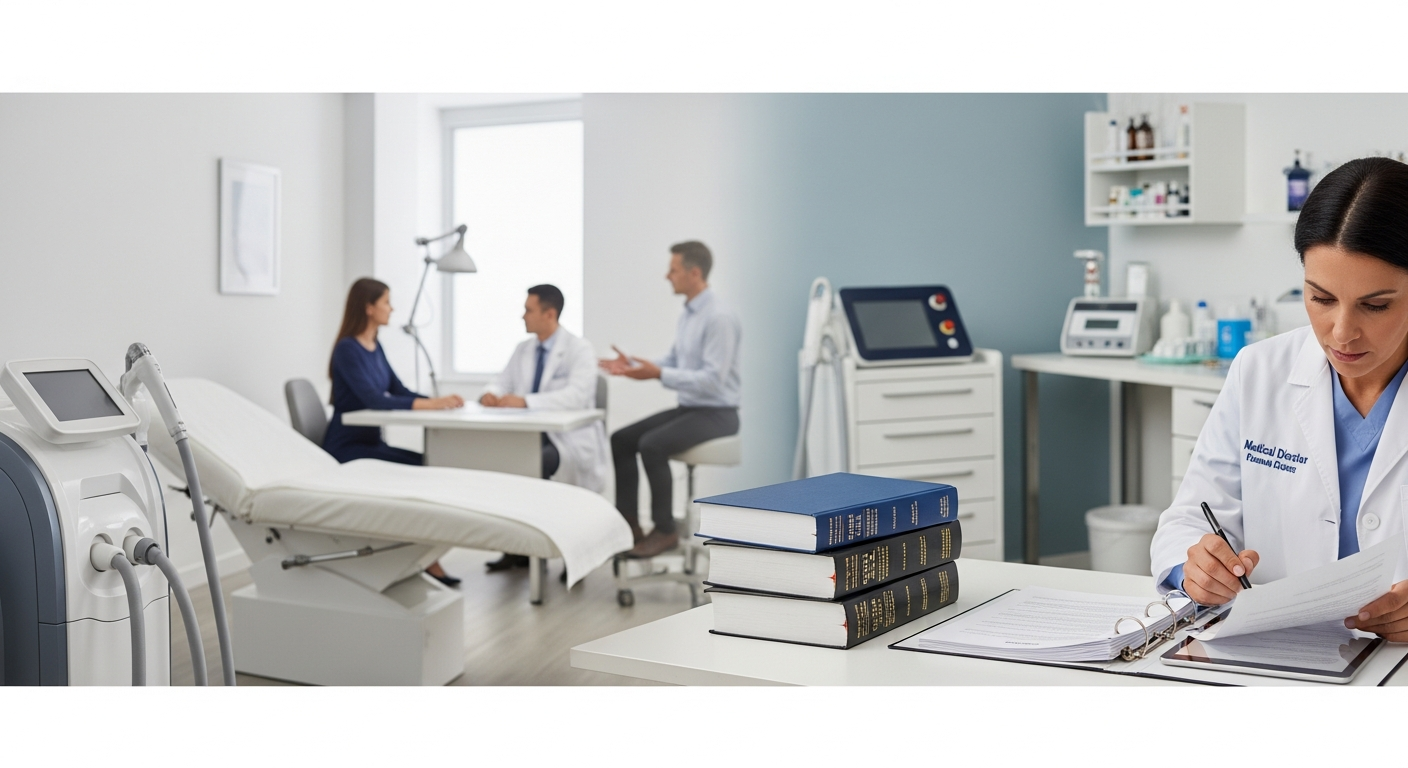
Med Spa Infection Control and Clinical Safety Standards
Med spa infection control refers to the systematic application of sanitation, disinfection, and sterilization protocols designed to prevent pathogen transmission during aesthetic treatments. These OSHA-aligned practices include rigorous treatment room preparation, proper handling of sharps, and the use of EPA-registered disinfectants to ensure a sterile environment for both practitioners and clients.
OSHA-Aligned Sanitation and PPE Standards
Every med spa must establish a written exposure control plan that aligns with OSHA bloodborne pathogen standards. This plan outlines how the facility manages potential exposure to bodily fluids during injectable or skin-resurfacing treatments.
Personal Protective Equipment (PPE) serves as the primary barrier between the practitioner and infectious agents. Clinical staff must utilize medical-grade gloves, fluid-resistant masks, and protective eyewear tailored to the specific treatment being performed.
Hand hygiene remains the most critical component of infection control. Practitioners must perform thorough handwashing with antimicrobial soap before and after every client contact, regardless of whether gloves were worn.
Treatment Room Disinfection Systems
Treatment rooms require a two-step cleaning and disinfection process between every client appointment. Surface cleaning removes organic soil, while disinfection kills the remaining microbial load on high-touch surfaces.
All non-porous surfaces, including treatment tables, workstations, and magnifying lamps, must be treated with EPA-registered, intermediate-level disinfectants. These solutions must remain wet on the surface for the full manufacturer-recommended contact time.
Disposable barriers should be used on equipment that is difficult to disinfect thoroughly. Plastic sleeves or specialized covers provide an additional layer of protection for touchscreens, cords, and adjustable table handles.
Sterilization and Instrument Management
Any reusable instrument that penetrates the skin or contacts mucosal membranes requires high-level sterilization. This process typically involves a validated autoclave system that uses pressurized steam to eliminate all microbial life.
- Pre-cleaning: Removing debris manually or via ultrasonic cleaners before sterilization.
- Packaging: Placing instruments in sealed pouches with chemical indicators to verify heat exposure.
- Monitoring: Conducting weekly biological spore tests to ensure the autoclave is functioning correctly.
Sterilized packages must be stored in a clean, dry area and inspected for integrity before use. Any package that is wet, torn, or expired must be re-processed through the entire sterilization cycle.
Cross-Contamination Prevention Strategies
Cross-contamination occurs when pathogens are transferred from one surface or person to another. Med spas must implement strict “point-of-use” waste segregation to minimize this risk during clinical transitions.
Sharps containers must be placed within arm’s reach of the treatment area to ensure immediate disposal of needles and blades. Never recapping needles or overfilling sharps containers is essential for preventing accidental punctures.
Standardized room turnover protocols ensure no steps are skipped during busy clinical shifts. Using a checklist helps staff verify that all used supplies are discarded and all clinical contact surfaces are fully disinfected.
Clinical Safety Documentation
Maintaining detailed safety logs is vital for compliance and accountability. These records should include sterilization logs, disinfectant contact time verification, and staff training certificates for infection control protocols.
Regular safety audits allow compliance managers to identify gaps in sanitation cycles. By reviewing these processes quarterly, a med spa ensures that its clinical environment remains safe for both staff and the public.
