Med Spa Infection Control and Clinical Safety Standards
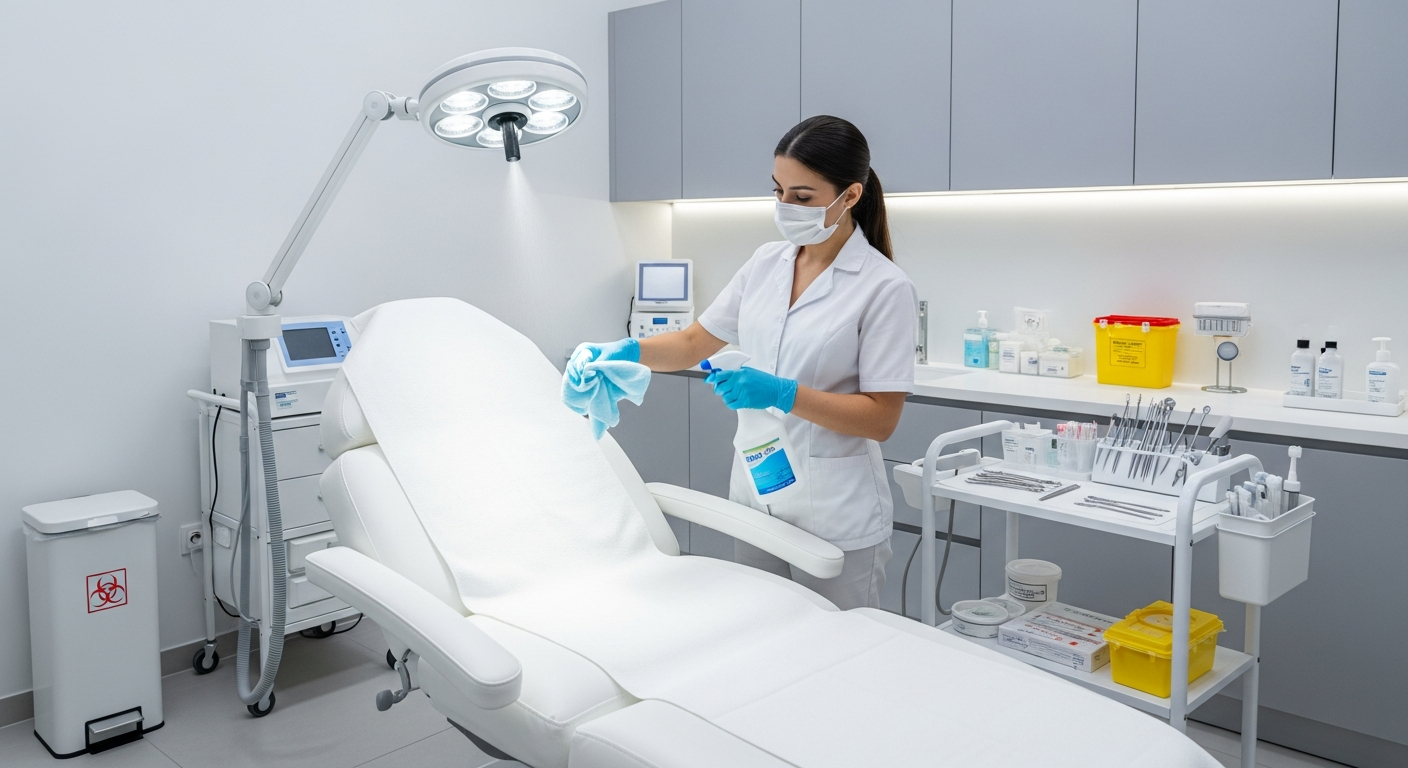
Med spa infection control refers to the systematic implementation of sanitation, disinfection, and sterilization protocols designed to prevent the spread of pathogens in aesthetic clinics. These OSHA-aligned practices involve rigorous hand hygiene, environmental surface disinfection, and the proper processing of clinical tools to ensure a sterile environment for both practitioners and clients.
Core Principles of Med Spa Sanitation
Every med spa must establish a written exposure control plan.
This document outlines how the clinic manages bloodborne pathogens.
It ensures all staff follow uniform safety sequences during treatments.
Hand hygiene remains the most effective way to prevent contamination.
Practitioners must wash hands before donning and after removing gloves.
Use high-quality antimicrobial soap or alcohol-based rubs consistently.
Treatment Room Disinfection Systems
All non-porous surfaces require cleaning between every client visit.
This includes treatment tables, counters, and equipment control panels.
Remove visible debris before applying any disinfecting agents.
High-Touch Surface Protocols
Identify high-touch areas such as door handles and magnifying lamps.
Apply disinfectants that are EPA-registered for clinical environments.
Ensure the surface stays wet for the full manufacturer contact time.
Use disposable barriers on equipment that is difficult to clean.
Replace these barriers after every procedure to prevent cross-contamination.
Dispose of used covers in designated biohazard or waste bins.
Sterilization and Tool Management
Reusable clinical tools must undergo a rigorous sterilization process.
Clean tools thoroughly with water and detergent before sterilization.
This step removes biological material that could shield pathogens.
Utilize an autoclave or dry heat sterilizer for metal implements.
Verify the effectiveness of the equipment with weekly spore testing.
Maintain a detailed log of every sterilization cycle performed.
Safe Storage of Clinical Implements
Store all sterilized instruments in sealed, individual pouches.
Keep these items in a dry, dust-free cabinet until use.
Inspect the integrity of the packaging before opening it for a client.
Personal Protective Equipment (PPE) Guidelines
PPE acts as a vital barrier between the practitioner and infectious agents.
Standard precautions require gloves, masks, and eye protection when necessary.
Select the appropriate PPE based on the specific treatment risk level.
Change gloves immediately if they become torn or heavily soiled.
Never reuse disposable masks or gloves between different clients.
Remove PPE in a manner that prevents self-contamination of clothing.
Preventing Cross-Contamination in Aesthetic Settings
Establish a clear distinction between “clean” and “dirty” work zones.
Never bring used tools into areas designated for sterile storage.
This physical separation reduces the risk of accidental pathogen transfer.
Proper sharps disposal is a critical component of med spa safety.
Place all needles and blades into puncture-resistant containers immediately.
Ensure these containers are located as close as possible to the treatment area.
