Med Spa Infection Control and Clinical Safety Standards
Med spa infection control is a systematic approach to clinical safety involving specialized sanitation, disinfection, and sterilization protocols to prevent pathogen transmission. These OSHA-aligned practices ensure that treatment rooms, clinical tools, and practitioner behaviors meet rigorous hygiene standards, protecting both clients and staff during aesthetic procedures within a med spa facility.
Core Protocols for Med Spa Infection Control
Establishing a consistent safety culture requires documented protocols for every area of the facility. These systems must align with state regulatory boards and federal safety guidelines to ensure operational compliance.
Every med spa should maintain a comprehensive safety manual that details daily, weekly, and monthly sanitation tasks. This documentation serves as the foundation for staff training and quality assurance.
Treatment Room Surface Disinfection
Clinical surfaces must be cleaned and disinfected between every client interaction to eliminate cross-contamination risks. This includes treatment tables, counters, and any equipment touched during a procedure.
Practitioners must use EPA-registered, hospital-grade disinfectants that are effective against a broad spectrum of pathogens. Proper contact time, or “wet time,” is essential for these solutions to work effectively.
Personal Protective Equipment Standards
Personal protective equipment (PPE) acts as a critical barrier between the practitioner and potential contaminants. Correct usage of gloves, masks, and eye protection is mandatory during most aesthetic treatments.
Gloves must be changed between every client and immediately if they become punctured or heavily soiled. Hand hygiene should be performed before donning and after removing any protective gear.
Sterilization Processes for Clinical Tools
Any tool that penetrates the skin or comes into contact with bodily fluids requires high-level sterilization. Understanding the difference between cleaning, disinfecting, and sterilizing is vital for med spa owners.
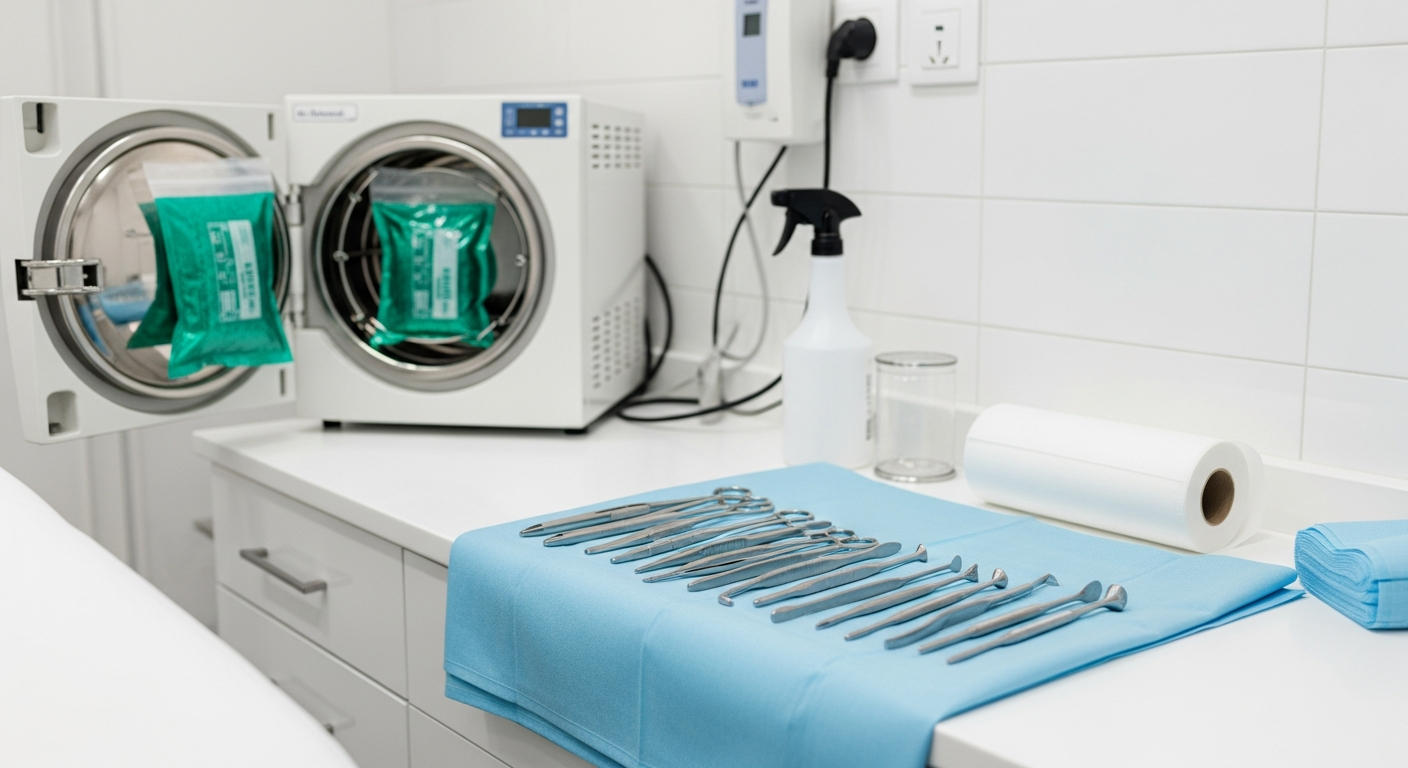
Reusable implements must undergo a multi-step process: manual cleaning to remove debris, followed by ultrasonic cleaning, and finally heat-based sterilization in an autoclave.
High-Level Disinfection and Autoclaving
Autoclaves are the gold standard for sterilization in the med spa environment, using pressure and steam to kill all microbial life. Monthly spore testing is required to verify the unit is functioning correctly.
Tools must be placed in sterilization pouches with chemical indicators that change color when the process is complete. These pouches should remain sealed until the moment of use in front of the client.
Management of Single-Use Items
Many med spa supplies are designed for single-use only and must be discarded immediately after a single treatment. Items such as needles, lancets, and certain applicators should never be cleaned for reuse.
Proper disposal of sharps is a critical component of infection control. Sharps containers must be puncture-resistant, labeled, and disposed of according to local biohazard waste regulations.
Cross-Contamination Prevention Systems
Cross-contamination occurs when pathogens are transferred from one surface or person to another. Preventing this requires strict adherence to aseptic techniques during all clinical preparations.
Practitioners should avoid “double-dipping” into product jars and should instead use sterile spatulas to dispense the necessary amount of product into a secondary container.
Maintaining Aseptic Techniques
Aseptic technique involves specific practices that prevent the contamination of sterile fields and clinical tools. This includes keeping sterile items separate from “dirty” zones in the treatment room.
High-touch surfaces like light handles, magnifying lamps, and product bottles should be covered with disposable barriers. These barriers are replaced between clients to minimize the need for deep chemical cleaning.
Facility Air and Water Safety
Infection control also extends to the environmental factors of the med spa, including air filtration and water quality. Regular maintenance of HVAC systems helps reduce the circulation of airborne particulates.
Water lines used in clinical equipment must be flushed and treated to prevent the buildup of biofilm. Consistent monitoring ensures that the facility environment remains as safe as the individual treatment tools.
