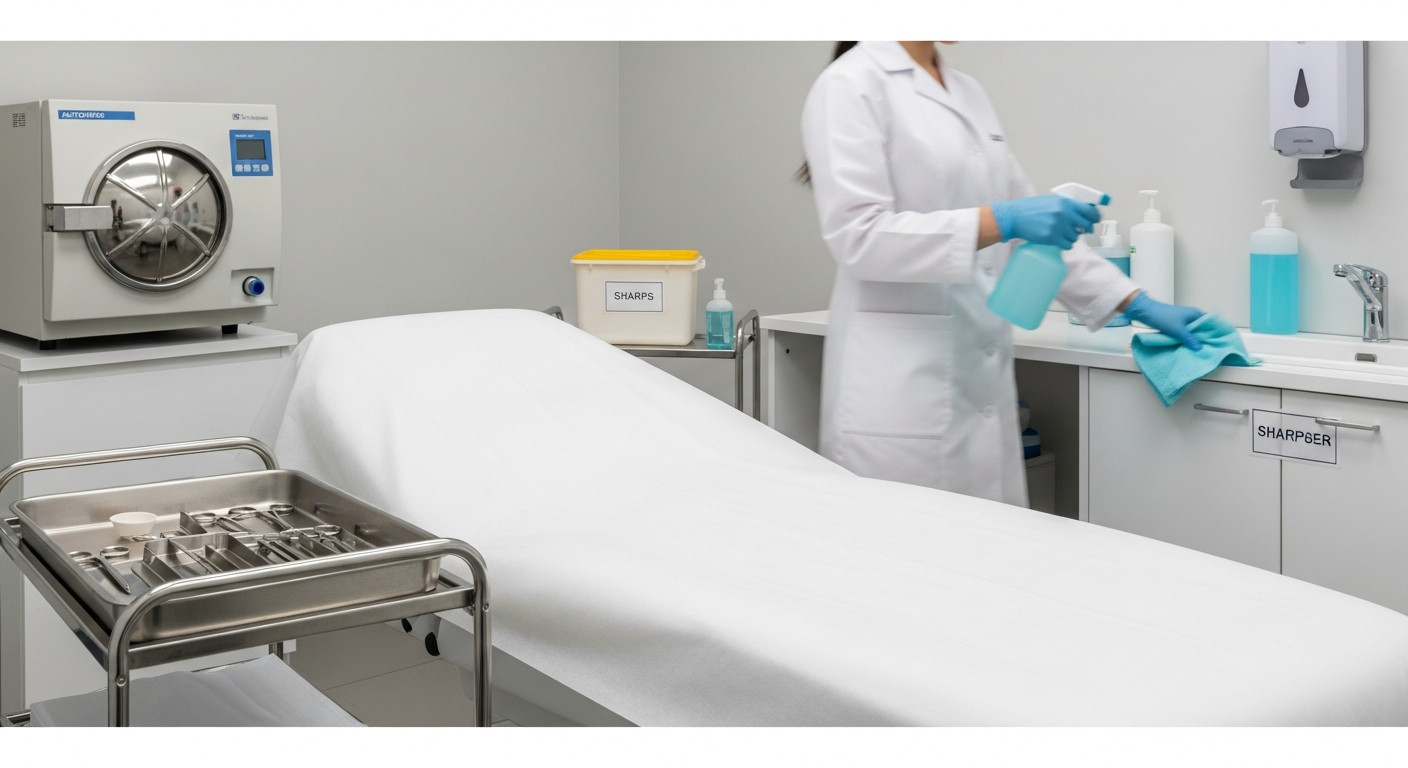
Med Spa Infection Control: Essential Clinical Safety Guide
Med spa infection control is the systematic application of sanitation and sterilization protocols designed to eliminate the risk of pathogen transmission during aesthetic procedures. These clinical safety practices include OSHA-aligned surface disinfection, the use of personal protective equipment, and strict sterilization of reusable instruments to ensure a compliant and safe treatment environment.
Establishing Rigorous Sanitation Protocols
Effective infection control begins with a written safety plan tailored to the med spa environment.
This plan must outline specific cleaning frequencies for every area of the facility.
Consistency ensures that all staff members follow the same high standards daily.
OSHA Standards and Regulatory Compliance
Med spas must adhere to OSHA bloodborne pathogen standards to protect providers and clients.
This includes annual training and maintaining accessible safety data sheets for all chemicals.
Compliance prevents legal liabilities and ensures a workplace culture of safety.
Daily Treatment Room Disinfection Cycles
High-touch surfaces require disinfection with EPA-registered solutions after every patient encounter.
This includes treatment tables, counters, and any equipment touched during a procedure.
Allowing for proper contact time is essential for the disinfectant to be effective.
Sterilization Processes for Aesthetic Tools
Any tool that penetrates the skin or contacts mucosal membranes requires high-level sterilization.
Med spas must use medical-grade autoclaves to ensure all microorganisms are destroyed.
Monitoring these systems with regular spore testing is a critical safety requirement.
Chemical Disinfection and Heat Sterilization
Non-invasive tools should undergo thorough chemical disinfection between uses.
Reusable items that cannot withstand heat must be processed using approved cold-sterilant solutions.
Always follow the manufacturer’s instructions to maintain the integrity of clinical equipment.
Advanced Cross-Contamination Prevention
Cross-contamination is the primary risk during multi-step aesthetic treatments.
Using barriers on equipment and strictly separating clean and soiled items prevents the spread of bacteria.
Organized workflows are necessary to maintain a sterile field during procedures.
Personal Protective Equipment and Hand Hygiene
Proper hand hygiene is the most effective way to prevent the transfer of germs.
Providers should wash hands before and after every client contact and when changing gloves.
Wearing appropriate gloves, masks, and eye protection further reduces exposure risks.
Clinical Waste and Sharps Management
Proper disposal of needles and lancets in puncture-resistant sharps containers is mandatory.
Biohazardous waste must be separated from standard trash and handled by certified disposal services.
Clear labeling and secure storage of clinical waste prevent accidental needle sticks and exposure.
- Systematic Cleaning: Follow a checklist for every room turnover.
- Single-Use Items: Dispose of disposable tools immediately after one use.
- Staff Education: Conduct regular drills on infection prevention steps.
- Equipment Maintenance: Schedule routine service for all sterilization units.
