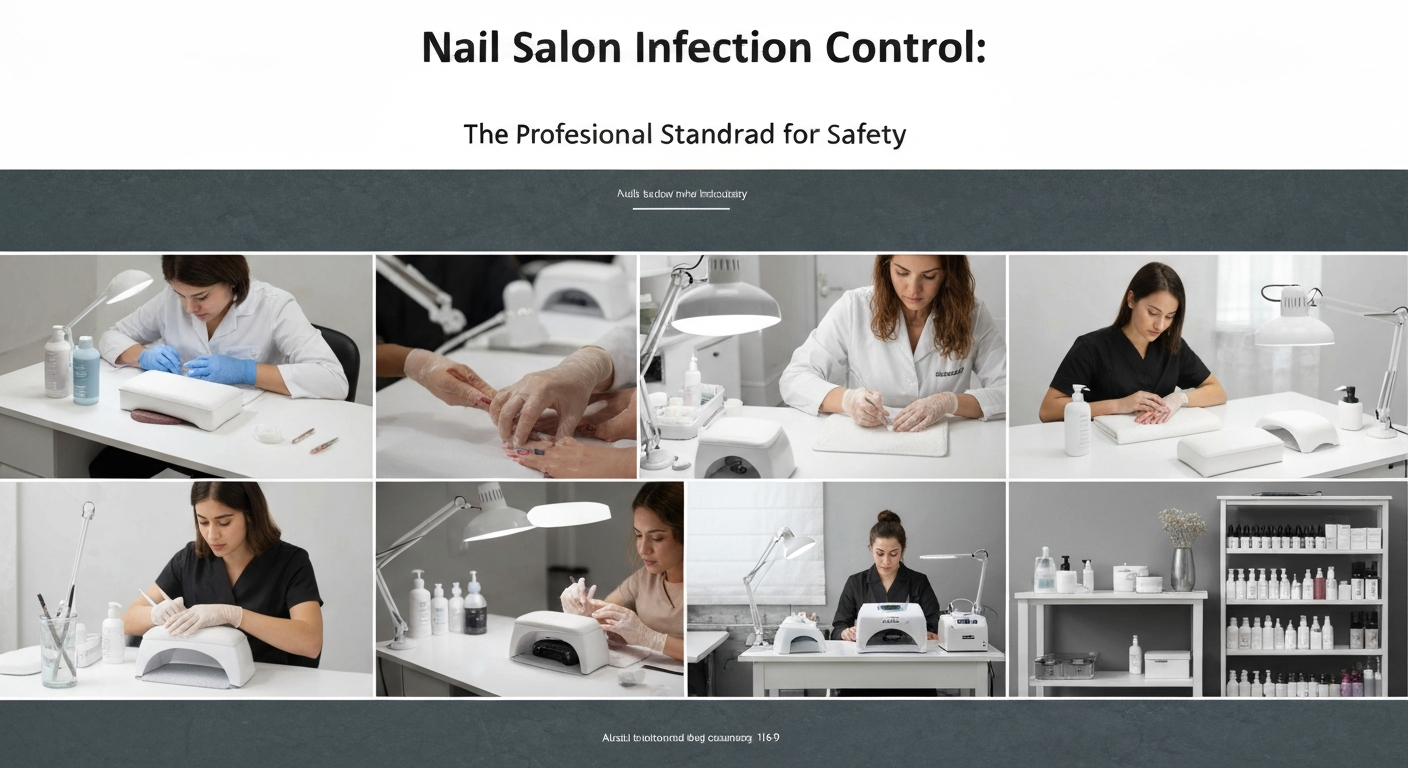
Nail Salon Infection Control: The Professional Standard for Safety
For professional nail technicians and salon owners, infection control is not just a legal requirement; it is the backbone of a reputable business.
Understanding the hierarchy of cleaning, disinfecting, and sterilizing is essential for protecting both the technician and the client.
This guide outlines the proper protocols for maintaining a sanitary workspace specifically for nail services.
The Three Levels of Decontamination in Nail Services
In the nail industry, we follow a specific hierarchy of decontamination to ensure tools and surfaces are safe for service.
Skipping steps or confusing these terms can lead to cross-contamination and the spread of pathogens like fungi or bacteria.
1. Cleaning (Sanitization)
Cleaning is the first step and arguably the most important because disinfection cannot occur on a dirty surface.
This process removes visible debris, dust, and oils from your nail tools and workstation.
- Scrub tools with warm water and soap using a designated brush.
- Remove all visible nail dust and skin debris from e-file bits.
- Wipe down manicure tables and pedicure chairs to remove residue.
2. Disinfection
Disinfection kills most pathogens on hard, non-porous surfaces. This is the standard required for most nail implements.
Nail salons must use an EPA-registered hospital-grade disinfectant that is bactericidal, virucidal, and fungicidal.
- Immerse clean, non-porous tools (nippers, pushers) completely in the solution.
- Follow the manufacturer’s contact time strictly (usually 10 minutes).
- Spray and wipe hard surfaces like nail lamps and tabletops between every client.
3. Sterilization
Sterilization is the highest level of decontamination, killing all microbial life, including bacterial spores.
While not always mandatory for all tools in every jurisdiction, it is the best practice for metal implements in high-end nail salons.
- Use an autoclave or dry heat sterilizer tested regularly.
- Package tools in sterilization pouches that change color when processed.
- Store sterilized pouches unopened until the client is seated.
Managing Porous vs. Non-Porous Nail Supplies
A critical skill for every nail technician is immediately identifying which items are single-use and which are reusable.
Mismanaging porous items is a common violation during state board inspections and a major hygiene risk.
Single-Use (Porous) Items
These items cannot be effectively disinfected because they absorb liquids and trap bacteria.
They must be discarded into the trash immediately after use on a single client.
- Wooden cuticle pushers (orangewood sticks).
- Nail buffers and sanding blocks.
- Standard arbor bands for e-files.
- Cotton pads, wipes, and paper towels.
- Toe separators and flip-flops.
Reusable (Non-Porous) Items
These items are made of hard materials like metal, glass, or ceramic and can be fully submerged in disinfectant.
- Metal cuticle nippers and pushers.
- Glass or crystal nail files (if non-porous).
- Electric file bits (carbide, diamond, ceramic).
- Plastic or metal spatula for scooping creams/gels.
Pedicure Tub and Basin Protocols
Pedicure stations present the highest risk for bacterial growth due to the circulation of water and skin debris.
Adhering to strict logging and cleaning schedules is mandatory for liability and safety.
After Every Client
Drain all water and remove the screen and other removable parts.
Scrub the basin with soap and a clean brush to remove the “scum line” and debris.
Disinfect with an EPA-registered disinfectant for the required contact time.
End of Day Deep Clean
Remove all removable jets and screens.
Fill the basin with water and a low-foaming chelating detergent.
Circulate the solution through the jets for the time recommended by the manufacturer (often 10-15 minutes).
Drain, rinse, and wipe dry.
Best Practices for Technician Personal Protection
Infection control also applies to the nail technician to prevent occupational hazards and cross-contamination.
Hand Washing: Wash hands with liquid soap and water before and after every service.
Gloves: Wear fresh nitrile gloves for every client. Replace them immediately if they tear or become heavily soiled with gel products.
Masks: Use N95 or designated dust masks to protect against fine nail dust during filing and drilling.
By strictly following these protocols, nail salons protect their clients’ health and secure their professional reputation.
