Essential Med Spa Regulations: A Compliance Guide for Owners
Med spa regulations are state-specific legal frameworks governing medical aesthetic procedures, requiring professional licensing, physician supervision, and strict adherence to corporate practice of medicine doctrines. These rules ensure patient safety by defining who can perform medical treatments and establishing necessary medical director oversight and facility safety standards within the United States.
Understanding State-Specific Med Spa Regulations
Med spa laws vary significantly across the United States because every state medical board sets its own standards. Most states follow the Corporate Practice of Medicine (CPOM) doctrine.
CPOM rules generally prohibit non-physicians from owning a medical practice or employing physicians. In these states, med spas must be structured as professional corporations or via management service agreements.
Owners must consult their specific state’s Medical and Nursing Boards to determine local requirements. Ignoring these state-level nuances can lead to heavy fines or license revocation.
Licensing and Physician Supervision Requirements
A medical director is a non-negotiable requirement for nearly every med spa in the United States. This individual must be a licensed physician responsible for all medical services.
The medical director provides oversight, approves protocols, and ensures that all treatments are performed within the legal scope of practice. They are ultimately responsible for patient outcomes.
Supervision levels vary; some states require the physician to be on-site, while others allow for remote supervision. Always verify the required proximity of your medical director.
Legal Scope of Aesthetic Practice
Defining who can perform specific procedures is a core component of med spa regulations. Procedures like Botox or laser hair removal are considered medical acts.
Registered Nurses (RNs) and Nurse Practitioners (NPs) often perform these treatments under physician delegation. Estheticians, however, are typically restricted to non-invasive skin care.
Performing medical treatments without the proper license or delegation is a criminal offense. Compliance requires a clear understanding of what each staff member is legally permitted to do.
Inspection Readiness Standards
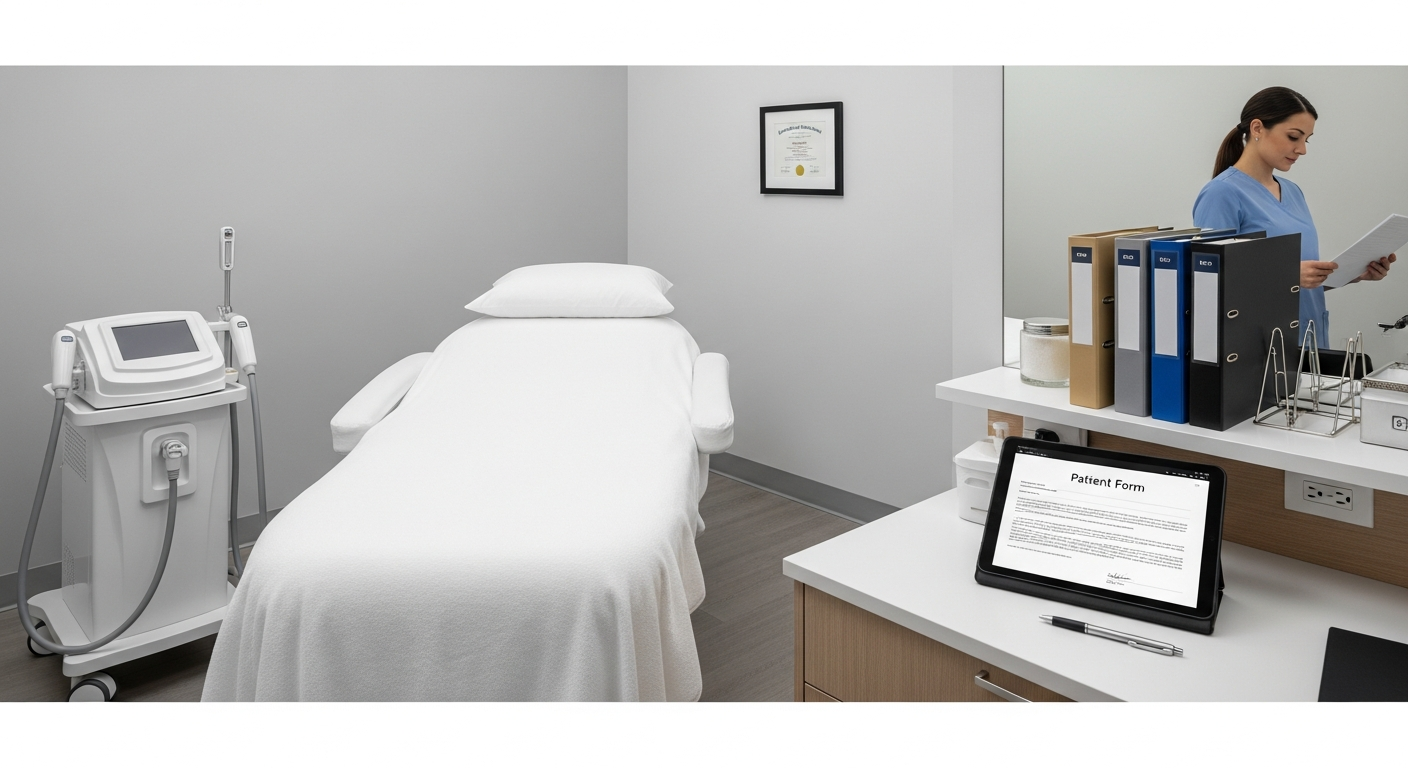
Med spas must maintain a high level of clinical cleanliness and safety to pass unexpected inspections. Regulators look for adherence to OSHA and HIPAA standards.
Common inspection focus areas include sterile processing, proper sharps disposal, and medication storage. All medical equipment must be regularly calibrated and documented.
Maintaining a clean facility and organized records demonstrates a commitment to patient safety. Regular internal audits can help identify compliance gaps before a state inspector arrives.
Compliance Documentation Basics
Thorough documentation is the best defense against regulatory scrutiny and legal liability. Every patient interaction must be recorded in a comprehensive medical chart.
Essential documentation includes signed informed consent forms, detailed treatment notes, and pre-and-post-care instructions. These records must be stored securely to meet privacy laws.
Standardized operating procedures (SOPs) should be written for every clinical process. These manuals prove that the facility follows consistent, legal, and safe medical protocols.
-
Core Compliance Checklist:
- Current medical director agreement and active license.
- State-specific professional business structure.
- Documented delegation of medical tasks to qualified staff.
- Updated OSHA and HIPAA compliance manuals.
- Accurate patient medical records and consent forms.
