Essential Med Spa Regulations and Compliance Guide
Med spa regulations are state-specific laws governing the ownership, operation, and clinical supervision of facilities providing medical aesthetic treatments. These requirements typically mandate that a licensed physician oversees procedures, practitioners work within their legal scope of practice, and facilities maintain rigorous documentation to ensure patient safety and compliance with medical board standards.
State-Specific Laws and Ownership Models
The Corporate Practice of Medicine (CPOM) doctrine is a critical regulatory hurdle in many states. This legal principle generally prohibits non-physicians or general corporations from owning a medical practice or employing physicians.
In these jurisdictions, a med spa must be owned by a licensed physician or a professional corporation. Business owners must structure their legal entities to comply with specific state-level ownership restrictions.
State boards of medicine and nursing frequently update their administrative codes regarding aesthetic procedures. Operating across state lines requires a deep understanding of how regulations differ between each individual jurisdiction.
Professional Licensing and Supervision Rules
Every clinical procedure performed in a med spa is considered the practice of medicine. This classification triggers strict requirements for professional licensing and clinical oversight of all medical staff.
The Role of the Medical Director
A medical director is a licensed physician who assumes legal responsibility for the clinical operations of the facility. They are responsible for creating treatment protocols and ensuring all procedures are performed safely.
Supervision requirements vary by state, with some requiring the physician to be physically present. Other states allow for “available” supervision, where the director must be reachable by phone or video.
Scope of Practice for Aesthetic Staff
Each practitioner, whether a Nurse Practitioner, Physician Assistant, or Registered Nurse, has a defined scope of practice. Compliance depends on ensuring staff members only perform tasks authorized by their license.
Estheticians are typically limited to non-invasive treatments that do not penetrate the dermis. Using estheticians for medical procedures like laser treatments or injections often violates state med spa regulations.
Achieving Medical Inspection Readiness
Regulatory bodies and health departments may conduct unannounced inspections to ensure public safety. Maintaining a constant state of readiness is the only way to avoid heavy fines or license suspension.
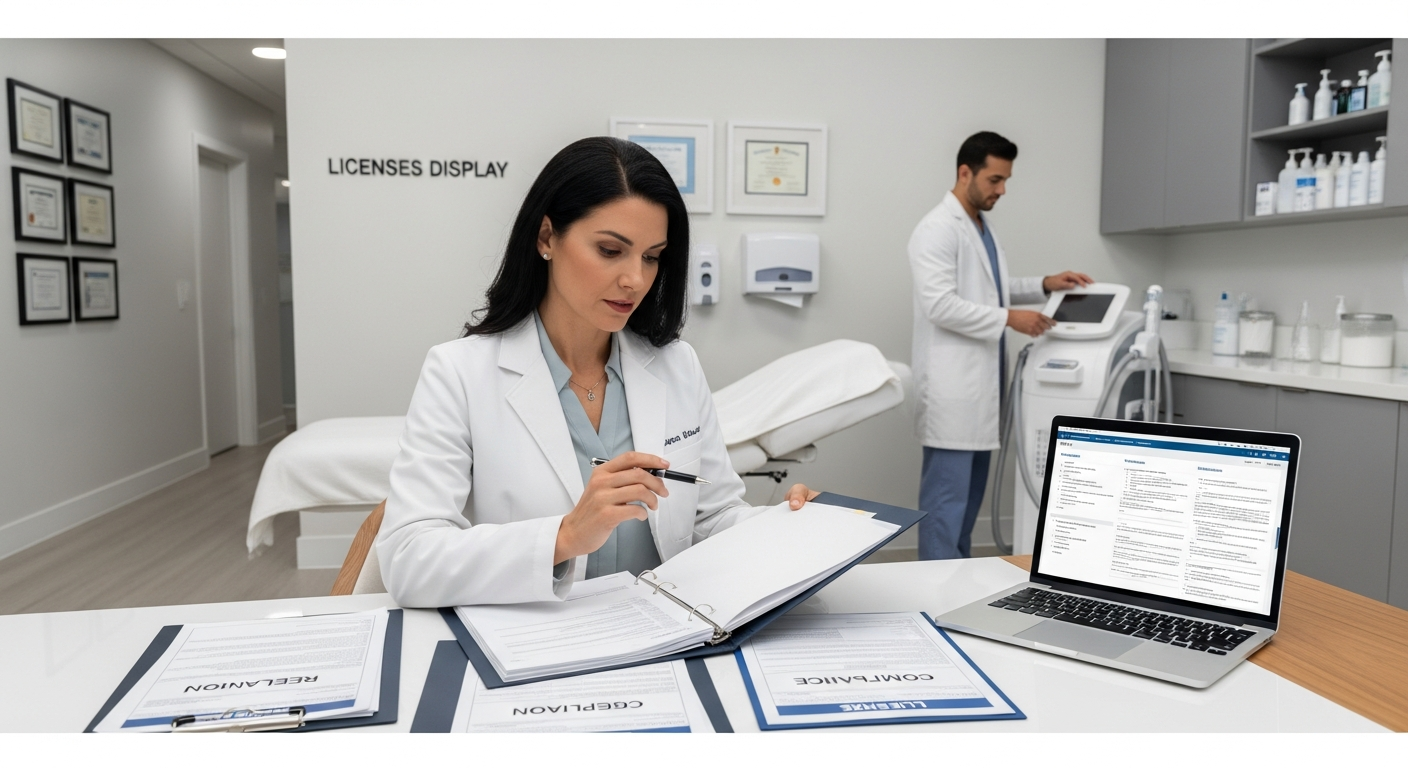
Inspections focus on sterilization techniques, medication storage, and the presence of emergency medical kits. Inspectors will also verify that all professional licenses are current and prominently displayed.
Proper hazardous waste disposal and biohazard management are high-priority items during any site visit. Facilities must have established contracts with licensed medical waste disposal companies to remain compliant.
Essential Compliance Documentation Basics
Documentation serves as the legal backbone of a compliant med spa operation. Without accurate records, a facility cannot prove it followed state-mandated safety protocols or supervision requirements.
- Standardized Procedures: Written protocols signed by the medical director for every treatment offered.
- Patient Consents: Comprehensive forms detailing the risks, benefits, and alternatives for medical procedures.
- Good Faith Exams: Documentation of an initial physical exam performed by a qualified provider before treatment.
- Personnel Files: Up-to-date records of licenses, certifications, and specialized training for all clinical staff.
Maintaining HIPAA-compliant digital or physical records is mandatory for protecting sensitive patient health information. Robust documentation protects both the patient and the business in the event of a legal or regulatory audit.
