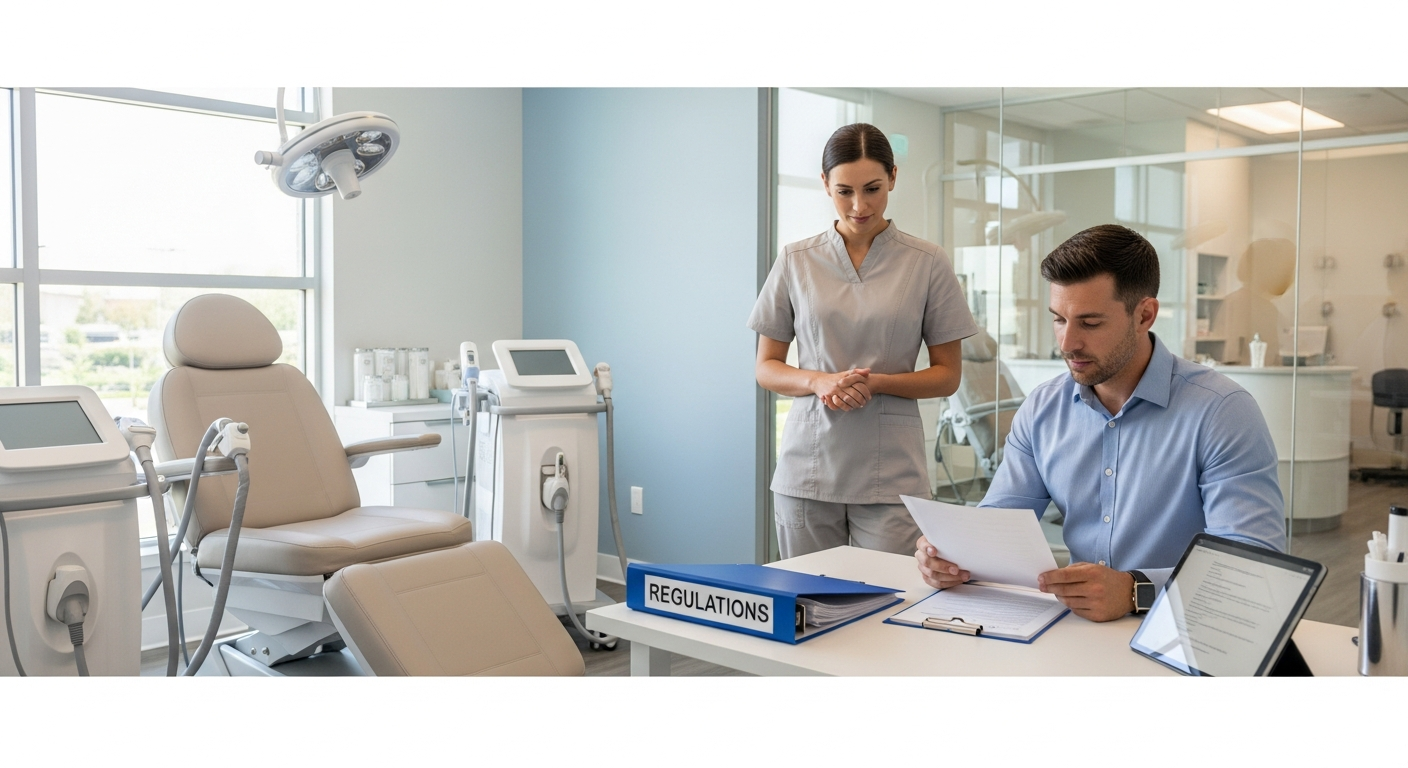
Essential Med Spa Regulations and Compliance Standards
Med spa regulations are the state-specific legal frameworks governing aesthetic medical procedures, facility ownership, and clinical oversight. These laws establish that medical spas must operate under a licensed physician’s supervision, requiring proper practitioner licensing and strict adherence to medical protocols to ensure patient safety and maintain professional healthcare standards.
State-Specific Med Spa Regulations and Ownership
Regulations for med spas vary significantly across the United States because most states categorize aesthetic treatments as medical practices.
Many jurisdictions follow the Corporate Practice of Medicine doctrine, which restricts business ownership of medical practices to licensed physicians.
Operators must research their specific state board of medicine to determine if a non-physician can legally own a majority stake.
Licensing and Medical Supervision Requirements
Every med spa must have a designated Medical Director who is responsible for all clinical activities and patient outcomes.
The Medical Director must provide appropriate supervision based on state-specific levels, such as “on-site,” “immediate,” or “general” supervision.
A Good Faith Exam (GFE) is a mandatory regulatory step where a provider evaluates a patient before any medical treatment begins.
The Role of the Medical Director
- Oversight: Establishing clinical protocols for all aesthetic treatments.
- Delegation: Authorizing qualified staff to perform specific medical tasks.
- Emergency Response: Ensuring the facility is equipped to handle adverse reactions.
Legal Scope of Aesthetic Practice
Compliance depends on ensuring every staff member operates strictly within their legally defined scope of practice.
Registered Nurses (RNs), Nurse Practitioners (NPs), and Physician Assistants (PAs) have different authorization levels for injecting neurotoxins.
Estheticians are often limited to non-invasive treatments and cannot perform procedures that penetrate the dermis without specific medical supervision.
Inspection Readiness and Safety Standards
Med spas must remain ready for unannounced inspections from state health departments or medical boards at any time.
Facilities must meet OSHA standards for bloodborne pathogens and maintain strict sterilization protocols for all reusable equipment.
Regulatory inspectors frequently review the storage of prescription drugs and the disposal methods for hazardous medical waste.
Essential Compliance Documentation Basics
Thorough documentation is the primary defense against legal challenges and regulatory fines in the aesthetic industry.
Standard Operating Procedures (SOPs) must be written, updated annually, and accessible to all staff members during working hours.
HIPAA compliance is mandatory, requiring secure storage of patient records and strict privacy controls for all digital communications.
Mandatory Regulatory Records
- Patient Consent: Signed forms detailing the risks and benefits of each procedure.
- Supervision Agreements: Legal contracts defining the relationship between the director and staff.
- Training Logs: Proof of continuing education and competency assessments for all practitioners.
