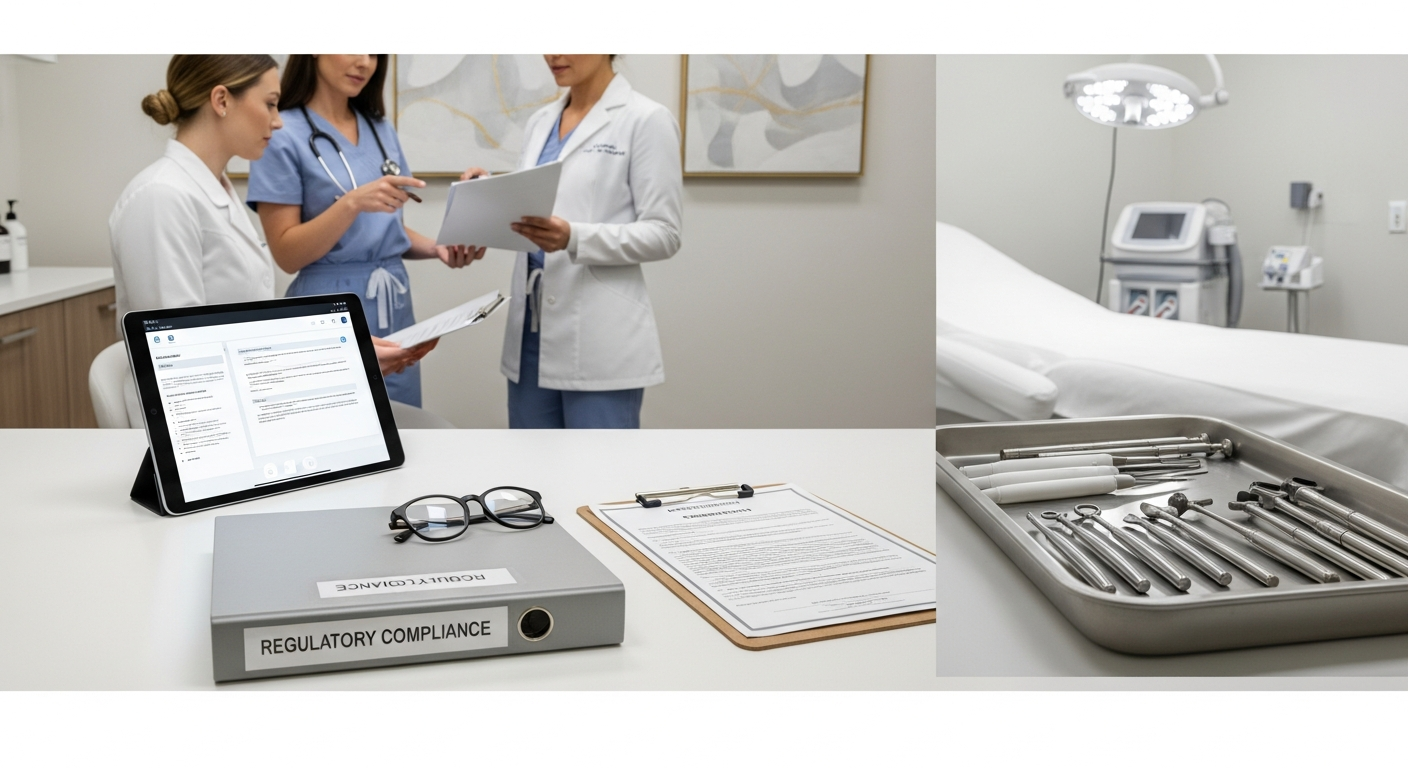
Med Spa Regulations and Compliance Guide
Med spa regulations are the state-specific legal frameworks governing the medical supervision, licensing, and operational standards of aesthetic clinics in the United States. These laws define the corporate practice of medicine, determine which practitioners can perform specific procedures, and establish the mandatory level of physician oversight for non-surgical cosmetic treatments.
Corporate Practice of Medicine and Ownership
In many states, the Corporate Practice of Medicine (CPOM) doctrine prohibits non-physicians from owning a medical practice. This means a med spa must often be owned by a licensed physician or a professional corporation.
Business owners who are not doctors frequently utilize Management Services Organizations (MSOs) to handle administrative tasks. This structure ensures the clinical side remains under the control of a licensed medical professional.
Medical Director Supervision Requirements
Every med spa must have a designated Medical Director who assumes ultimate responsibility for patient safety and clinical outcomes. This physician must be licensed in the state where the facility operates.
Regulations vary regarding how often a Medical Director must be physically present on-site. However, they must always be available for consultation and provide oversight for all medical procedures performed by staff.
The Good Faith Examination
A “Good Faith Exam” is a mandatory initial evaluation conducted before a patient receives any medical treatment, such as Botox or fillers. This must be performed by a physician, Physician Assistant, or Nurse Practitioner.
The purpose of this exam is to establish a provider-patient relationship and determine if the treatment is appropriate. Skipping this step is a frequent cause of regulatory disciplinary action and license suspension.
Legal Scope of Aesthetic Practice
State boards of medicine and nursing define which professionals can perform specific tasks. RNs and LPNs typically require a direct order from a prescriber to administer medical-grade aesthetic treatments.
Aestheticians are generally restricted to non-invasive treatments that do not penetrate the dermis. Performing medical procedures like deep chemical peels or laser treatments may fall outside their legal scope of practice.
Compliance Documentation and Standardized Procedures
Compliance depends on maintaining rigorous documentation, including standardized procedures or “Standing Orders.” These documents outline the protocols for every treatment offered within the facility.
- Written protocols for adverse event management.
- Detailed patient consent forms for each procedure.
- Records of staff training and current licensure.
- Proper medical charting for every patient encounter.
Preparation for Regulatory Inspections
State departments of health and medical boards may conduct unannounced inspections to ensure public safety. Facilities must be prepared to demonstrate compliance with infection control and pharmaceutical storage rules.
Maintaining a clean, organized clinical environment and having all compliance documentation readily available is essential. Inspections focus on drug expiration dates, sterilization logs, and the presence of emergency medical supplies.
HIPAA and Patient Privacy
Because med spas provide medical treatments, they must adhere to the Health Insurance Portability and Accountability Act (HIPAA). This governs the storage and transmission of sensitive patient health information.
Electronic Health Record (EHR) systems must be encrypted and password-protected. Staff must be trained annually on privacy protocols to avoid data breaches and significant federal fines.
