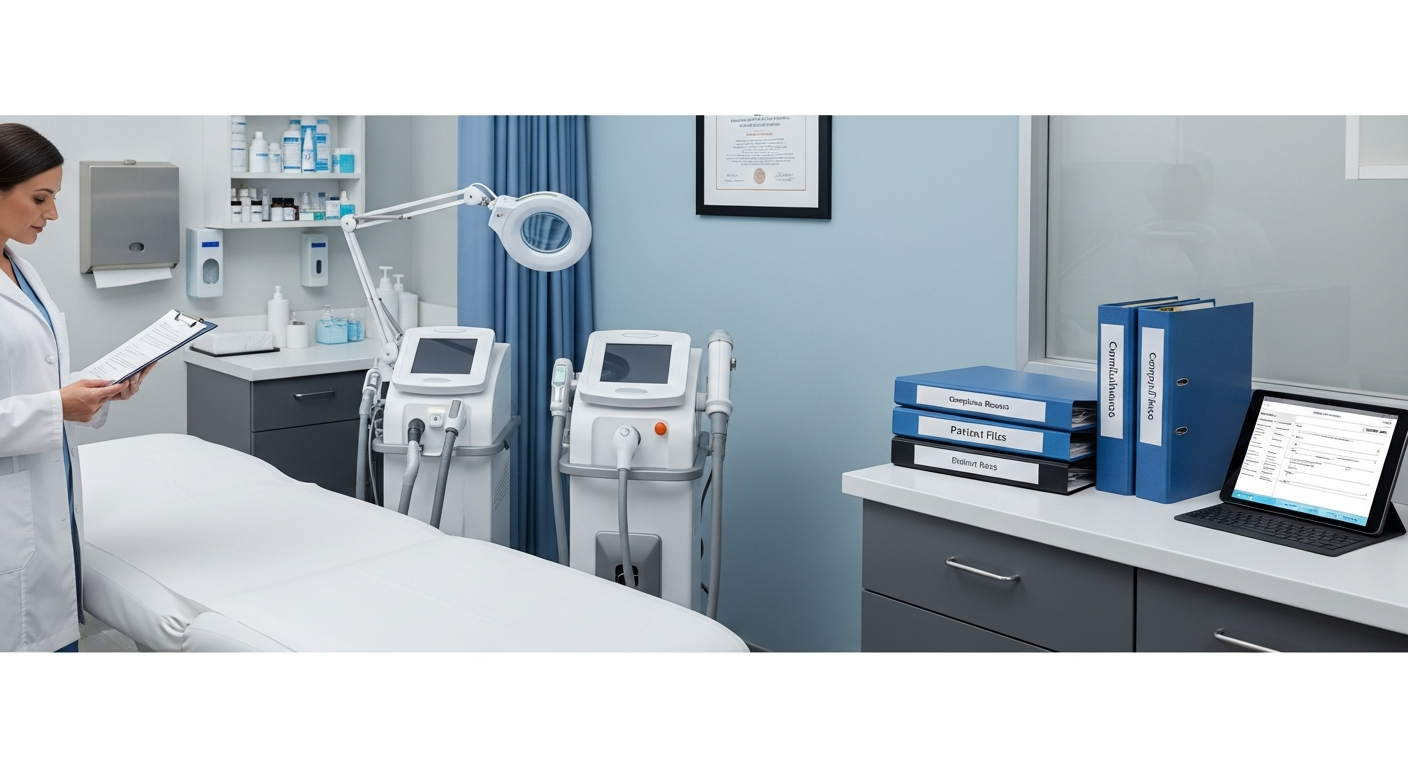
Navigating US Med Spa Regulations and Compliance
Med spa regulations encompass the state-level legal requirements governing medical aesthetic practices to ensure patient safety and clinical oversight. These regulations define who can own a facility, the necessary medical supervision for procedures, and the specific licensing credentials required for practitioners to legally perform medical-grade aesthetic treatments across the United States.
Understanding the Corporate Practice of Medicine
The Corporate Practice of Medicine (CPOM) is a fundamental med spa regulation.
This doctrine generally prohibits non-physicians from practicing medicine or owning medical clinics.
In many states, this means a physician must own the majority of the med spa.
Business owners often use Management Services Organizations (MSOs) to navigate these rules.
The MSO handles non-clinical administrative tasks while the physician handles medical care.
Strict adherence to CPOM ensures the facility avoids practicing medicine without a license.
Essential Licensing and Supervision Requirements
Licensing is the backbone of med spa regulations and varies by practitioner type.
State boards define the specific procedures nurses, PAs, and NPs can perform.
Each practitioner must act only within their designated legal scope of practice.
The Role of the Medical Director
Every med spa requires a qualified Medical Director to oversee clinical operations.
The director is responsible for all medical protocols and patient safety outcomes.
State laws dictate whether the director must be on-site or available via telecommunication.
Delegated Scope of Practice
Physicians may delegate medical tasks to qualified non-physician practitioners.
This delegation must follow state-specific guidelines regarding training and competency.
Written protocols must be in place for every delegated aesthetic procedure.
State-Specific Regulatory Variations
Med spa regulations are not uniform across the United States.
Texas, California, and Florida have distinct requirements for laser hair removal and injectables.
Operators must consult their specific state medical and nursing boards regularly.
Failure to follow state-specific rules can result in heavy fines or license revocation.
Some states require specific facility permits for certain types of aesthetic equipment.
Always verify local requirements before introducing new medical services to the clinic.
Inspection Readiness and Documentation Basics
Inspection readiness is a core component of med spa regulations and safety.
Regulatory bodies may conduct unannounced visits to verify compliance with health standards.
Clinics must maintain organized records of all staff licenses and certifications.
Maintaining Compliance Protocols
Standard Operating Procedures (SOPs) should be documented for every medical treatment.
These documents prove that the facility follows safe and standardized clinical paths.
Detailed patient charts and informed consent forms are required for every procedure.
Proper documentation protects both the patient and the medical director.
Logbooks for device maintenance and sterilization must be updated daily.
Consistent record-keeping is the best defense during a regulatory audit or inspection.
