Understanding Med Spa Regulations and Compliance in the US
Med spa regulations are state-specific legal standards governing the ownership, medical supervision, and operational compliance of aesthetic clinics in the United States. These laws determine who can legally own a facility, specify the required level of physician oversight, and define the scope of practice for clinicians performing medical-grade aesthetic treatments.
The Corporate Practice of Medicine Doctrine
Many states follow the Corporate Practice of Medicine (CPOM) doctrine, which prohibits non-physicians from owning medical practices. In these jurisdictions, a med spa must be owned by a licensed physician or a professional corporation owned by physicians.
Business owners often utilize Management Service Organizations (MSOs) to navigate these ownership restrictions. The MSO handles administrative functions while the professional corporation remains responsible for all clinical decisions and medical services provided.
Failure to adhere to ownership laws can result in significant fines or the forced closure of the facility. Understanding your state’s specific stance on CPOM is the first step in establishing a compliant med spa.
Medical Supervision and Delegation Standards
Every med spa must operate under the supervision of a Medical Director who is responsible for all medical treatments. The level of required supervision varies by state, ranging from physical presence to off-site availability via telecommunication.
A “Good Faith Examination” (GFE) is a critical regulatory requirement in most states before any medical treatment is administered. A physician, nurse practitioner, or physician assistant must evaluate the patient to establish a treatment plan.
Delegation rules define which tasks a Medical Director can assign to registered nurses or licensed estheticians. These rules ensure that only qualified individuals perform invasive procedures like laser treatments or injectable fillers.
State-Specific Licensing and Scope of Practice
Licensing requirements for med spa staff are dictated by state boards of medicine, nursing, and cosmetology. A practitioner’s scope of practice determines which devices and substances they are legally permitted to use.
For example, some states allow estheticians to operate certain non-ablative lasers, while others restrict all laser use to medical professionals. It is vital to verify the credentials of every staff member against state-specific board rules.
Operating outside of one’s legal scope of practice constitutes the unlicensed practice of medicine. This violation carries heavy legal penalties and can jeopardize the professional licenses of both the practitioner and the supervisor.
Inspection Readiness and Safety Standards
Regulatory bodies may conduct unannounced inspections to ensure the facility meets health and safety standards. Compliance officers look for proper sterilization techniques, medical waste disposal protocols, and emergency response plans.
OSHA compliance is mandatory for protecting employees from bloodborne pathogens and chemical hazards found in clinical settings. Maintaining a clean, organized environment is not just about aesthetics; it is a legal requirement for patient safety.
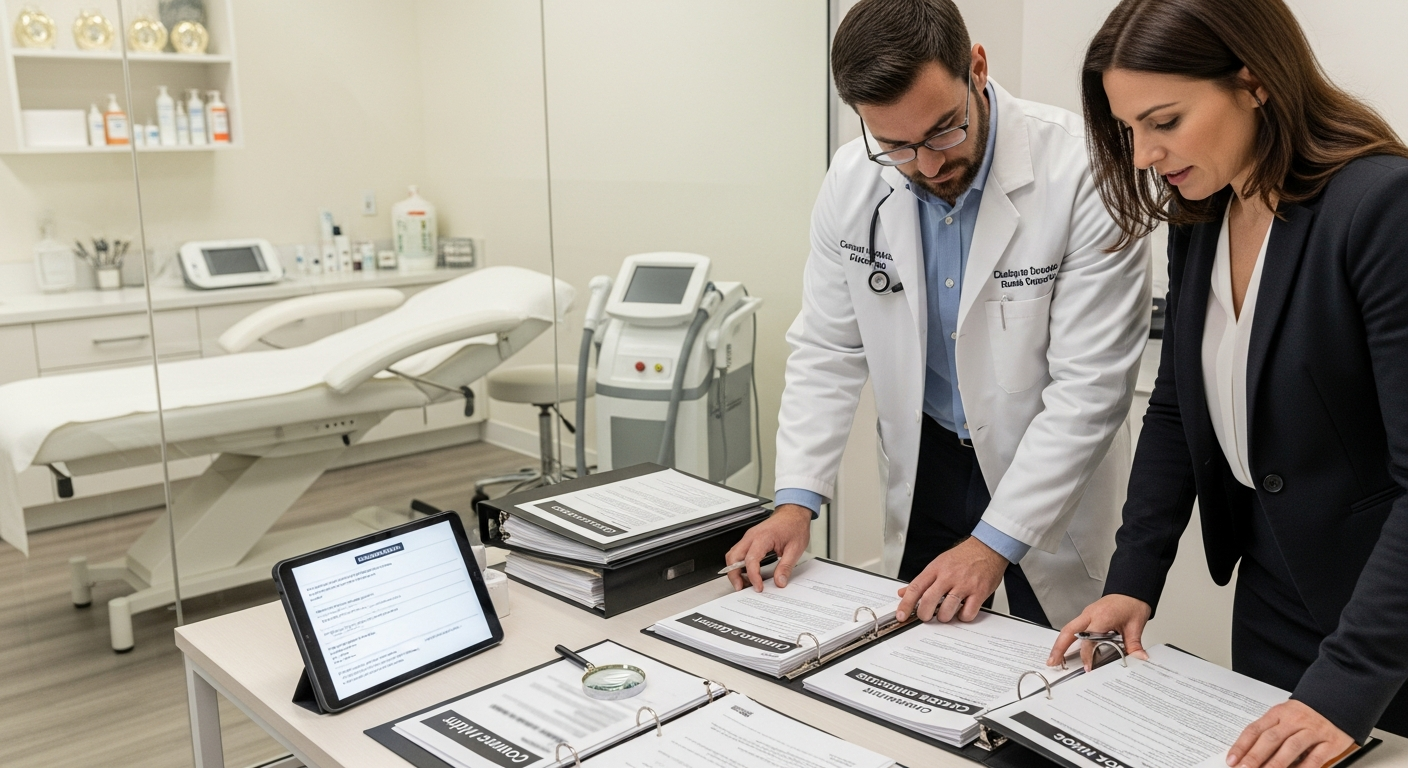
Clinics should maintain an inspection binder containing all necessary permits, safety data sheets, and equipment maintenance logs. Being prepared for an audit reduces the risk of administrative sanctions and demonstrates a commitment to high standards.
Essential Compliance Documentation Basics
Accurate and thorough documentation is the foundation of a legally protected med spa practice. This includes detailed patient charts, standardized procedure protocols, and comprehensive informed consent forms for every medical service.
HIPAA regulations require med spas to protect patient privacy and secure electronic health records. All staff must be trained on confidentiality protocols to prevent data breaches and ensure the legal handling of sensitive patient information.
Standardized procedures must be written and signed by the Medical Director for every medical treatment offered. These documents outline the steps for treatment, potential contraindications, and emergency protocols to be followed by clinical staff.
