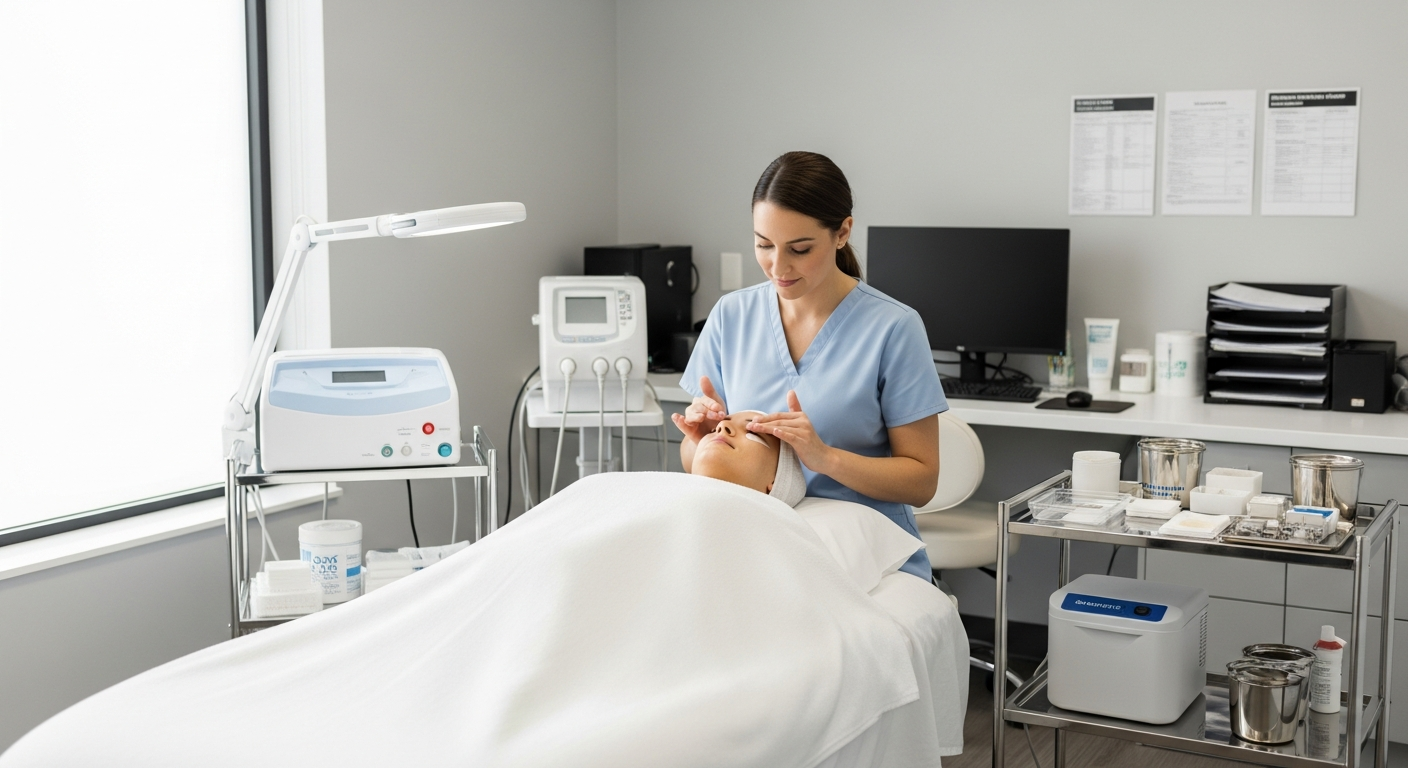
Clinical Post-Treatment Management in Med Spa Settings
Post-treatment management in med spa facilities refers to the standardized clinical protocols used to monitor recovery and minimize complications after aesthetic procedures. These systems involve managing inflammation, erythema, and downtime through structured follow-up workflows. Consistent aftercare ensures patient safety and predictable outcomes across laser, microneedling, and chemical peel treatments.
Standardized Post-Laser Recovery Protocols
Laser treatments require precise management of thermal energy remaining in the dermis.
Standardized protocols focus on immediate heat dissipation to prevent secondary burns.
Providers must monitor the duration of perifollicular edema and localized heat.
Post-treatment management includes strict cooling phases and hydration monitoring.
Clinical staff should document the reduction of erythema at specific hourly intervals.
Consistency in these steps prevents long-term pigmentary changes or scarring.
Microneedling Downtime Management
Microneedling creates controlled micro-injuries that trigger a specific inflammatory cascade.
Post-treatment management focuses on protecting the compromised skin barrier for 24 to 48 hours.
Reducing transepidermal water loss is the primary goal during the initial recovery phase.
Clinical workflows should mandate a “no-touch” period to prevent exogenous contamination.
Providers must educate patients on the difference between healthy redness and adverse inflammation.
Standardized follow-up calls help track the transition from inflammation to tissue remodeling.
Chemical Peel Aftercare Systems
Chemical peels involve controlled keratolysis that requires a structured recovery timeline.
The system must account for varying depths of penetration and expected desquamation.
Managing the skin’s pH balance during the peeling phase is critical for safety.
Post-treatment management includes specific instructions on avoiding mechanical exfoliation.
Staff must ensure patients understand the timeline of “frosting” versus actual peeling.
Uniform protocols ensure that every patient receives the same level of clinical oversight.
Managing Inflammation and Erythema
Inflammation is a necessary biological response but must be kept within clinical limits.
Med spa protocols should define the thresholds for normal versus excessive erythema.
Standardized assessment tools help providers identify early signs of post-inflammatory hyperpigmentation.
Management involves the use of soothing agents and environmental protection.
Protocols must be applied universally regardless of the individual provider’s preference.
This ensures the med spa maintains a high standard of care and patient safety.
Standardized Recovery Workflows in Med Spas
A successful med spa relies on documented workflows rather than individual provider judgment.
Every procedure must have a corresponding post-treatment checklist for the clinical team.
This reduces the risk of missed steps during the critical first 72 hours of recovery.
- Documentation: Record all visual skin responses immediately post-procedure.
- Communication: Provide written recovery timelines to every patient.
- Follow-up: Implement a mandatory 48-hour clinical check-in system.
- Education: Train all staff on identifying standard versus abnormal healing.
Structured workflows create a predictable environment for both the provider and the patient.
By removing guesswork, the med spa ensures clinical excellence and patient safety.
Consistency is the foundation of effective post-treatment management.
