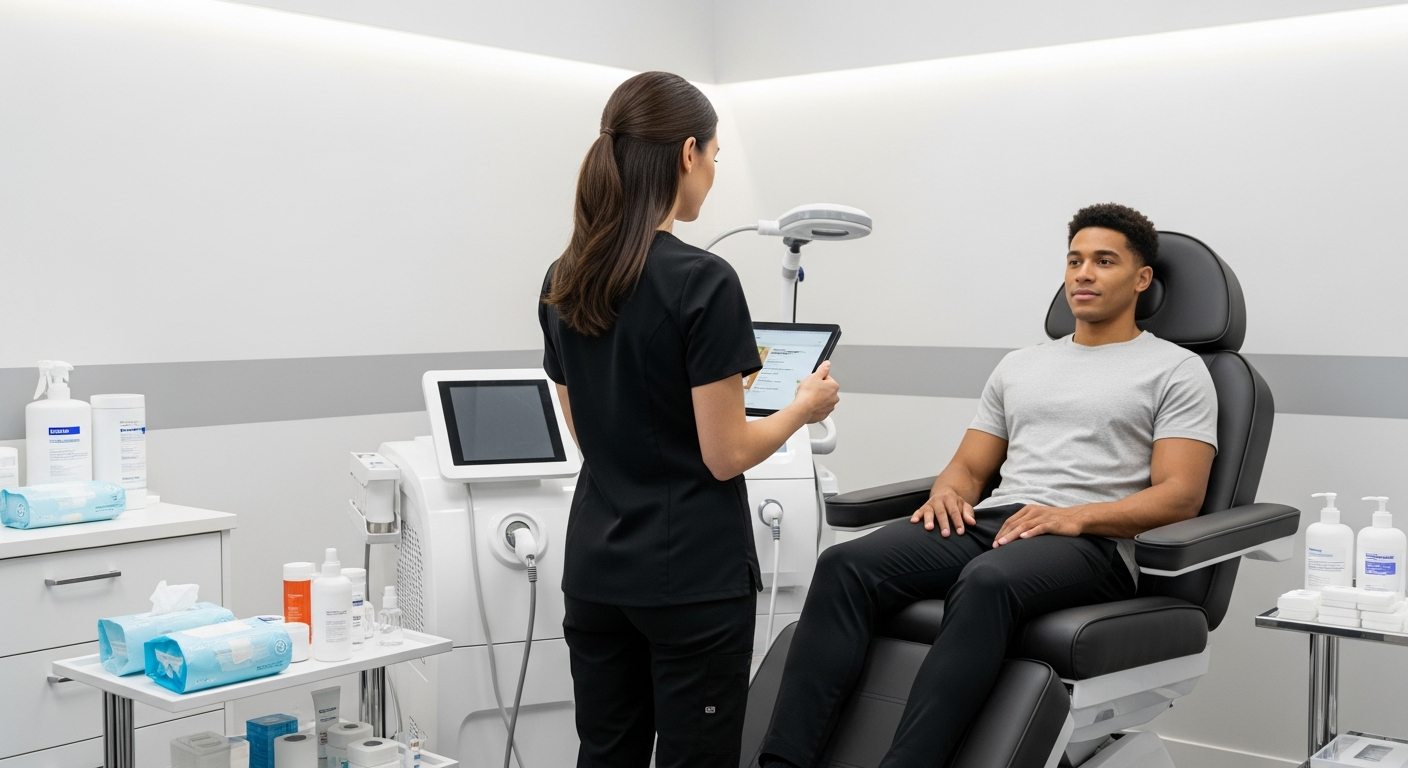
Post-Treatment Management in Med Spa Clinical Operations
Post-treatment management in med spa environments is the systematic application of standardized recovery protocols to reduce downtime and prevent complications following aesthetic procedures. These clinical systems focus on managing inflammation, erythema, and epidermal repair through structured workflows that ensure consistent patient outcomes regardless of the specific provider performing the treatment.
Standardizing Post-Laser Recovery Protocols
Effective post-laser management requires immediate thermal regulation and barrier restoration.
Standardized protocols ensure that heat-induced erythema is addressed within the first hour.
Med spas must implement cooling systems to stabilize skin temperature post-procedure.
Standardization reduces the risk of post-inflammatory hyperpigmentation in laser patients.
Providers should follow a specific timeline for introducing occlusive dressings or thin barriers.
Consistency in these workflows prevents variations in recovery times across different staff members.
Managing Heat Dissipation
Controlled cooling is essential for dissipating residual thermal energy in the dermis.
Protocols should specify the duration of cooling to prevent secondary tissue damage.
Clinical supervisors must verify that every laser patient receives uniform cooling therapy.
Microneedling Downtime and Erythema Management
Post-treatment management for microneedling focuses on protecting open micro-channels.
Clinical workflows should emphasize the first 24 hours as the critical window for protection.
Standardized instructions prevent patients from introducing irritants into the treated area.
Managing erythema after microneedling involves promoting rapid epidermal closure.
Providers must use standardized hydration protocols to support the natural healing response.
Clear, written recovery systems help patients manage expected redness and minor swelling.
Micro-Channel Protection Systems
Clinical protocols must strictly define when patients can resume standard skin hygiene.
Med spas should provide structured guidance on avoiding environmental contaminants.
Consistent messaging from all providers ensures patient compliance and safety.
Chemical Peel Aftercare Systems
Standardized chemical peel management centers on the controlled desquamation process.
Med spa protocols must dictate how to handle varying depths of exfoliation.
A system-wide approach prevents patients from prematurely removing peeling skin.
Sun protection is the most critical component of chemical peel recovery workflows.
Clinical supervisors must ensure every patient is educated on strict UV avoidance.
Documented protocols help providers identify normal vs. abnormal peeling patterns.
Barrier Recovery and Hydration
Maintaining the acid mantle is vital after chemical exfoliation treatments.
Standardized recovery systems include specific intervals for applying lipid-rich emollients.
These workflows minimize the risk of scarring or prolonged sensitivity.
Clinical Workflows for Inflammation Control
Managing inflammation requires a proactive clinical strategy in the med spa setting.
Standardized assessment tools help providers grade erythema and edema accurately.
Uniform protocols for inflammatory response ensure high-quality patient care standards.
Standardized workflows must include escalation steps for persistent or unexpected inflammation.
Med spas that prioritize protocol consistency see fewer post-procedure complications.
Clinical supervisors should audit recovery outcomes to ensure system-wide adherence.
- Consistent Assessment: Use standardized scales for erythema.
- Documented Timing: Track recovery milestones at 24 and 48 hours.
- Provider Uniformity: Ensure every clinician follows the same recovery steps.
