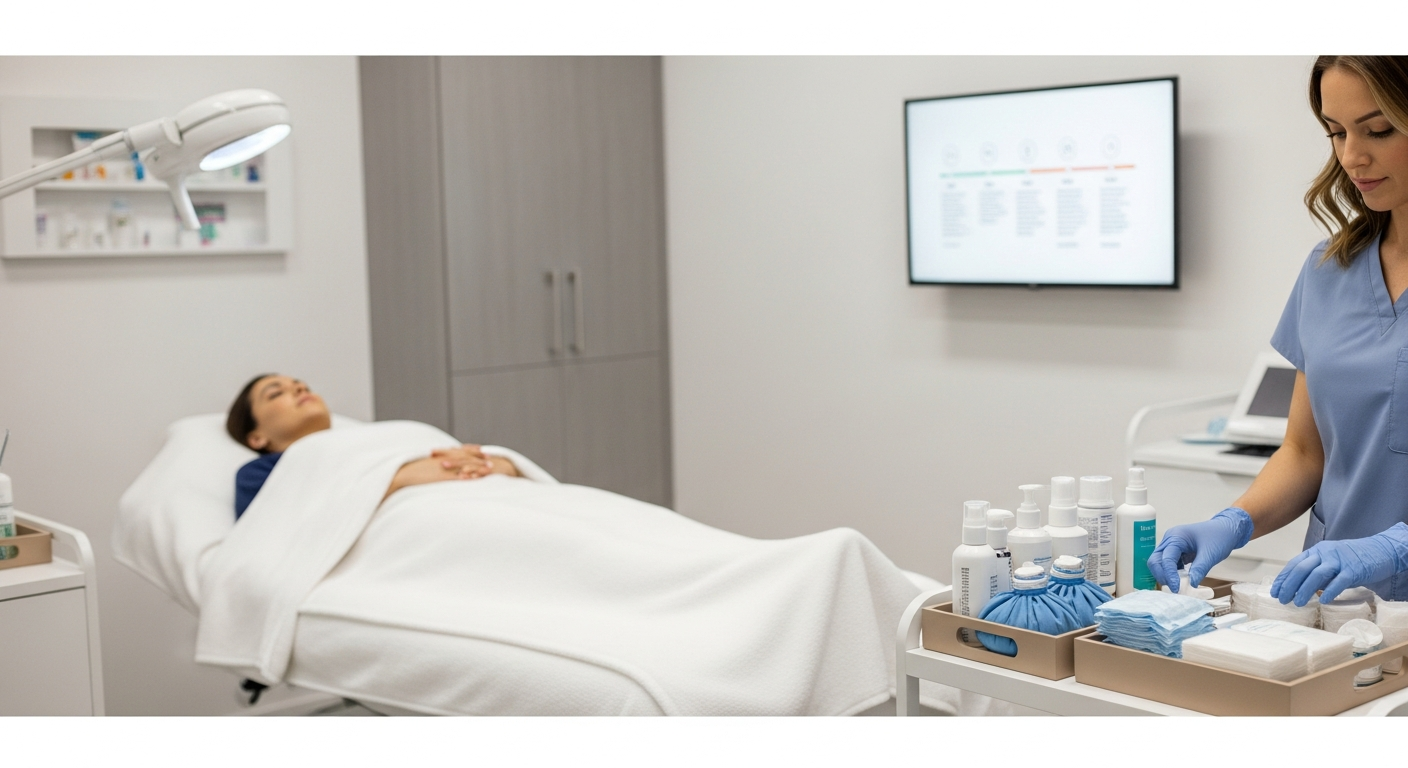
Post-Treatment Management in Med Spa: Clinical Workflows
Post-treatment management in med spa refers to the standardized clinical protocols used to stabilize skin health after aesthetic procedures. Effective management ensures consistent recovery through regulated inflammation control, erythema reduction, and barrier repair. By implementing structured workflows for lasers and microneedling, providers minimize complications and maintain high safety standards across the facility.
Standardizing Clinical Recovery Workflows
Consistent post-treatment management in med spa environments relies on documented, evidence-based protocols.
Removing variability between individual providers ensures predictable clinical outcomes for every patient.
These systems prioritize safety by establishing clear recovery benchmarks for all aesthetic staff.
Post-Laser Recovery Protocols
Managing skin following laser treatments requires immediate thermal stabilization and controlled hydration.
Clinical protocols focus on heat dissipation and the application of breathable, protective barriers.
Providers must monitor erythema closely to distinguish between expected healing and potential adverse events.
Heat Dissipation and Barrier Support
Immediate post-laser care involves reducing residual heat to prevent prolonged thermal damage.
Standard workflows include the use of cooling compresses and non-comedogenic emollients.
Maintaining a moist healing environment is essential for rapid re-epithelialization of the skin.
Microneedling Downtime Management
Microneedling creates thousands of micro-channels that require specific barrier repair strategies.
Standardized care involves protecting these channels during the initial twenty-four-hour closing window.
Effective management reduces the risk of post-inflammatory hyperpigmentation and secondary infections.
Infection Control and Irritant Avoidance
Clinical supervisors must ensure patients receive strict instructions on avoiding environmental contaminants.
Protocols should mandate the suspension of active ingredients like retinoids or acids during the healing phase.
Structured follow-ups help confirm that the inflammatory response is resolving as expected.
Chemical Peel Aftercare Systems
Post-peel management focuses on controlling the rate of exfoliation and maintaining skin pH levels.
Clinicians must provide clear systems for managing the peeling process without manual interference.
Structured workflows ensure that the new skin layer is protected from UV exposure and dehydration.
Managing Acute Inflammation and Erythema
Acute inflammation is a necessary part of the remodeling process but must be kept within safe limits.
Clinical systems include the use of cooling measures and soothing agents to manage patient discomfort.
Standardizing these responses ensures that redness subsides within the expected clinical timeframe.
- Erythema Assessment: Distinguishing between therapeutic redness and persistent inflammation.
- Edema Control: Utilizing physical measures to reduce swelling in sensitive treatment areas.
- Patient Compliance: Providing standardized, written instructions to ensure protocol adherence at home.
The Importance of Protocol Consistency
Relying on standardized recovery systems rather than individual judgment reduces clinical errors.
Consistency in post-treatment management allows med spas to track outcomes and improve safety.
Fixed protocols serve as the operational backbone for high-volume aesthetic medical practices.
