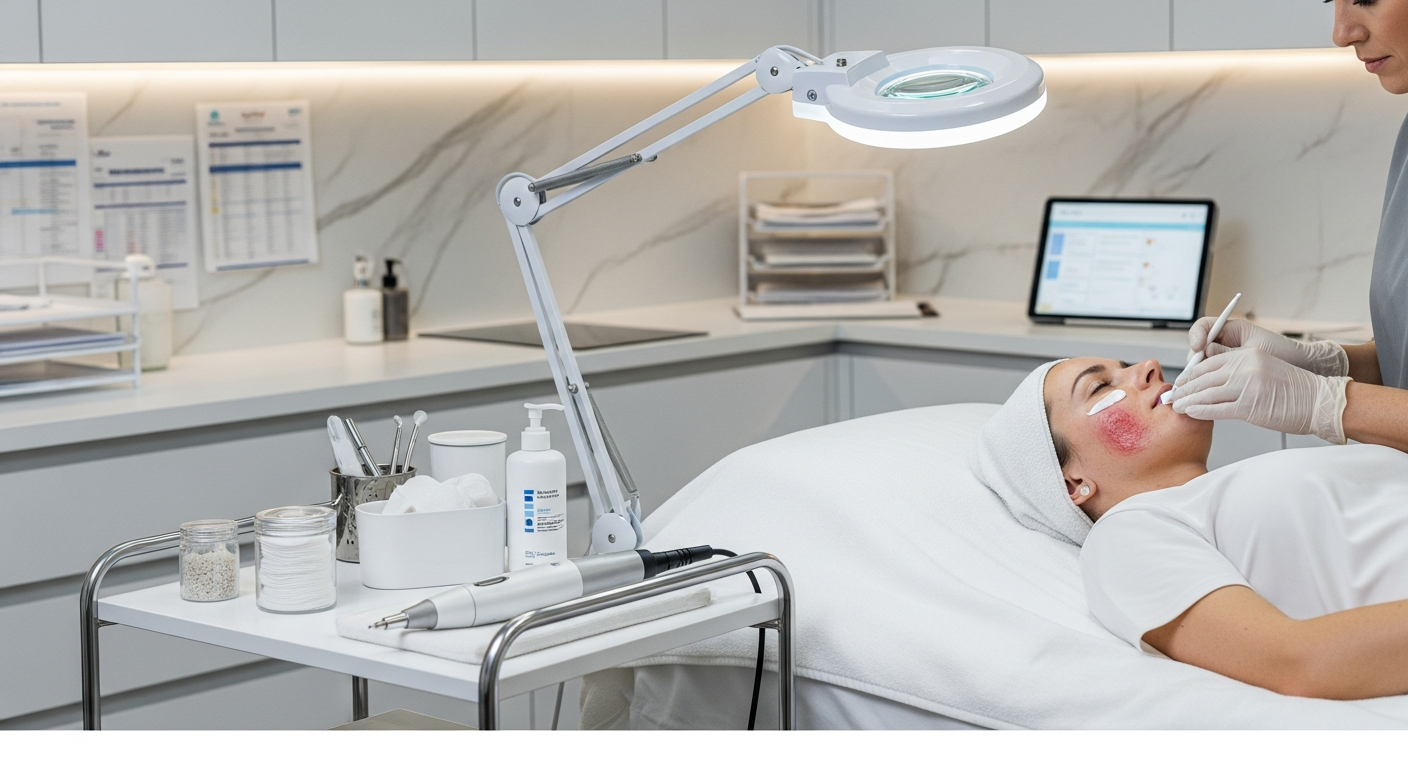
Post-Treatment Management in Med Spas: Clinical Protocols
Post-treatment management in med spas refers to the standardized clinical protocols used to oversee patient recovery after aesthetic procedures like lasers or microneedling. These systems ensure consistent application of aftercare instructions, monitoring for adverse reactions, and managing common side effects like erythema and inflammation to achieve predictable clinical outcomes and minimize downtime.
Standardizing Post-Laser Recovery Protocols
Effective post-treatment management in med spas begins with heat dissipation after energy-based procedures. Standardized protocols ensure that skin temperature is lowered efficiently to prevent secondary thermal injury to surrounding tissues.
Clinical workflows should prioritize the preservation of the skin barrier immediately following laser resurfacing or intense pulsed light treatments. This includes the application of occlusive or semi-occlusive dressings as dictated by the specific laser wavelength used.
Monitoring for prolonged erythema is a critical component of the recovery system. Providers must follow a strict observation schedule to differentiate between expected inflammatory responses and potential complications like thermal crusting.
Managing Microneedling Downtime and Erythema
Microneedling creates thousands of micro-channels that require a structured recovery approach to prevent transepidermal water loss. Med spa protocols should focus on keeping the treated area hydrated during the initial 24-hour inflammatory phase.
Erythema management in microneedling involves clear timelines for when patients can resume standard skincare routines. Standardized systems often prohibit the use of active acids or retinoids until the physical channels have completely closed.
Clinical supervisors must ensure that providers give uniform instructions regarding physical activity and heat exposure. Excessive perspiration shortly after microneedling can lead to irritation or localized follicular inflammation if not managed through protocol.
Chemical Peel Aftercare Systems
Post-treatment management in med spas for chemical peels focuses on the controlled shedding of the stratum corneum. Systems must be in place to prevent patients from prematurely removing peeling skin, which can lead to post-inflammatory hyperpigmentation.
Providers should utilize standardized checklists to educate patients on pH-neutral cleansing. Maintaining the skin at an optimal recovery pH is essential for enzymatic repair processes after acid-based exfoliation.
- Phase 1: Immediate neutralization and cooling of the epidermis.
- Phase 2: Protection of the vulnerable basement membrane during desquamation.
- Phase 3: Gradual reintroduction of environmental protection and barrier support.
Addressing Inflammation and Erythema
Managing the inflammatory cascade is a core competency of any clinical med spa environment. While some inflammation is necessary for collagen remodeling, excessive swelling can delay recovery and increase patient discomfort.
Standardized workflows include the use of cold compresses and specific sleeping positions to encourage lymphatic drainage. These steps are essential for reducing edema after injectable or high-intensity fractional treatments.
Clinical documentation should include a scale for measuring erythema at follow-up appointments. This data allows med spa owners to refine their recovery protocols based on observed healing trends across the patient population.
Establishing Standardized Recovery Workflows
Operational success in post-treatment management in med spas relies on protocol consistency over individual provider judgment. This reduces clinical variability and ensures every patient receives a high standard of care regardless of the practitioner.
Workflow Documentation
Every procedure must have a corresponding recovery map that includes immediate post-care, 48-hour instructions, and one-week follow-up requirements. Digital or physical checklists ensure no clinical steps are missed during the patient discharge process.
Clinical Escalation Paths
Standardized systems must define exactly when a normal recovery becomes a clinical concern. Establishing clear escalation paths for supervisors ensures that unexpected inflammation or delayed healing is addressed promptly according to established clinical safety guidelines.
