Med Spa Risk Management and Liability Protocols
Med spa risk management is the systematic process of identifying, assessing, and mitigating legal and clinical liabilities within a medical spa environment. Effective risk management involves maintaining rigorous documentation, implementing comprehensive informed consent protocols, and establishing structured incident reporting systems to protect the clinic, medical director, and staff from potential litigation.
Strengthening Informed Consent Documentation
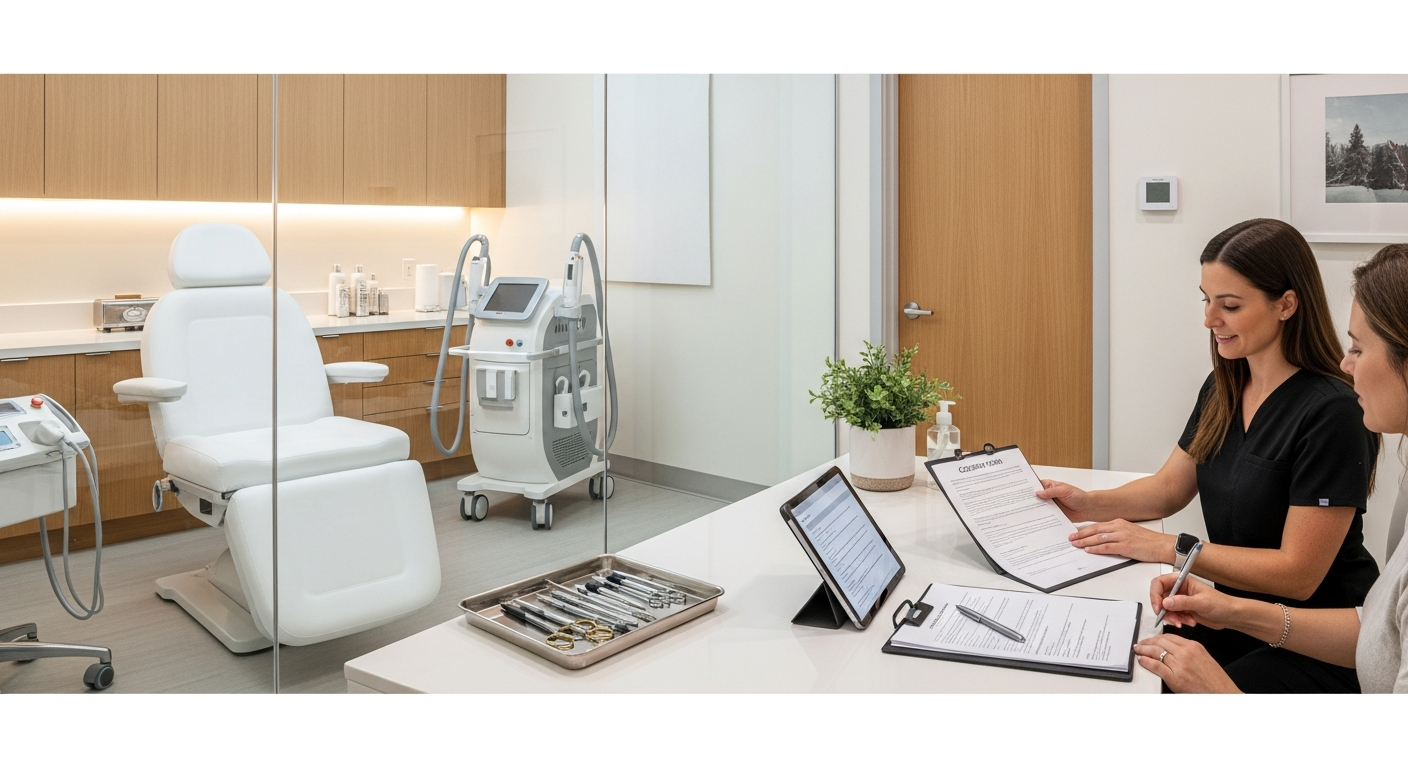
Informed consent is the foundation of a med spa risk management strategy. It is a process of communication between the provider and the patient that ensures the patient understands the risks and benefits of a procedure.
Documentation must reflect that the patient was given the opportunity to ask questions. Every consent form should be procedure-specific rather than a generic document covering all services offered at the med spa.
A signed consent form serves as a defense during legal disputes. It proves the patient acknowledged potential side effects and complications before the treatment began, significantly reducing the med spa’s liability exposure.
Clear Communication of Potential Risks
Providers must explain common and rare side effects in plain language. Technical medical terms should be avoided to ensure the patient fully grasps the nature of the aesthetic intervention.
The documentation should include the patient’s acknowledgment of alternative treatments or the option to forgo treatment entirely. This comprehensive approach establishes a clear record of informed decision-making.
Standardizing Incident Reporting Systems
A formal incident reporting system is vital for every med spa. This system tracks any event that deviates from the expected treatment path, even if no immediate harm is apparent.
Consistent reporting allows the medical director to identify patterns in equipment failure or provider technique. Early identification of these trends prevents minor issues from escalating into significant legal claims.
Staff must be trained to report incidents immediately without fear of retribution. A culture of transparency is essential for maintaining high safety standards and lowering overall risk profiles.
Handling Adverse Treatment Outcomes
When an adverse outcome occurs, the med spa must document the event with clinical precision. This includes the date, time, specific treatment parameters used, and the immediate response taken by the staff.
Objective language is mandatory in these reports. Providers should record visible symptoms and patient complaints without including personal opinions or admissions of fault within the clinical record.
Follow-up documentation is equally important. Recording the subsequent care provided to the patient demonstrates that the med spa acted responsibly to mitigate the effects of the adverse outcome.
Recordkeeping Standards for Compliance
Accurate recordkeeping is a non-negotiable component of med spa risk management. Patient charts must be complete, chronological, and include all communication regarding the treatment plan and post-care instructions.
High-quality clinical photography is a critical part of the record. Before-and-after photos provide objective evidence of treatment results and can protect the med spa against claims of negligence or dissatisfaction.
Records should be stored securely in accordance with state and federal privacy regulations. Ensuring data integrity prevents unauthorized access and maintains the professional standing of the medical spa.
Implementing a Liability Reduction Framework
A structured liability reduction framework involves regular audits of clinical protocols and documentation. The medical director should review patient charts periodically to ensure compliance with established safety standards.
Ongoing staff training focuses on the latest safety techniques and documentation requirements. This ensures that every team member understands their role in the med spa risk management process.
By prioritizing structured documentation and clear communication, med spas can operate with greater confidence. A proactive approach to risk management creates a safer environment for patients and a more stable business for owners.
