Med Spa Risk Management and Liability Reduction
Med spa risk management is the systematic process of identifying, assessing, and mitigating operational and clinical hazards to protect patients and reduce liability. Effective strategies focus on comprehensive informed consent, structured incident reporting, and rigorous recordkeeping standards to ensure compliance with medical board regulations and professional liability insurance requirements.
Informed Consent Documentation Standards
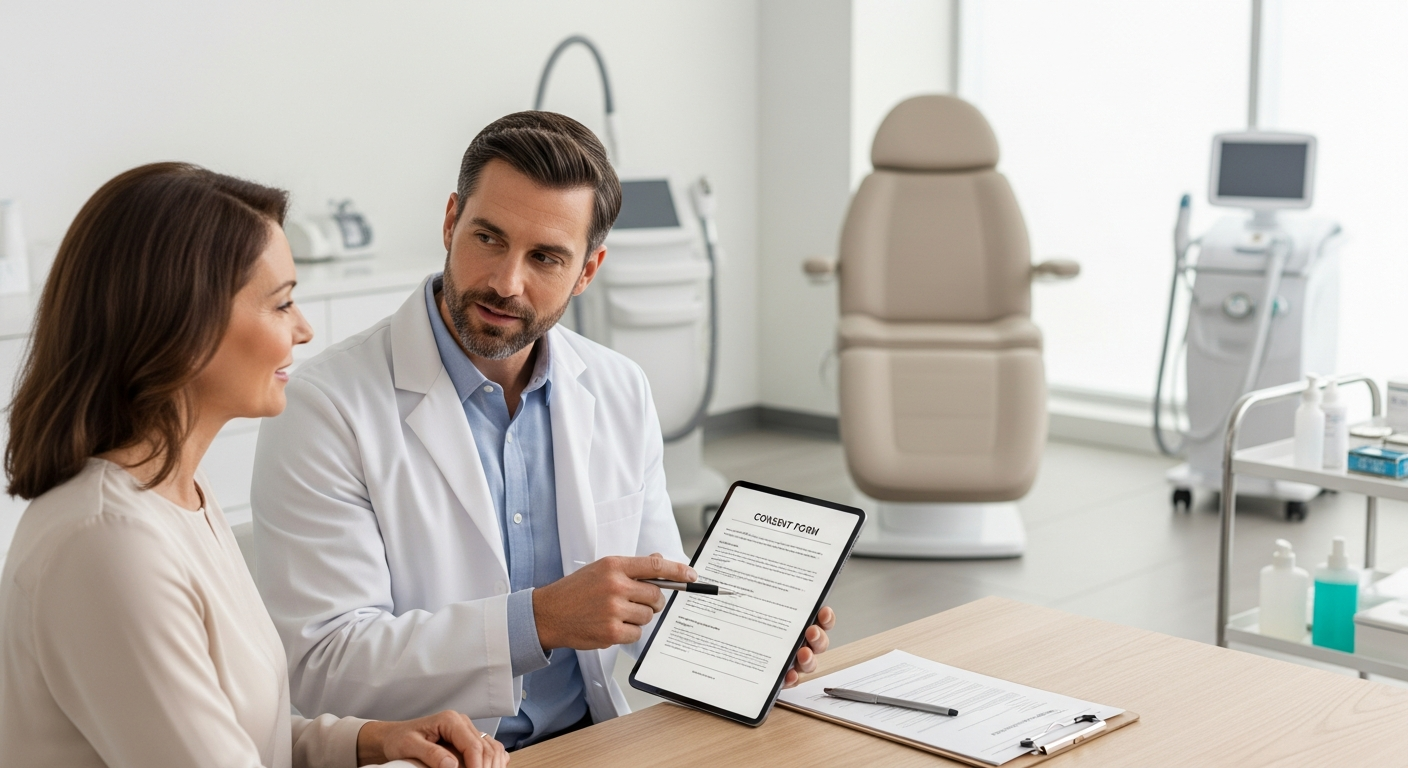
Informed consent in a med spa is a process, not just a signature on a form.
It requires a documented conversation regarding the specific risks, benefits, and alternatives of a treatment.
Providers must ensure the patient understands potential complications before any aesthetic procedure begins.
To strengthen liability protection, the consent process should include:
- Procedure-specific forms that detail common and rare side effects.
- Evidence of a Q&A session where the patient’s concerns were addressed.
- A copy of the signed document provided to the patient for their records.
Structured Incident Reporting Systems
A formal incident reporting system allows a med spa to track and analyze adverse events.
This system should capture the details of the event, the immediate clinical response, and follow-up actions.
Standardized reporting helps the medical director identify patterns and improve safety protocols.
Effective incident reports should be completed immediately after an event occurs.
The documentation must remain objective, focusing on facts rather than opinions or blame.
Consistent reporting is vital for maintaining coverage with professional liability insurance carriers.
Handling Adverse Treatment Outcomes
When an adverse outcome occurs, the med spa must prioritize patient safety and clinical intervention.
Clear communication with the patient is necessary to manage expectations and provide guidance.
Documenting every interaction following an adverse event is critical for defense in the event of a claim.
Internal reviews should follow every significant adverse outcome to determine the root cause.
This may involve assessing equipment functionality, provider technique, or pre-treatment screening.
Continuous improvement based on these findings is a hallmark of a robust risk management strategy.
Liability Reduction Frameworks
Reducing liability requires a comprehensive framework built on Standardized Operating Procedures (SOPs).
These procedures ensure that every provider delivers care according to the medical director’s protocols.
Uniformity in service delivery reduces the likelihood of errors and clinical deviations.
Key elements of a liability reduction framework include:
- Regular staff training on equipment safety and emergency protocols.
- Competency verification for all clinical staff performing aesthetic procedures.
- Supervision guidelines that align with specific state medical board requirements.
Recordkeeping for Legal Compliance
Accurate and thorough recordkeeping is the strongest defense in any med spa liability dispute.
Treatment notes should follow a standardized format, such as SOAP notes, to ensure clinical clarity.
Every entry must be dated, timed, and attributed to the specific provider who performed the service.
Visual documentation is equally important in the med spa environment.
High-quality before and after photos provide objective evidence of treatment outcomes and patient conditions.
Maintaining secure, encrypted storage for these records ensures compliance with patient privacy expectations.
