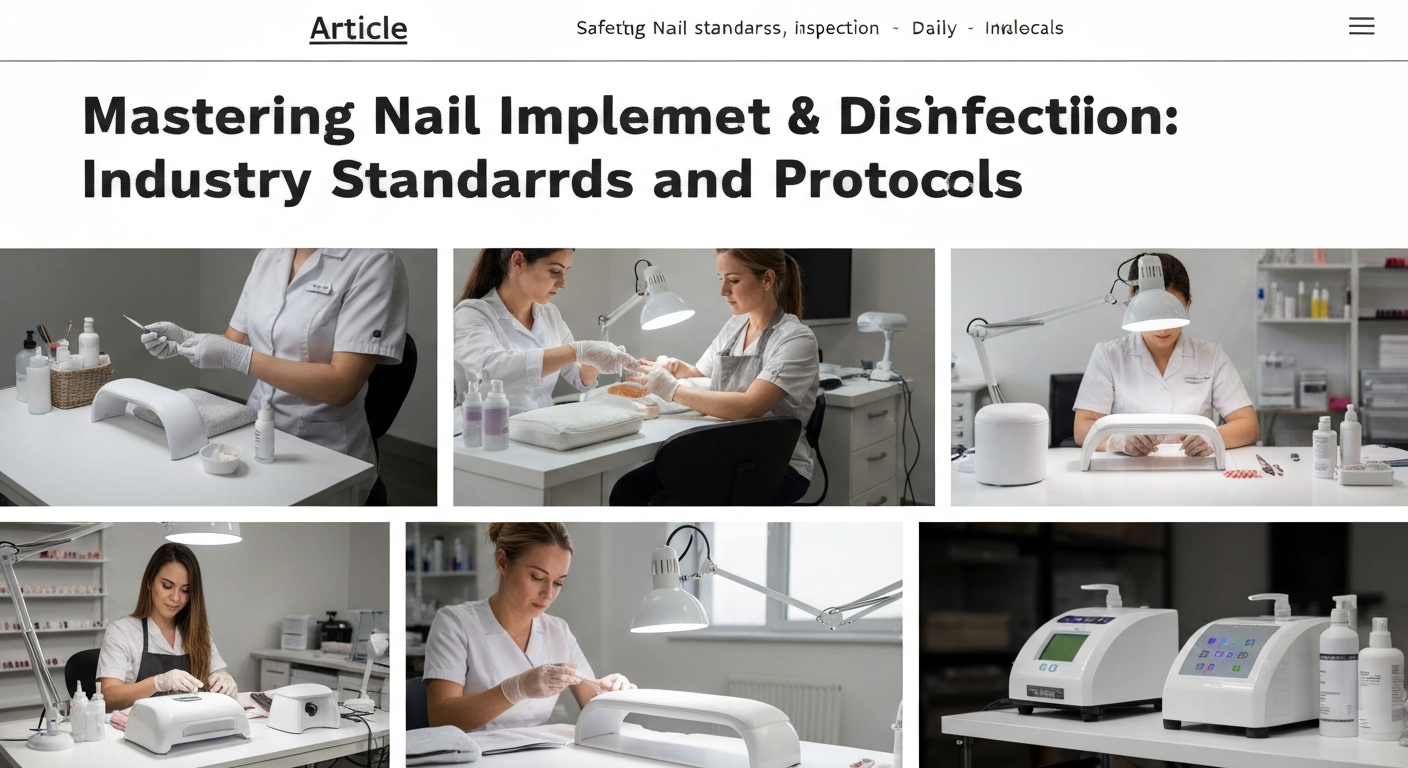
Mastering Nail Implement Disinfection: Industry Standards and Protocols
Maintaing the highest standards of hygiene is the foundation of a professional nail business.
Nail technicians must understand the distinct chemical processes required to control infection.
Failure to follow these protocols risks client safety and your professional license.
The Difference Between Cleaning, Disinfecting, and Sterilizing
Many technicians use these terms interchangeably, but they have distinct definitions in the nail industry.
Cleaning (Sanitizing) is the mechanical removal of visible debris, dust, and skin oils.
You must clean a tool with soap and water before it can be effectively disinfected.
Disinfection kills most bacteria, viruses, and fungi on non-porous surfaces.
This is the standard requirement for all reusable metal tools in the salon.
Sterilization destroys all microbial life, including bacterial spores.
While used in medical settings, hospital-grade disinfection is sufficient for most nail services.
Step-by-Step Disinfection Process for Metal Tools
Follow this workflow for cuticle nippers, metal pushers, and electric file bits.
Skipping steps compromises the efficacy of your EPA-registered disinfectant.
1. Mechanical Scrubbing
Wash implements with warm water and a dedicated scrubbing brush.
Remove all visible gel dust, acrylic residue, and biological matter.
Disinfectants cannot penetrate layers of debris left on the tool.
2. Drying
Thoroughly dry all implements with a clean towel or paper towel.
Placing wet tools into disinfectant dilutes the chemical solution.
An incorrect ratio reduces the solution’s ability to kill pathogens effectively.
3. Total Immersion
Submerge tools completely in an EPA-registered hospital-grade disinfectant.
The liquid must cover the hinge of nippers and the entire shaft of e-file bits.
Adhere strictly to the manufacturer’s recommended contact time, usually 10 minutes.
Managing Porous vs. Non-Porous Supplies
Nail salon supplies fall into two categories: single-use and reusable.
Understanding the difference is critical for cost management and compliance.
Single-Use (Porous) Items
- Nail Files and Buffers: Unless made of metal or glass, these cannot be disinfected.
- Orangewood Sticks: Wood absorbs moisture and bacteria instantly.
- Sanding Bands: These are strictly one-client items for electric files.
- Toe Separators: Foam separators must be discarded after every pedicure.
Reusable (Non-Porous) Items
- Metal Implements: Nippers, pushers, and clippers.
- E-File Bits: Carbide, diamond, and ceramic bits.
- Glass or Crystal Files: These can be scrubbed and immersed in liquid.
- Synthetic Brushes: Gel brushes with synthetic bristles can be cleaned with alcohol.
Proper Storage of Disinfected Tools
Once the disinfection cycle is complete, remove tools with clean tongs or gloved hands.
Rinse them if required by the chemical manufacturer and dry them immediately.
Store clean tools in a covered, labeled container away from dust and debris.
Never store clean tools in an airtight bag if they are still damp.
Trapped moisture encourages bacterial growth and rust on expensive nippers.
Keep your dirty tool container physically separate from your clean tool storage area.
Maintaining Your Disinfectant Solution
Disinfectant solution loses efficacy once it becomes cloudy or contaminated.
Change the solution daily, or sooner if visible debris is present.
Always mix a fresh batch according to the specific ratio on the bottle.
Wear gloves and safety glasses when mixing concentrated chemicals.
Protect your skin and eyes from splashes during the mixing process.
Keep the Safety Data Sheet (SDS) for your disinfectant accessible in the salon.
