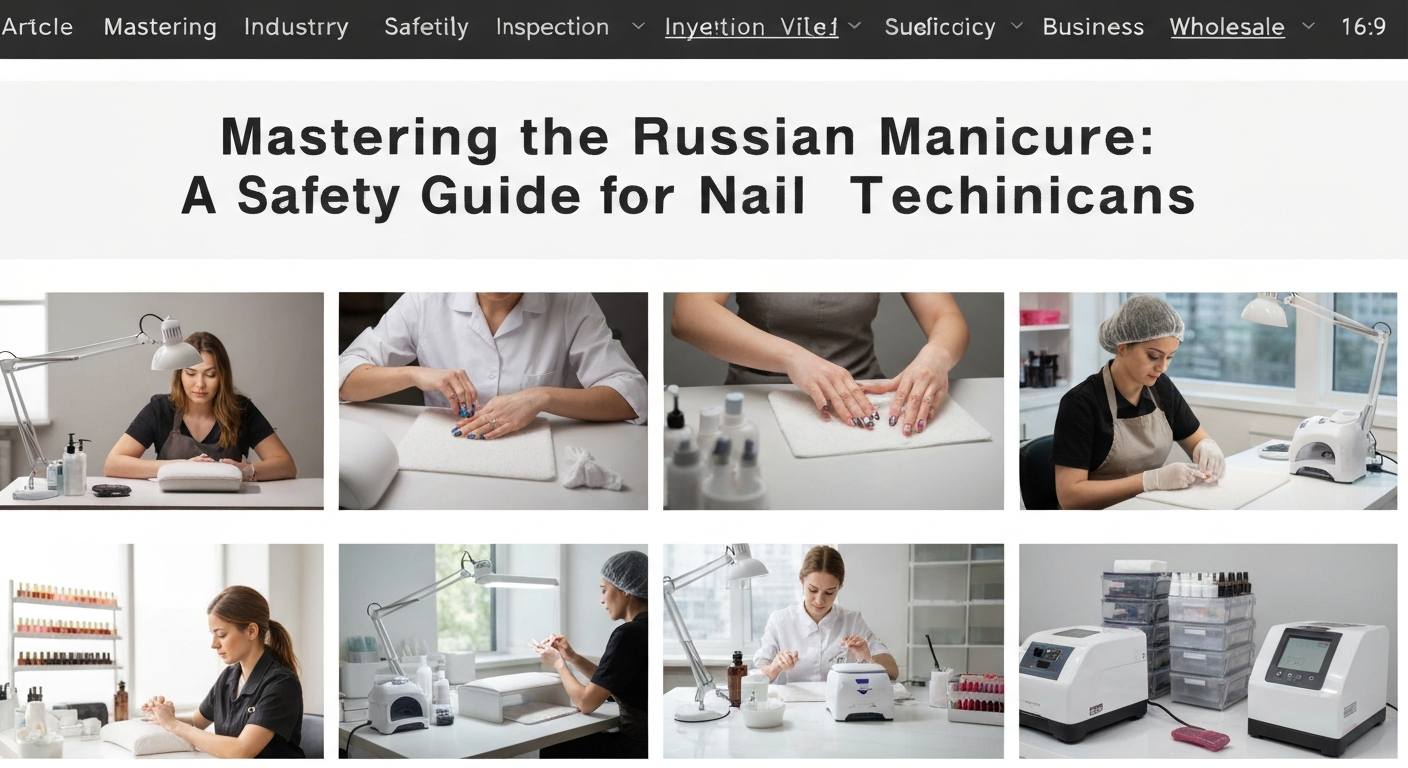
Mastering the Russian Manicure: A Safety Guide for Nail Technicians
The Russian manicure, also known as an e-file manicure or dry manicure, has revolutionized the nail industry.
This technique allows for precise cuticle work and flawless gel application under the proximal nail fold.
However, it requires advanced skill and strict adherence to safety protocols to avoid damaging the natural nail.
For nail technicians, mastering this method is a way to elevate service prices and client retention.
Understanding the “Dry” Manicure Philosophy
Unlike traditional manicures, the Russian method uses no water or cuticle softeners during the prep phase.
Water expands the porous nail plate, which can lead to gel lifting once the nail shrinks back to its natural state.
By working dry, you ensure the nail plate remains perfectly dehydrated for maximum product adhesion.
This method relies entirely on an electric file and specialized diamond bits to exfoliate dead tissue.
Essential Diamond Bits for Cuticle Work
Choosing the correct drill bits is the first step in a safe workflow.
Carbide bits are too aggressive for the natural nail and should only be used for product removal.
For the cuticle area, you must use high-quality diamond bits with the correct grit.
Decoding Bit Color Bands
Industry standards use colored bands on the shank to indicate abrasiveness.
- Yellow (Extra Fine): Best for very sensitive or thin skin.
- Red (Fine): The standard for most cuticle prep work.
- Blue (Medium): Used for callused skin, but requires a light hand.
The Flame Bit
The flame bit is the workhorse of the Russian manicure.
Its tapered shape allows you to lift the proximal nail fold and clear the pterygium from the nail plate.
It creates the “pocket” necessary for deep color application.
The Ball Bit
Once the skirt of dead skin is lifted, the ball bit is used to gently exfoliate and remove it.
This replaces the need for nippers in many cases, sealing the skin to prevent hangnails.
Preventing the “Ring of Fire”
The most common injury associated with improper e-file use is the “ring of fire.”
This refers to over-filing the nail plate near the lunula, causing pain and redness.
To avoid this, you must control your angle, pressure, and speed.
Correct Hand Position and Angle
When using a flame bit, keep the bit parallel to the nail plate.
Never dig the tip of the bit into the nail; the belly of the bit should do the work.
Always use a fulcrum (pinky rest) to stabilize your hand and prevent slipping.
RPM and Torque Settings
Cuticle work does not require high speed.
Operate your e-file between 5,000 and 15,000 RPM depending on the bit size and skin texture.
High speeds increase heat friction and the risk of cutting the client.
Sanitation Standards for Diamond Bits
Because diamond bits have a textured surface, they trap skin cells and biological debris easily.
Standard immersion in disinfectant is often insufficient for cleaning the crevices of a diamond bit.
Follow this strict sanitation workflow for every client:
- Step 1: Scrub bits with a wire brush to remove visible debris.
- Step 2: Process in an ultrasonic cleaner with a disinfectant solution.
- Step 3: Rinse, dry, and package in a sterilization pouch.
- Step 4: Sterilize in a medical-grade autoclave to kill all pathogens.
Contraindications for E-File Manicures
Not every client is a candidate for a deep Russian manicure.
Assess the client’s hands during the consultation phase.
Avoid this technique if the client has inflamed cuticles, open wounds, or signs of paronychia.
Additionally, clients with extremely thin nail plates require a modified, gentler approach.
Conclusion
The Russian manicure sets a high standard for aesthetic results in the nail salon.
It creates a clean canvas that allows gel polish to last 3 to 4 weeks.
However, it is a technique that demands professional training and respect for the natural nail anatomy.
Invest in quality education and tools to perform this service safely and effectively.
