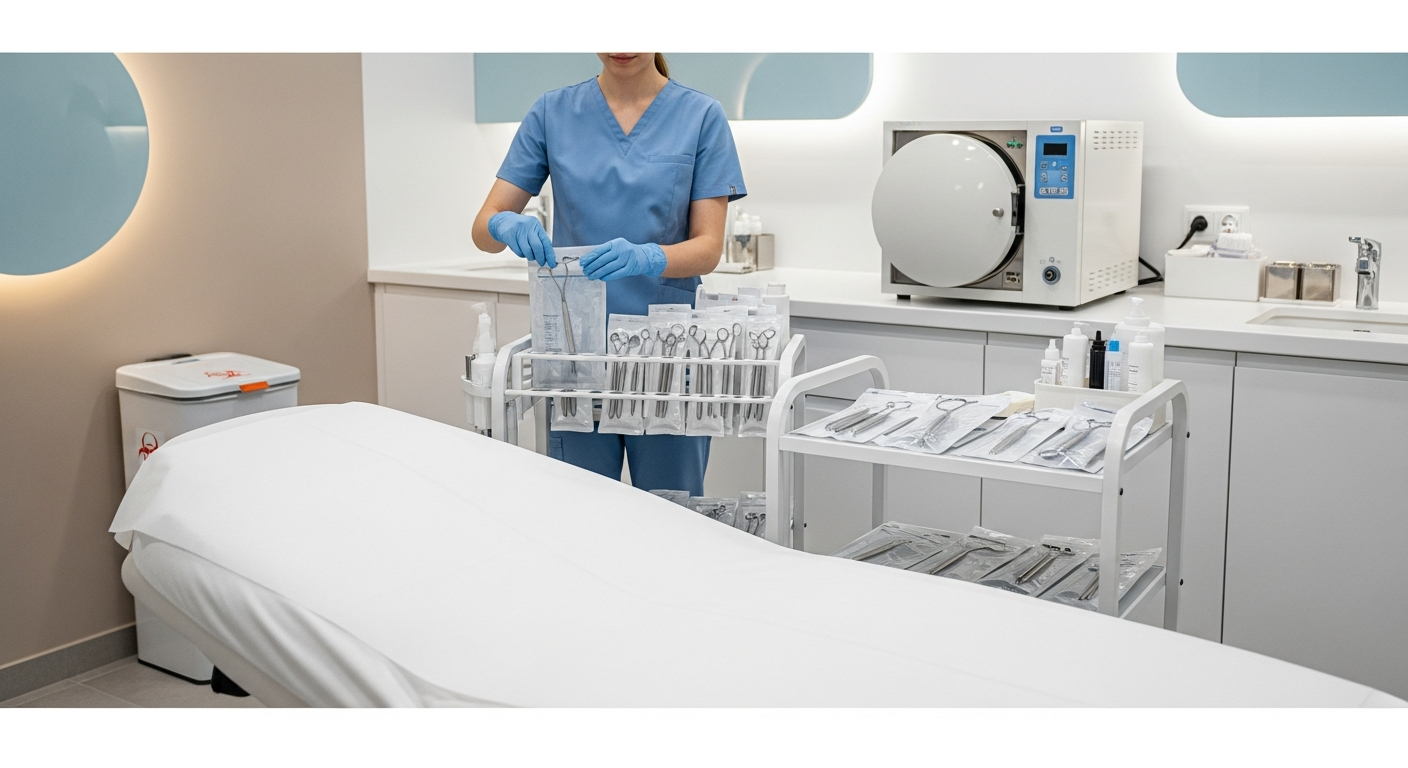
Med Spa Infection Control and Clinical Safety Protocols
Med spa infection control is the systematic implementation of sanitation, disinfection, and sterilization procedures required to prevent the spread of pathogens in aesthetic clinics. These safety protocols follow OSHA standards to protect personnel and clients by ensuring that all treatment surfaces, clinical tools, and practitioner hands remain free from infectious contaminants during daily operations.
OSHA-Aligned Sanitation Practices
Every med spa must establish a written exposure control plan that aligns with federal safety standards. This plan outlines how the facility manages bloodborne pathogens and other potentially infectious materials encountered during aesthetic procedures.
Standard precautions treat all bodily fluids as potentially infectious. Practitioners must use appropriate personal protective equipment, including medical-grade gloves, masks, and eye protection, to create a physical barrier between the staff and the client.
Hand hygiene serves as the foundation of any sanitation system. Staff must wash hands with antimicrobial soap before and after every client contact, following specific scrubbing techniques to ensure all skin surfaces are properly decontaminated.
Treatment Room Disinfection Systems
Treatment rooms require a two-step cleaning and disinfection process between every scheduled appointment. This ensures that the environment remains safe for subsequent clients and prevents the buildup of environmental contaminants.
High-Touch Surface Management
- Treatment Tables: All surfaces must be wiped with EPA-registered disinfectants after removing disposable paper barriers.
- Equipment Controls: Buttons, dials, and handpieces on aesthetic devices require thorough disinfection or the use of protective plastic sleeves.
- Countertops: Workstations where products are mixed or tools are placed must remain clear of clutter to allow for complete surface contact with cleaning agents.
Environmental Cleaning Cycles
Beyond the immediate treatment area, the facility must maintain a daily cleaning log for common zones. This includes disinfecting doorknobs, reception counters, and consultation seating to minimize the risk of community-spread germs.
Waste management is a critical component of room safety. Biohazardous waste, such as used needles or blood-contaminated gauze, must be placed in puncture-proof, labeled containers and disposed of through licensed medical waste services.
Sterilization Standards for Clinical Tools
Any tool that penetrates the skin or comes into contact with compromised tissue must undergo full sterilization. This process goes beyond simple disinfection by destroying all forms of microbial life, including bacterial spores.
The use of an autoclave is the standard for reusable metal instruments. Owners must perform regular spore testing to verify that the equipment is reaching the required pressure and temperature to achieve total sterilization.
Single-use items provide the highest level of safety for many med spa procedures. These items must remain in their original sterile packaging until the moment of use and be discarded immediately after the treatment is completed.
Cross-Contamination Prevention Strategies
Cross-contamination occurs when pathogens are transferred from one surface or person to another. Preventing this requires a strict workflow that separates “clean” areas from “dirty” areas within the treatment room.
Practitioners should avoid touching non-clinical surfaces, such as cabinets or phones, while wearing contaminated gloves. If a surface is touched, it must be added to the disinfection list before the next procedure begins.
Product dispensing also requires careful attention to prevent contamination of bulk supplies. Using disposable spatulas or pumps ensures that the remaining product in a container stays sterile for the next client.
Ongoing Safety Compliance and Training
A culture of safety requires continuous education for all med spa personnel. Regular training sessions ensure that every team member understands the latest clinical standards and knows how to use chemical disinfectants safely.
Monitoring and documentation are essential for maintaining these standards. Detailed logs of sterilization cycles, room cleaning times, and staff vaccinations provide a clear record of the facility’s commitment to client health and safety.
By prioritizing these systematic infection control protocols, med spa owners can provide a professional environment that minimizes risk and maintains the highest levels of clinical integrity.
