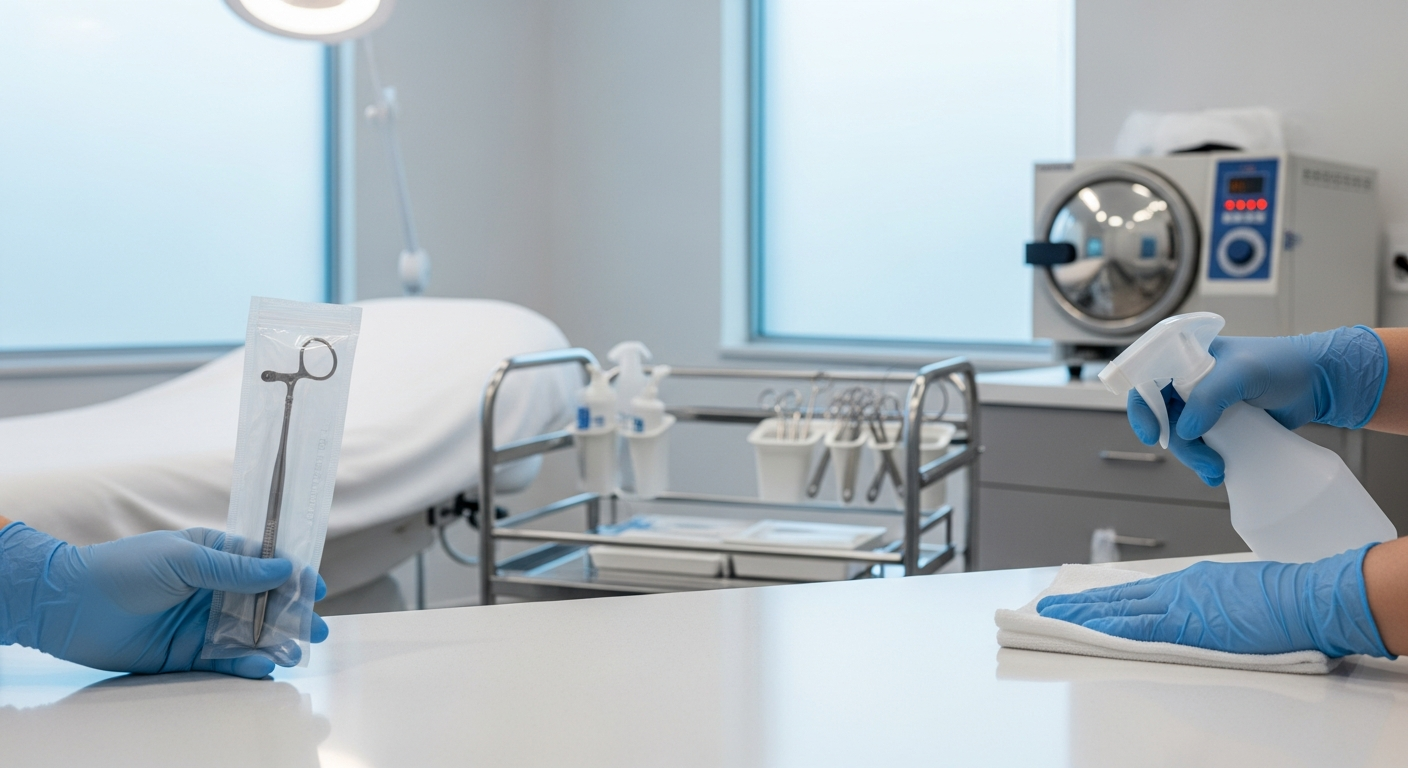
Med Spa Infection Control and Clinical Safety Protocols
Med spa infection control refers to the systematic application of sanitation, disinfection, and sterilization protocols designed to prevent pathogen transmission within aesthetic clinical environments. These OSHA-aligned practices include rigorous treatment room disinfection, proper use of personal protective equipment, and the implementation of high-level sterilization standards for all reusable medical tools and surfaces.
Understanding Standard Precautions in Med Spas
Standard precautions serve as the foundation of med spa infection control by treating all bodily fluids as potentially infectious.
Clinical staff must consistently apply these measures regardless of the perceived risk associated with a specific aesthetic procedure.
Consistent application ensures a baseline of safety for every practitioner and client within the facility.
Hand Hygiene and Personal Protective Equipment
Proper hand hygiene remains the most effective method for preventing the spread of microorganisms between staff and clients.
Staff must use medical-grade gloves and protective eyewear during any treatment that involves potential fluid exposure.
Gloves must be changed between every client and after touching any non-sterile surface during a procedure.
Treatment Room Disinfection and Surface Safety
Treatment rooms require thorough disinfection between every client visit to eliminate surface-level bacteria and viruses.
EPA-registered intermediate-level disinfectants are necessary for cleaning treatment tables, counters, and equipment interfaces.
All surfaces must remain wet for the full contact time specified by the disinfectant manufacturer to ensure efficacy.
High-Touch Surface Protocols
High-touch areas like adjustment handles, stool seats, and magnifying lamps require frequent sanitation throughout the day.
Using disposable barriers on difficult-to-clean equipment provides an additional layer of protection against contamination.
These barriers must be discarded and replaced after each treatment session to maintain a sterile environment.
Instrument Sterilization and Reprocessing Systems
Any tool that penetrates the skin or contacts mucosal membranes must undergo full sterilization before reuse.
Med spas utilize steam autoclaves to ensure all biological contaminants are destroyed through high pressure and heat.
Instruments must be cleaned of all organic debris before being placed into sterilization pouches.
Autoclave Use and Biological Monitoring
Sterilization equipment must be tested regularly using biological indicators to confirm that all pathogens are being killed.
Detailed logs should be kept to document every sterilization cycle, including time, temperature, and pressure readings.
This documentation provides a clinical audit trail that ensures the facility meets state and federal safety requirements.
Preventing Cross-Contamination in Clinical Settings
Preventing cross-contamination involves establishing clear “clean” and “dirty” zones within the med spa facility.
Single-use items must be disposed of immediately in appropriate biohazard or sharps containers to maintain a sterile field.
Staff should never reach into clean supply drawers with contaminated gloves or used instruments.
Proper waste management is a critical component of preventing the spread of bloodborne pathogens in the workplace.
Sharps containers must be puncture-resistant and located as close as possible to the point of use for immediate disposal.
Maintaining these systematic safety processes protects the health of the community and the integrity of the clinical practice.
