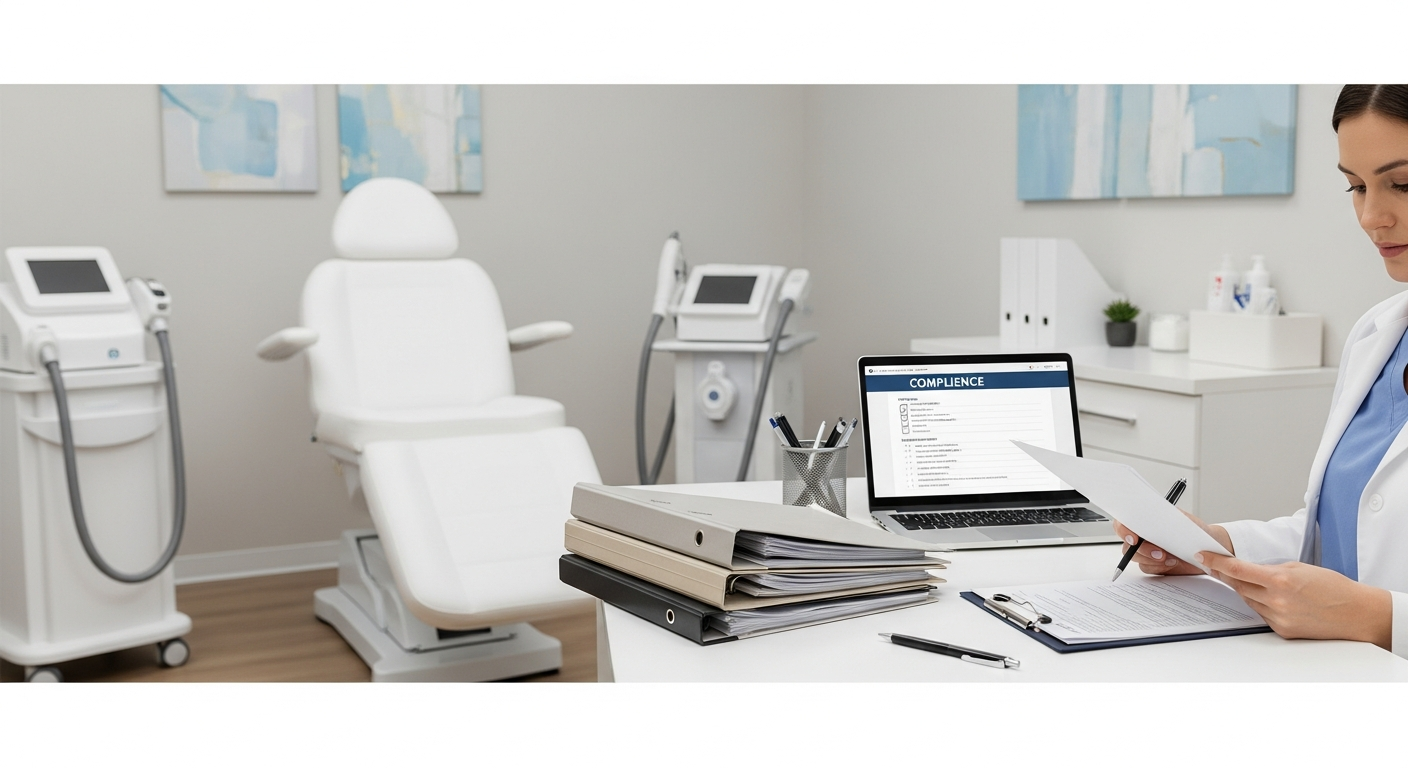
Med Spa Infection Control and Clinical Safety Standards
Med spa infection control refers to the systematic implementation of sanitation, disinfection, and sterilization protocols designed to prevent the spread of pathogens during aesthetic treatments. These OSHA-aligned practices protect both clients and providers by establishing rigorous standards for treatment room hygiene, tool processing, and cross-contamination prevention in a clinical setting.
Regulatory Alignment and OSHA Standards
Med spas operate as treatment-based facilities requiring strict adherence to clinical safety regulations.
Following OSHA Bloodborne Pathogens Standards is mandatory for protecting staff and clients from infectious materials.
These federal guidelines dictate how facilities manage sharps, biological waste, and surface decontamination.
Compliance managers must maintain comprehensive safety manuals detailing every hygiene process.
Staff training should occur annually to ensure all team members understand current sterilization benchmarks.
Proper documentation of these activities is essential for maintaining a legally compliant clinical environment.
Systematic Treatment Room Disinfection
Pre-Treatment Preparation
Safety begins before the client enters the treatment room by clearing all non-essential items.
Technicians must apply EPA-registered disinfectants to all high-touch surfaces, including treatment tables and stools.
Single-use barriers should be applied to equipment that cannot be easily submerged or chemically scrubbed.
Post-Treatment Sanitation
Immediate disposal of single-use items prevents the accidental spread of contaminants between sessions.
All clinical waste must be placed in appropriate receptacles, with sharps stored in puncture-resistant containers.
Surface disinfection must follow specific manufacturer contact times to ensure the total elimination of pathogens.
Sterilization and Tool Management
Reusable instruments require a multi-stage decontamination process to ensure they are safe for use.
The process starts with manual cleaning to remove visible debris and bioburden from the tools.
Instruments then undergo high-level disinfection or steam sterilization to achieve total microbial destruction.
Sterilization equipment must be tested regularly using biological indicators to verify functional efficacy.
Processed tools should be stored in sealed, dated pouches to maintain their sterile state until the next use.
Any tool that cannot be sterilized or properly disinfected must be treated as a single-use disposable item.
Preventing Cross-Contamination
Hand hygiene is the most critical factor in preventing the transfer of germs within a med spa.
Clinicians must wash hands or use clinical-grade sanitizer before and after every client contact.
Gloves should be changed immediately if they become compromised or when moving between different tasks.
Establishing “clean” and “dirty” zones within the facility prevents the mixing of sterile and used supplies.
Trays used for transporting tools must be disinfected after every use to maintain the integrity of the workspace.
Consistent use of Personal Protective Equipment, including masks and eye protection, further reduces environmental risks.
