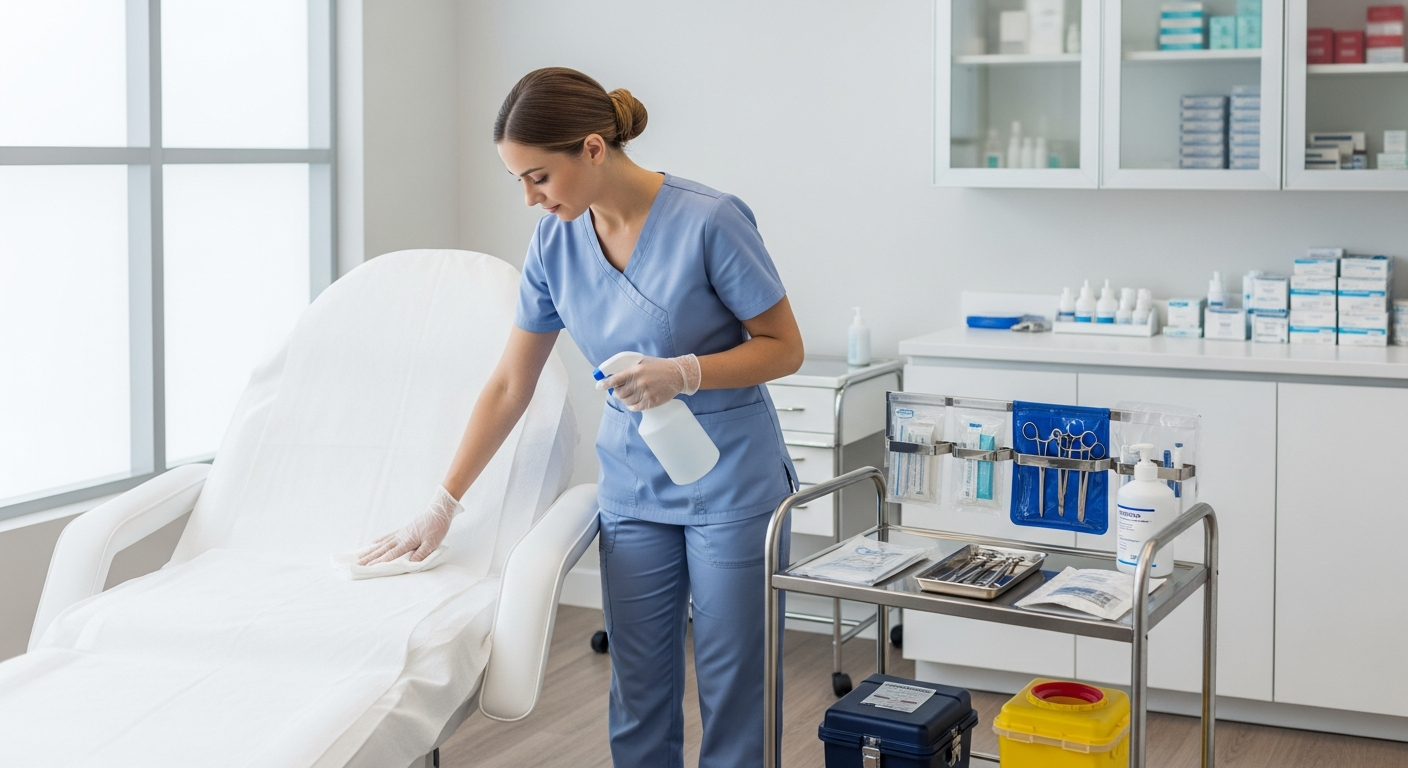
Med Spa Infection Control: Clinical Safety Standards
Med spa infection control is the implementation of systematic sanitation, disinfection, and sterilization protocols used to prevent the transmission of pathogens during aesthetic procedures. These clinical safety standards include rigorous surface cleaning, proper personal protective equipment usage, and strict adherence to OSHA-aligned biohazard disposal to ensure a sterile treatment environment for clients and staff.
Standard Precautions and Hand Hygiene
Hand hygiene remains the most critical component of a med spa infection control program.
Clinical staff must perform thorough handwashing with antimicrobial soap before and after
every client contact to prevent cross-contamination.
Alcohol-based hand rubs are acceptable for use between treatment steps if hands
are not visibly soiled. Consistency in these practices reduces the
risk of transferring microorganisms from staff to clinical surfaces.
Gloves must be changed between every client and after touching any non-sterile
surface during a procedure. Wearing gloves does not replace the necessity
for frequent and proper handwashing techniques.
Environmental Surface Disinfection Protocols
Treatment rooms require high-level disinfection between every appointment to
maintain a safe clinical environment. All high-touch surfaces, such as
treatment tables, counters, and equipment, must be addressed.
Facilities should utilize EPA-registered, hospital-grade disinfectants that
are effective against a broad spectrum of pathogens. The disinfectant
must remain wet on the surface for the full manufacturer-recommended contact time.
Treatment Room Turnaround Procedures
All disposable barriers, including table paper and headrest covers, must be
discarded immediately after use. Surfaces underneath these barriers
still require active disinfection before a new barrier is applied.
Technicians must organize workstations to separate clean supplies from contaminated
items. This physical separation prevents the accidental spread of bacteria
or viruses during complex aesthetic treatments.
Sterilization and Instrument Management
Instruments that penetrate the skin or contact mucous membranes require the
highest level of med spa infection control. These items
must undergo professional-grade sterilization or be disposed of as single-use items.
Steam sterilization via autoclave is the industry standard for reusable
stainless steel tools. Every sterilization cycle must be monitored
with chemical indicators to verify that the required temperature was reached.
Single-Use vs. Reusable Devices
Strict adherence to single-use labeling is mandatory for clinical safety.
Items intended for one-time use, such as needles or certain
applicators, must never be cleaned or reused on another client.
Reusable devices must be cleaned of all organic debris before
entering the sterilization chamber. Failure to remove bioburden can
shield pathogens from the sterilization process, rendering it ineffective.
OSHA Compliance and Biohazard Disposal
Managing clinical waste is a fundamental pillar of med spa infection control
and regulatory compliance. Proper segregation of waste prevents
accidental needle sticks and exposure to bloodborne pathogens.
- Sharps must be discarded in puncture-resistant, leak-proof containers.
- Biohazard bags should be used for items saturated with blood.
- Waste containers must be closed when not in active use.
Staff training on Bloodborne Pathogens (BBP) must be conducted annually
to ensure everyone understands current safety standards. Documentation of
this training is required for facility compliance and clinical safety records.
Maintaining a detailed log of sterilization cycles and safety inspections
provides an audit trail for health departments. These systematic
processes ensure the facility remains a safe space for advanced aesthetic care.
