Med Spa Regulations: A Guide to Compliance and Licensing
Med spa regulations are state-level laws and medical board rules that dictate how aesthetic clinics must operate, supervise staff, and deliver treatments. These regulations establish who can own a practice, the level of physician supervision required for procedures, and the specific licensing credentials necessary for practitioners to perform medical-grade aesthetic services.
State-Specific Med Spa Regulations and Ownership
Most states follow the Corporate Practice of Medicine doctrine. This legal principle generally requires that a physician or a physician-owned corporation must own the medical portion of the business.
Owners must verify their state’s specific entity requirements to ensure legal compliance. Failure to structure the business correctly can lead to heavy fines or the loss of medical licenses for the parties involved.
State laws also dictate how “MSO” or Management Services Organization agreements must be structured. These agreements allow non-physicians to manage the administrative side of a med spa without practicing medicine.
Professional Licensing and Supervision Requirements
Medical Director Responsibilities
A medical director provides essential oversight for all clinical procedures performed within the facility. They are responsible for developing medical protocols and ensuring high safety standards for every patient.
Supervision levels vary significantly by state, ranging from mandatory on-site presence to remote availability via telecommunication. The medical director is ultimately responsible for the delegated medical acts performed by staff.
Practitioner Scope of Practice
Regulations strictly define what treatments nurses, physician assistants, and estheticians can perform. Injectables and high-energy lasers are almost universally classified as medical acts rather than cosmetic services.
Practitioners must operate within the specific scope granted by their respective professional boards. Performing treatments outside of this scope is considered the unlicensed practice of medicine and carries severe legal penalties.
Maintaining Inspection Readiness Standards
State boards of medicine or nursing may conduct unannounced inspections of med spa facilities. Clinics must maintain clean, sterile environments and ensure all medical equipment is properly calibrated and serviced.
Emergency kits and complication protocols must be readily accessible to all clinical staff members. Inspectors often check for the presence of appropriate reversal agents, such as hyaluronidase, in areas where fillers are administered.
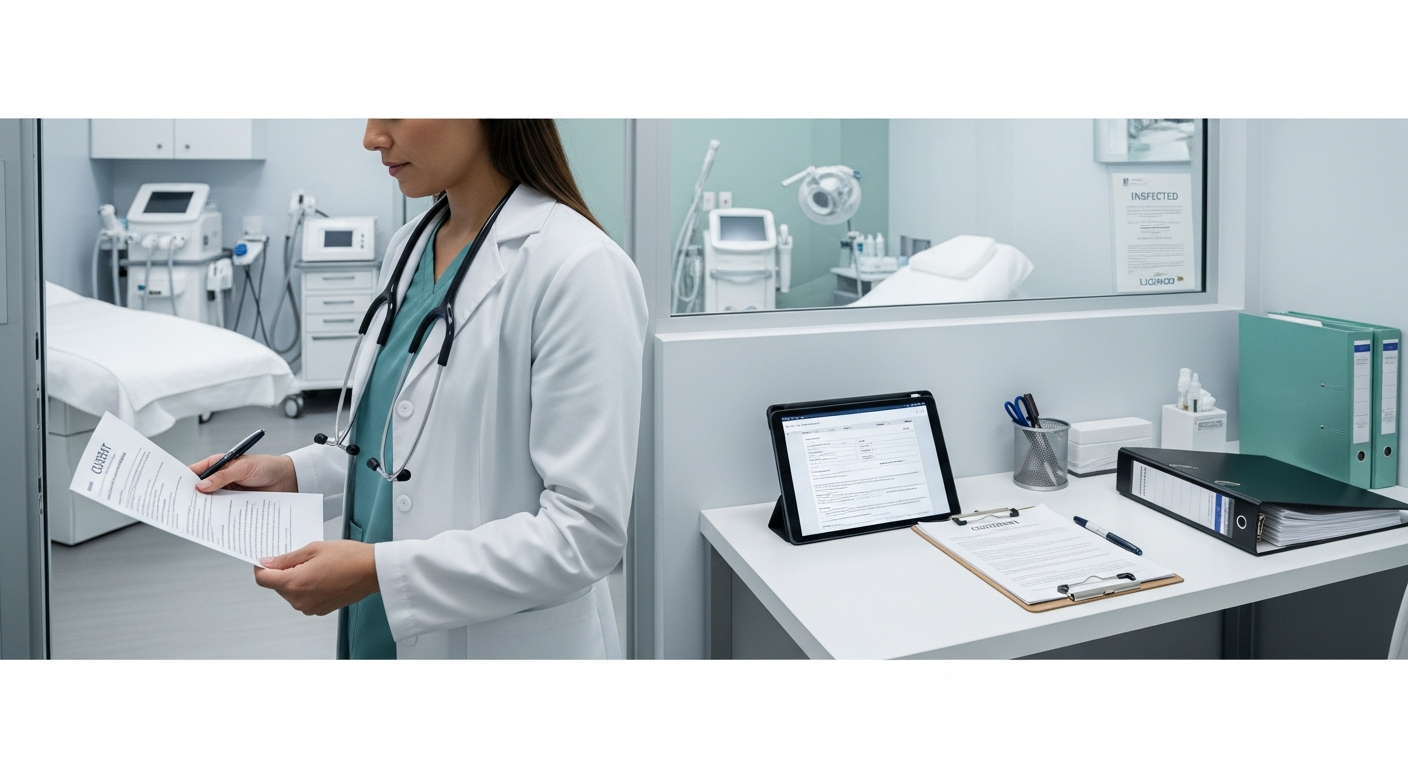
Staff training records should be organized and available for review at any time. Demonstrating that every provider has received specific training for the devices they operate is a core component of inspection readiness.
Essential Compliance Documentation Basics
Detailed patient records are a mandatory component of regulatory compliance in the United States. Every new patient treatment requires a Good Faith Examination (GFE) performed by a qualified healthcare provider.
Informed consent forms must be signed and must clearly outline the specific risks and benefits of each procedure. These documents serve as a legal record that the patient was educated before receiving a medical treatment.
Maintain consistent logs for drug inventory, device maintenance, and clinical staff certifications. Robust documentation serves as the primary defense for a med spa during a regulatory audit or legal inquiry.
