Med Spa Regulations and Compliance Standards
Med spa regulations are state-level laws that govern the ownership, medical supervision, and clinical operations of aesthetic facilities. These mandates require that medical procedures, such as neurotoxin injections and laser treatments, be performed by licensed professionals under the oversight of a qualified medical director to ensure patient safety and legal compliance.
The Corporate Practice of Medicine Doctrine
Most U.S. states follow the Corporate Practice of Medicine (CPOM) doctrine, which prohibits non-physicians from owning medical practices. In these jurisdictions, a med spa is legally classified as a medical office rather than a traditional salon.
Non-physician entrepreneurs often utilize a Management Services Organization (MSO) model to partner with a physician. This structure allows the MSO to handle administrative tasks while the physician-owned entity manages all clinical services.
Medical Director and Supervision Requirements
Every med spa must have a designated Medical Director, typically a licensed physician, who assumes responsibility for clinical outcomes. The director ensures that all medical protocols align with state board of medicine standards.
Supervision levels vary by state, ranging from “on-site” presence to “available by phone.” Compliance requires documenting exactly how the medical director oversees practitioners and handles potential emergencies.
The Importance of the Good Faith Exam
A Good Faith Exam (GFE) is a mandatory clinical evaluation performed before a patient receives a new medical treatment. This initial assessment must be conducted by a physician, Nurse Practitioner, or Physician Assistant.
Performing medical procedures without a documented GFE is a frequent source of regulatory citations. The exam ensures the patient is a safe candidate for the requested aesthetic procedure.
Scope of Practice for Aesthetic Providers
State boards of nursing and medicine define the legal scope of practice for Registered Nurses, Estheticians, and mid-level providers. Not all practitioners can legally perform every procedure offered in a med spa.
For example, in many states, an esthetician may not perform “ablative” laser treatments or inject dermal fillers. Business owners must verify that every employee’s license allows for the specific tasks they are assigned.
Inspection Readiness and Safety Standards
State agencies may conduct unannounced inspections to ensure the facility meets health and safety codes. Inspectors look for proper sterilization techniques, expired medications, and appropriate biohazard disposal.
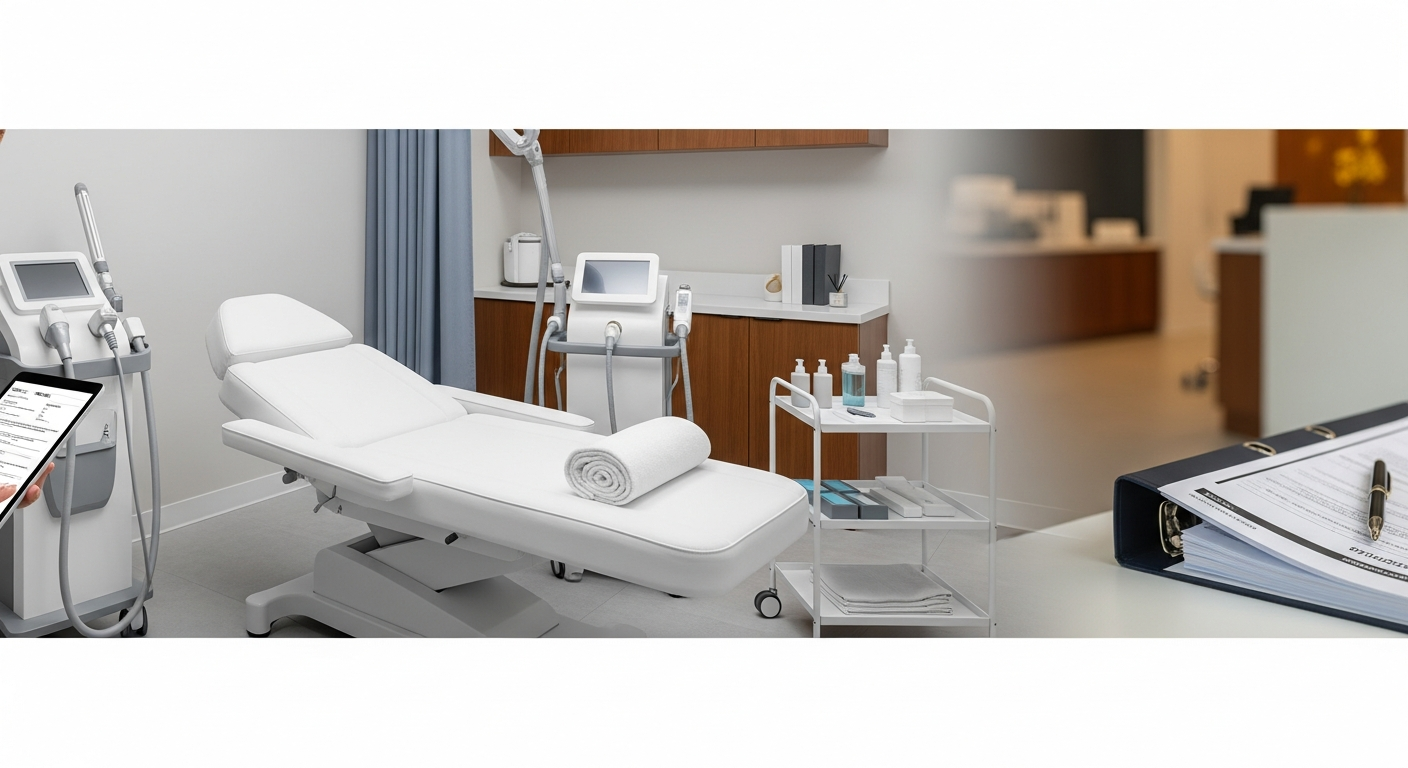
Maintaining an organized compliance binder is essential for inspection readiness. This binder should include staff licenses, equipment maintenance logs, and updated Standard Operating Procedures (SOPs).
Essential Compliance Documentation Basics
Accurate medical record-keeping is a legal requirement for every med spa operating in the United States. Each patient file must contain informed consent forms, treatment notes, and pre-and-post-procedure instructions.
- HIPAA-compliant digital or physical storage systems
- Standard Operating Procedures (SOPs) for all medical treatments
- Adverse event reporting protocols and documentation
- Proof of professional liability insurance for all providers
Strict adherence to these documentation standards protects the clinic during legal disputes or board investigations. Compliance should always be prioritized over operational shortcuts to ensure long-term business stability.
