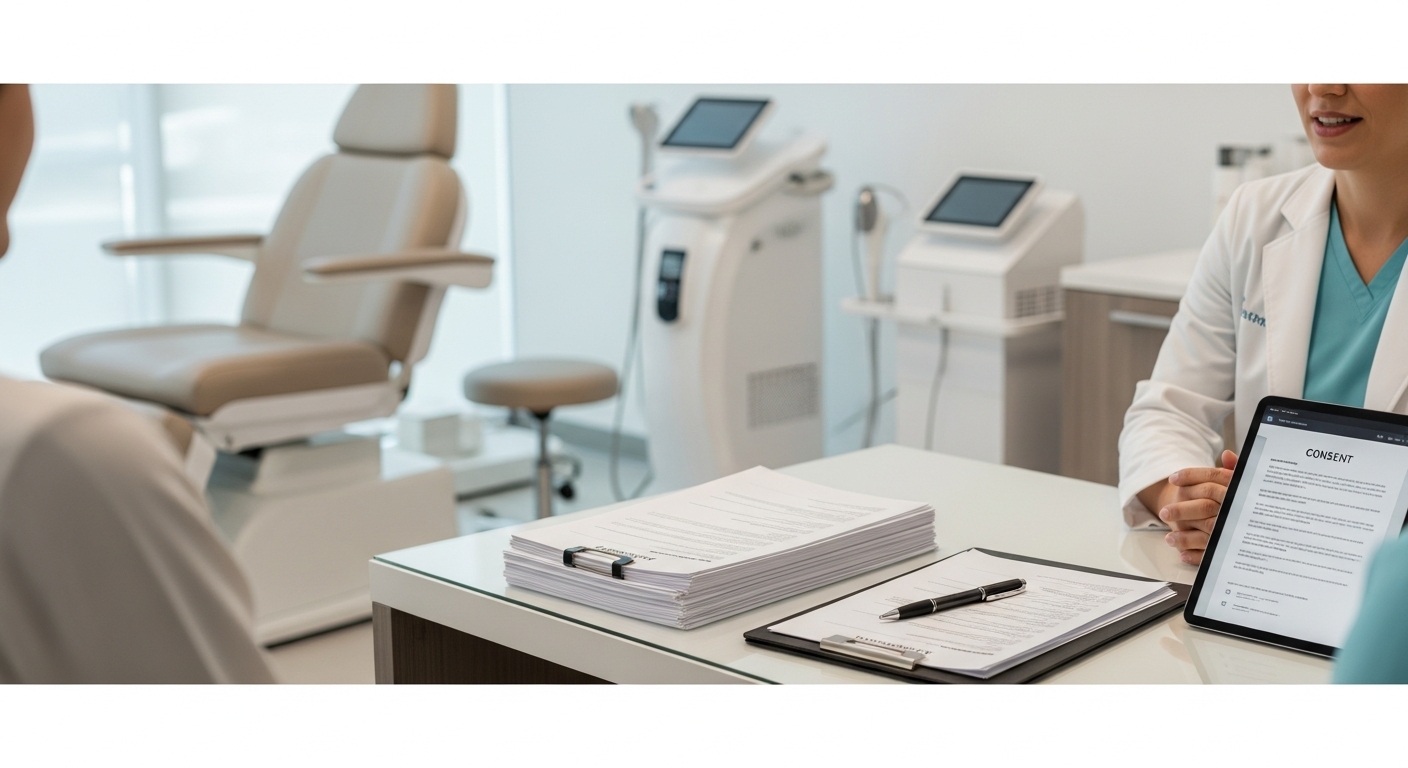
Med Spa Risk Management and Liability Protection
Med spa risk management is the systematic process of identifying, assessing, and mitigating potential liabilities within an aesthetic clinic. It focuses on implementing rigorous documentation standards, comprehensive informed consent protocols, and structured incident reporting systems to ensure patient safety while protecting the facility from legal exposure and regulatory non-compliance.
Informed Consent as a Foundation for Liability Reduction
Informed consent is more than a signed form; it is a documented educational process between the practitioner and the patient. It serves as evidence that the patient was fully aware of the risks before a procedure.
Med spa practitioners must record that the patient understands potential complications, treatment benefits, and available alternatives. This conversation must be captured in the clinical notes to demonstrate a thorough exchange of information.
Proper documentation ensures that the patient’s voluntary agreement to proceed is legally defensible. A signature alone is often insufficient if the record does not reflect a verbal review of specific treatment risks.
Implementing Structured Incident Reporting Systems
A formal incident reporting system captures every deviation from expected clinical outcomes or safety protocols within the med spa. This system provides a clear paper trail for internal quality control.
These reports should be completed immediately following any adverse event or “near miss” during a cosmetic treatment. Prompt reporting ensures that details are recorded accurately while the event is fresh in the minds of staff.
Documenting the facts, witnesses, and immediate corrective actions helps identify operational weaknesses. Consistent reporting allows the medical director to implement changes that prevent future occurrences and lower overall liability.
Handling Adverse Treatment Outcomes Professionally
When a patient experiences a complication, the med spa must follow a predetermined response framework. This framework prioritizes patient safety while managing the clinic’s legal profile.
Documentation during an adverse event should include detailed clinical observations and the specific follow-up instructions provided. All subsequent patient communications, including phone calls and emails, must be saved in the patient file.
Maintaining an objective and professional tone in all records is vital for risk management. Accurate charting prevents the appearance of negligence or poor management during potential legal or regulatory reviews.
Recordkeeping Standards for Compliance
Med spa records must be accurate, objective, and timely to withstand scrutiny from state boards and insurance carriers. Incomplete records are a primary vulnerability in liability cases.
Consistent use of standardized templates ensures that every patient interaction meets professional liability requirements. These templates should prompt staff to record vital signs, lot numbers for injectables, and specific device settings.
Secure and organized storage of these records is mandatory for maintaining patient privacy and long-term protection. Structured recordkeeping demonstrates a commitment to high clinical standards and operational transparency.
Essential Elements of a Liability Reduction Framework
- Regular reviews of treatment protocols by the medical director.
- Verification of staff credentials and clinical competency assessments.
- Clear communication channels for reporting safety concerns internally.
- Strict adherence to pre-treatment screening and post-care delivery.
A comprehensive framework integrates these elements into daily operations. By prioritizing documentation and standardized procedures, med spa owners can significantly reduce their exposure to professional liability claims.
