Med Spa Risk Management: Essential Liability Protocols
Med spa risk management is a strategic framework designed to identify, assess, and mitigate legal and clinical liabilities within an aesthetic practice. It involves implementing structured documentation systems, rigorous informed consent protocols, and detailed incident reporting to ensure regulatory compliance and protect the business from claims arising from adverse treatment outcomes.
The Role of Informed Consent in Liability Reduction
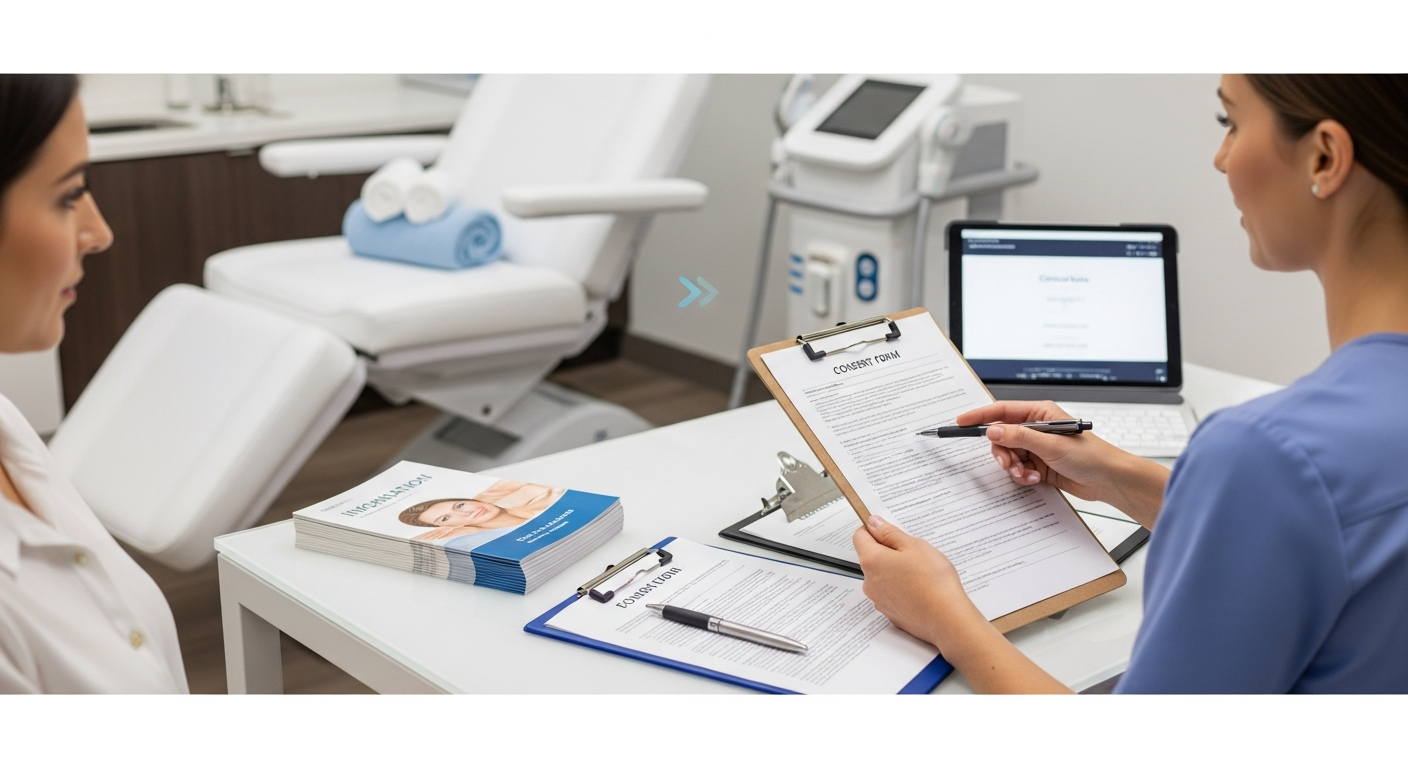
Informed consent serves as the primary defense against claims of negligence in a med spa. It is a communication process where providers explain the risks, benefits, and alternatives of a procedure to the patient.
Documentation must prove that the patient understood the specific potential complications of an aesthetic treatment. A signed form alone is insufficient without a recorded clinical discussion in the patient’s chart.
Effective consent protocols require that patients are given ample time to ask questions before the procedure begins. This transparency reduces the likelihood of litigation by aligning patient expectations with realistic clinical outcomes.
Establishing Robust Incident Reporting Systems
An incident reporting system tracks every deviation from expected treatment outcomes or safety protocols. This data allows med spa owners to identify patterns and address potential clinical gaps before they escalate.
Reports should be factual, objective, and completed immediately following an adverse event or “near-miss” situation. They provide a chronological account that is vital for defense in the event of a board inquiry.
A standardized reporting form ensures that all necessary details, such as device settings and anatomical locations, are captured consistently. This structured approach facilitates a thorough internal review of the incident.
Clinical Recordkeeping and Documentation Standards
Accurate recordkeeping is the cornerstone of med spa compliance and risk mitigation. Every patient interaction, including phone calls and follow-up instructions, must be captured in the medical chart.
Entries should be contemporaneous and clearly indicate the provider’s clinical rationale for specific treatment settings. Consistent records demonstrate that the clinic consistently adheres to the established standard of care.
In the legal environment of a med spa, missing documentation is often interpreted as a failure to perform the service correctly. Maintaining detailed logs of skin assessments and pre-treatment photos is essential.
Managing Adverse Outcomes and Patient Complications
Adverse outcomes are an inherent risk in aesthetic medicine that require immediate and structured responses. Handling these events through a pre-defined framework reduces the likelihood of a formal legal claim.
Providers must document the objective clinical findings of the complication and the specific remedial steps taken to assist the patient. Detailed follow-up notes show the clinic’s commitment to patient safety and resolution.
Maintaining professional and empathetic communication during an adverse event preserves the patient-provider relationship. Documenting these interactions helps prove that the med spa acted responsibly under the circumstances.
Structural Frameworks for Operational Safety
Standardized operational frameworks ensure that every staff member follows the same safety and documentation steps. This consistency prevents human error from creating unnecessary legal exposure for the clinic.
Regular audits of patient charts and consent forms help maintain high standards of internal compliance. These checks confirm that the med spa risk management system is functioning as intended across all departments.
Clear protocols for escalation ensure that medical directors are notified immediately of high-risk situations. A defined chain of command is critical for mitigating liability in a fast-paced medical environment.
