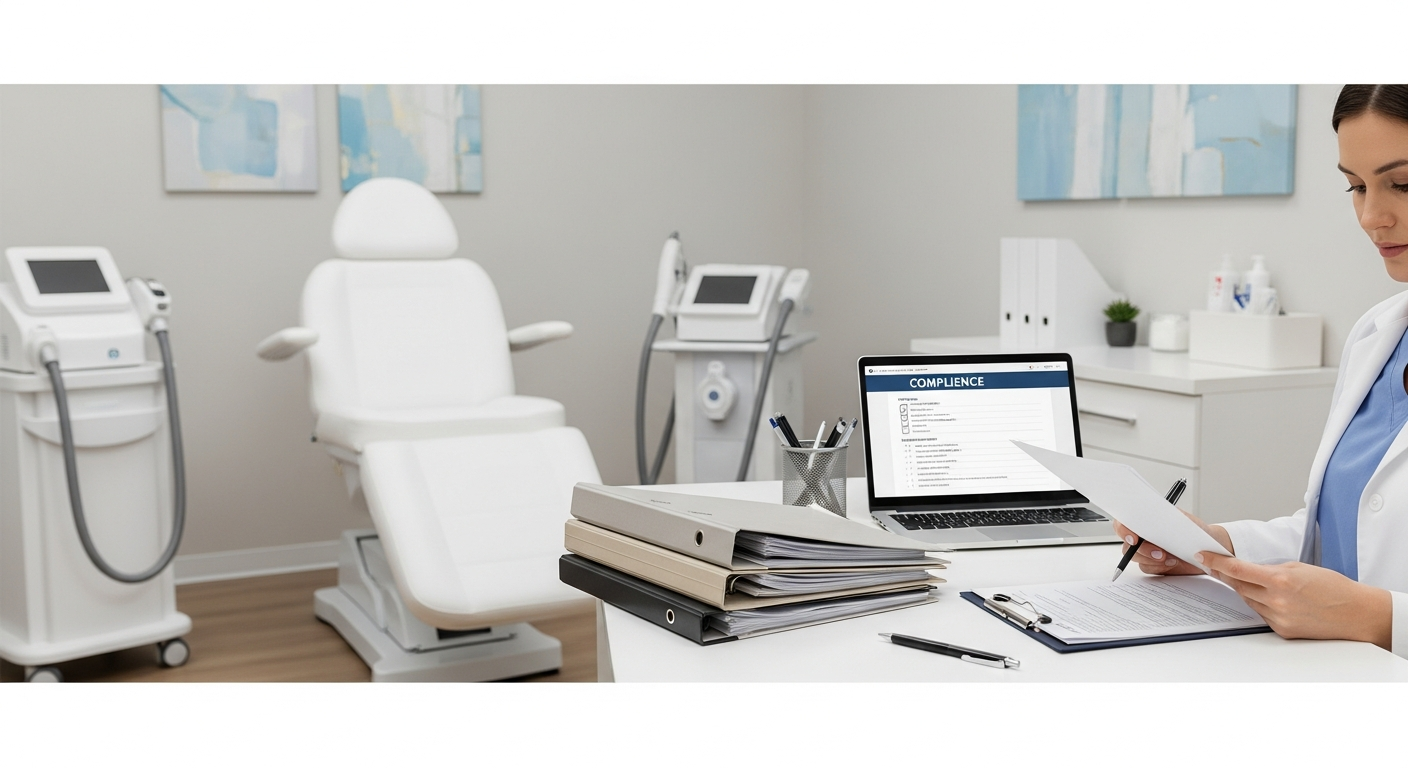
Navigating Med Spa Regulations in the United States
Med spa regulations are the state-specific laws and medical board rules governing the legal operation of aesthetic clinics in the United States. These mandates define the required medical director supervision, professional licensing for practitioners, and the scope of practice for non-physician providers performing medical procedures like injectables and laser treatments.
Understanding State-Specific Med Spa Regulations
Med spa laws vary significantly by state because most aesthetic treatments are classified as the practice of medicine.
Compliance requires following the specific rules set by state medical and nursing boards regarding facility ownership.
Many states follow the Corporate Practice of Medicine doctrine, requiring a physician to own the majority of the business.
Licensing and Medical Supervision Requirements
A qualified medical director is essential for overseeing clinical operations and ensuring patient safety within the facility.
The medical director must provide appropriate supervision based on state-level requirements for nurses and estheticians.
Licensing standards dictate which professionals can legally perform neurotoxin injections, dermal fillers, and high-energy laser therapies.
Defining the Legal Scope of Aesthetic Practice
The scope of practice defines the specific medical procedures a practitioner is authorized to perform based on their professional license.
Registered nurses, physician assistants, and nurse practitioners have different levels of autonomy depending on the state jurisdiction.
Practicing outside of a licensed scope can lead to heavy fines, license revocation, and the permanent closure of the facility.
Maintaining Inspection Readiness Standards
State boards and health departments may conduct unannounced inspections to verify that the med spa meets all health and safety standards.
Inspectors look for proper sanitation protocols, biohazardous waste disposal, and the presence of required emergency medical kits.
Maintaining a clean, organized clinical environment is the first step in passing a surprise regulatory audit successfully.
Essential Compliance Documentation Basics
Accurate documentation is the foundation of a legally compliant med spa and protects the business against potential malpractice claims.
Clinics must maintain detailed patient charts, signed informed consent forms, and comprehensive treatment records for every medical procedure performed.
Standard operating procedures should be documented and accessible to all staff members to ensure consistent care and regulatory adherence.
Professional Record Keeping
- Informed Consent: Every patient must sign documents detailing the risks and benefits of medical aesthetic treatments.
- Supervision Agreements: Written protocols between the medical director and mid-level practitioners must be kept on-site.
- Credential Verification: Facilities must maintain copies of current licenses for every healthcare provider operating in the clinic.
Safety and Protocol Manuals
Written protocols ensure that all staff members follow the same safety standards during every patient interaction.
These manuals should include emergency response plans for adverse events, such as vascular occlusions or allergic reactions.
Regularly updating these documents ensures the med spa remains compliant with evolving state board regulations.
