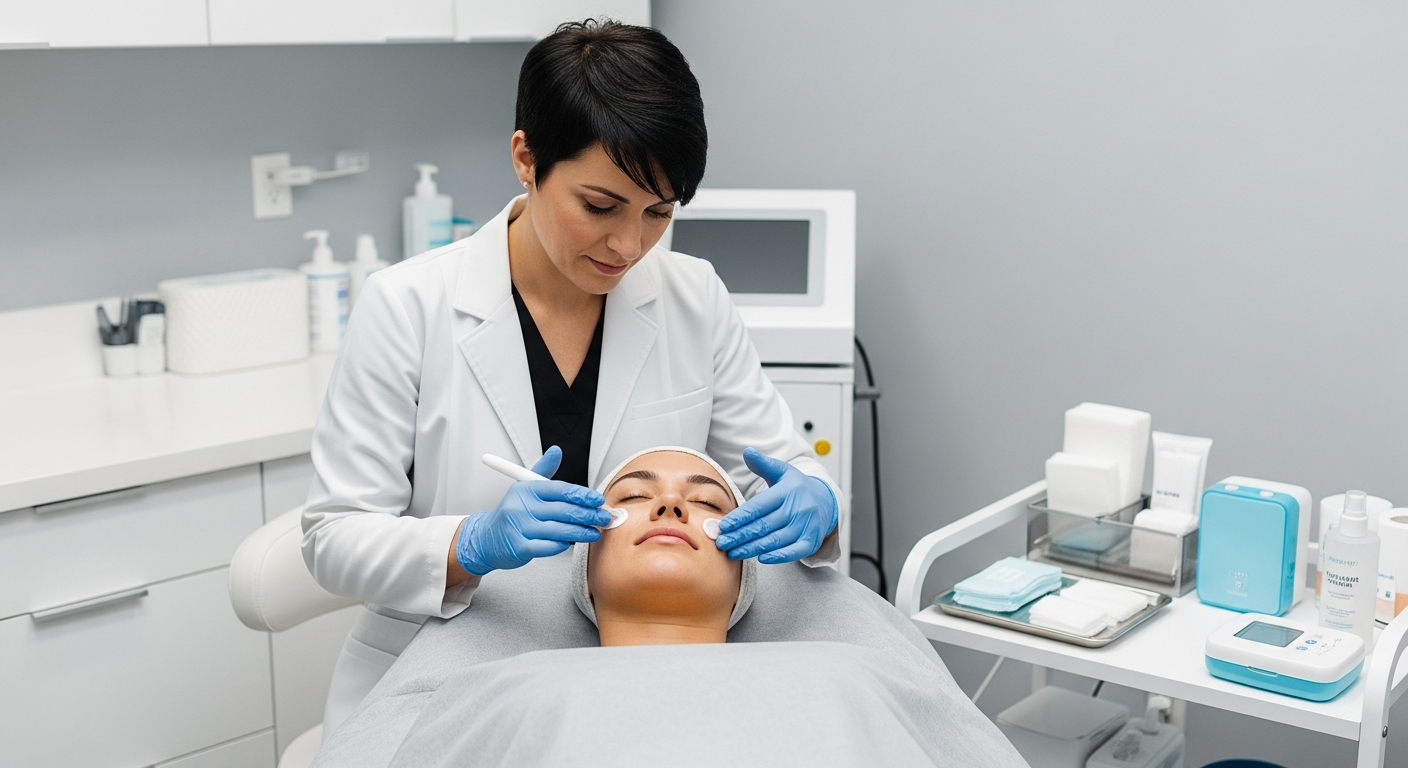
Post-Treatment Management in Med Spa Clinics
Post-treatment management in med spa settings is the systematic application of clinical protocols designed to stabilize the skin and optimize healing after aesthetic procedures. These standardized workflows focus on reducing erythema, managing inflammation, and restoring the skin barrier to minimize downtime and ensure predictable recovery across all patient demographics.
Standardized Protocols for Post-Laser Recovery
Effective post-laser management focuses on thermal regulation and barrier repair.
Providers must implement immediate cooling measures to dissipate residual heat from the dermis.
This reduces the risk of prolonged erythema and secondary thermal injury.
Standardized workflows include the application of occlusive barriers to prevent moisture loss.
Clinical supervisors should mandate specific intervals for reapplication during the first 48 hours.
Consistent hydration protocols accelerate re-epithelialization and minimize crusting.
Education on environmental triggers is a core component of laser aftercare systems.
Patients must receive clear instructions to avoid heat exposure and direct sunlight.
This consistency across the clinical team ensures all patients receive the same safety benchmarks.
Microneedling Downtime and Inflammation Control
Managing microneedling recovery requires a focus on the controlled inflammatory response.
The primary clinical objective is to support the wound-healing cascade without over-stimulation.
Standardized post-treatment management in med spa environments includes strict hygiene protocols.
Practitioners should utilize sterile, non-irritating topical agents immediately following the procedure.
These agents help soothe micro-channels while maintaining a protected environment for the skin.
Avoiding active ingredients for several days is essential for preventing granulomas or hypersensitivity.
Providers must monitor the transition from acute redness to the proliferative phase of healing.
Standardized tracking of downtime allows clinical supervisors to identify abnormal inflammatory responses.
Clear communication regarding the timeline of “social downtime” improves patient compliance.
Clinical Systems for Chemical Peel Aftercare
Chemical peel management centers on protecting the newly revealed epidermal layers.
Systems must be in place to prevent premature peeling or mechanical exfoliation by the patient.
Standardized instructions should emphasize gentle cleansing and heavy moisturization.
- Phase 1: Immediate neutralization and calming of the treated area.
- Phase 2: Maintaining a flexible skin surface to prevent cracking.
- Phase 3: Transitioning back to maintenance routines after full shedding.
Managing erythema after a peel requires consistent monitoring of skin temperature.
Providers should document the depth of the peel to tailor the intensity of the recovery system.
Strict adherence to broad-spectrum sun protection is mandatory during this vulnerable phase.
Managing Inflammation and Erythema
Persistent inflammation can lead to post-inflammatory hyperpigmentation (PIH) in certain skin types.
Med spas must employ standardized assessment tools to categorize redness levels.
This allows for objective decision-making regarding the use of calming agents.
Reducing erythema involves both physical cooling and chemical stabilization.
Protocols should outline specific steps for managing reactive skin during follow-up visits.
Consistency in these steps reduces the variability of results among different practitioners.
Clinical workflows must include a clear path for escalating care if inflammation persists.
Standardized documentation of every recovery phase ensures the medical director can review cases efficiently.
This structured approach maintains the highest level of clinical safety within the facility.
Standardized Recovery Workflows in Med Spas
Operational success in a med spa depends on protocol consistency over individual judgment.
Every provider should follow the same post-treatment management system for every procedure.
This reduces the risk of error and ensures a predictable patient experience.
Written recovery guides should be provided to every patient before they leave the clinic.
These guides serve as the primary reference for managing common side effects at home.
Standardization ensures that no critical safety step is omitted during the discharge process.
Follow-up schedules should be automated to check on healing progress at key intervals.
Digital or phone check-ins allow the clinical team to intervene if healing deviates from the norm.
A structured workflow for post-treatment care is the foundation of high-quality aesthetic outcomes.
