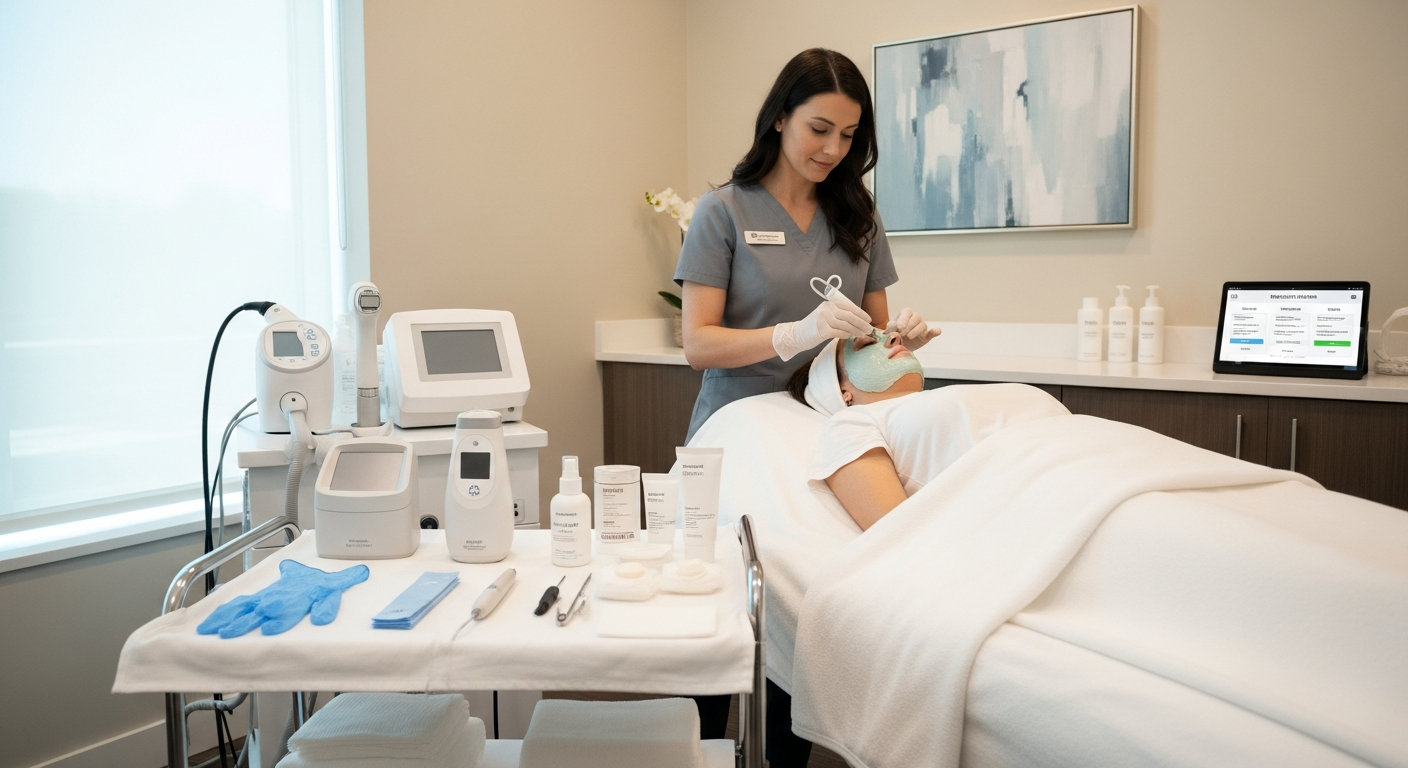
Post-Treatment Management in Med Spa Operations
Post-treatment management in med spa environments refers to the standardized clinical protocols used to monitor recovery, minimize complications, and manage downtime after aesthetic procedures. These systems ensure consistent patient outcomes following laser therapy, microneedling, and chemical peels by prioritizing uniform inflammatory response control and structured recovery workflows across all clinical staff.
Standardizing Post-Laser Recovery Protocols
Post-laser management focuses on heat dissipation and the protection of the newly sensitized epidermal layer.
Clinical protocols must prioritize cooling the tissue immediately to prevent extended thermal injury and secondary inflammation.
- Erythema Assessment: Providers must document the duration and intensity of redness according to established clinic scales.
- Thermal Regulation: Use of cold compresses or specialized cooling devices to stabilize skin temperature post-procedure.
- Barrier Protection: Application of occlusive or semi-occlusive dressings to prevent transepidermal water loss during the initial healing phase.
Microneedling Downtime and Inflammation Management
Management after microneedling requires a focus on mechanical injury recovery and the prevention of exogenous contamination.
The primary goal is to support the wound-healing cascade while minimizing patient discomfort and prolonged edema.
- Infection Control: Maintaining a sterile environment until the micro-channels have naturally closed, typically within four to twenty-four hours.
- Inflammation Reduction: Implementing standardized protocols for the application of calming agents that do not interfere with the collagen induction process.
- Patient Education: Providing clear instructions on avoiding irritants, such as active acids or physical exfoliants, during the inflammatory phase.
Chemical Peel Aftercare Systems
Standardized management for chemical peels involves monitoring controlled desquamation and ensuring pH balance restoration.
Clinicians must ensure patients do not prematurely disrupt the peeling process, which can lead to post-inflammatory hyperpigmentation.
Managing Controlled Exfoliation
Protocols should dictate the frequency of hydration and the avoidance of mechanical picking or scrubbing.
Providers must standardize the assessment of skin peeling patterns to distinguish between normal recovery and adverse reactions.
Hydration and UV Protection
Post-peel systems require strict adherence to broad-spectrum UV protection to safeguard the vulnerable, newly exposed skin cells.
Clinical workflows should include a mandatory follow-up check to verify the restoration of the skin’s natural lipid barrier.
Standardized Recovery Workflows for Clinical Staff
Operational success in a med spa depends on protocol consistency over individual provider judgment.
Standardized workflows ensure that every patient receives the same level of clinical oversight regardless of the performing technician.
- Documentation: Utilizing digital charting to track recovery milestones and photographic evidence of healing.
- Triage Protocols: Establishing clear triggers for when a recovery process requires escalation to a clinical supervisor.
- Supply Management: Ensuring all recovery suites are stocked with uniform supplies required for post-procedure care.
Managing Erythema and Edema
Clinical supervisors must train staff to recognize the difference between expected erythema and early signs of complications.
Standardized cooling and soothing steps should be applied immediately when inflammatory markers exceed the procedural baseline.
