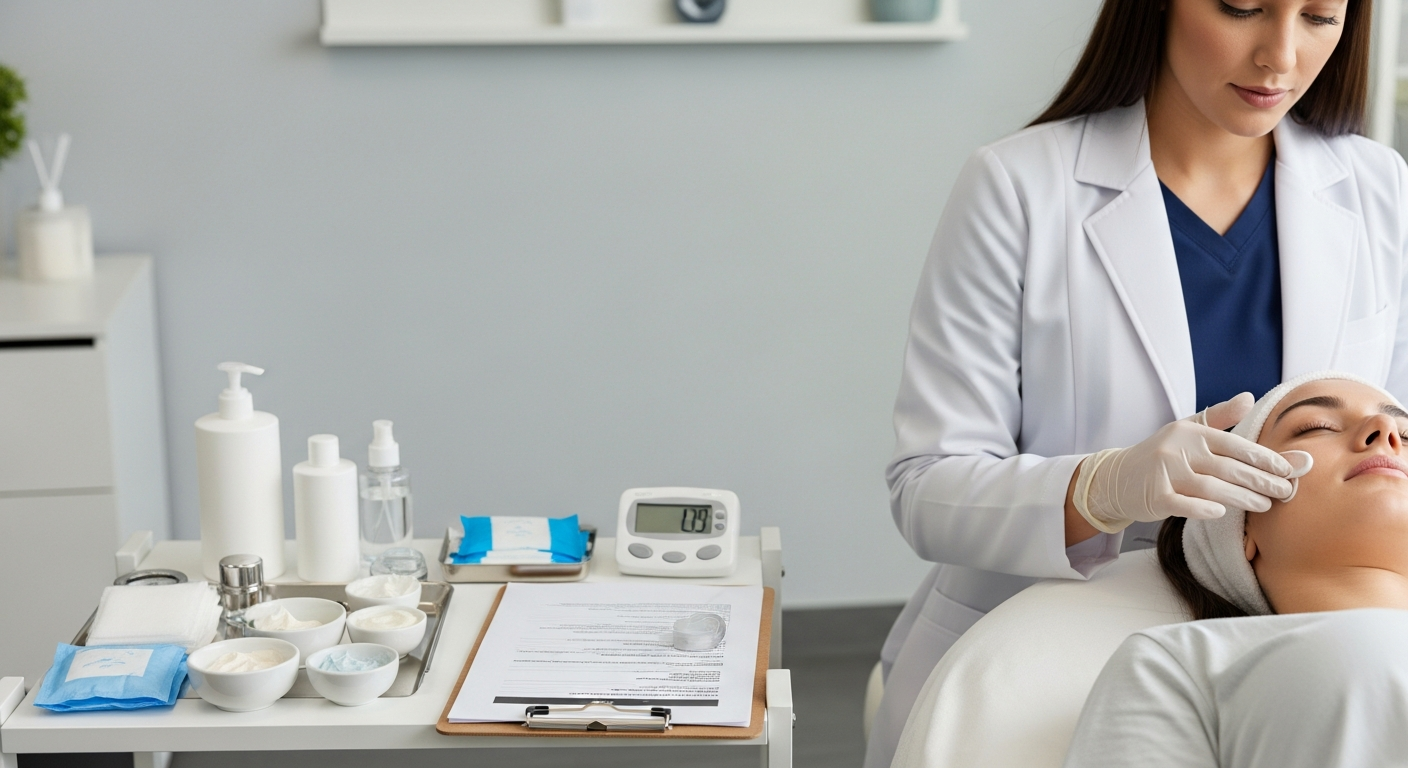
Post-Treatment Management in Med Spa Settings
Post-treatment management in med spa operations refers to the clinical application of standardized protocols designed to minimize patient downtime and prevent complications after aesthetic procedures. These systems focus on stabilizing the skin barrier, reducing inflammation, and regulating thermal responses through consistent, provider-led recovery workflows to ensure predictable patient healing.
Standardizing Post-Laser Recovery Protocols
Effective post-treatment management in med spa environments begins with thermal regulation after laser procedures.
Clinical protocols must prioritize lowering the skin temperature immediately to prevent extended erythema.
Standardized workflows often include the application of occlusive barriers to prevent transepidermal water loss.
Managing Erythema and Thermal Sensitivity
Clinicians should monitor the duration of redness to distinguish between expected inflammation and adverse reactions.
Standardized cooling windows help stabilize the basement membrane after high-energy light treatments.
Maintaining a cool environment for the treated area is essential for the first twenty-four hours.
Microneedling Downtime Management Systems
Post-treatment management in med spa settings for microneedling focuses on protecting open micro-channels.
Providers must implement strict hygiene protocols to prevent exogenous contamination during the initial healing phase.
The primary goal is to support the natural inflammatory cascade without allowing secondary infections.
Transdermal Pathway Protection
Recovery systems should emphasize keeping the treated area clean and free from non-sterile environmental factors.
Standardized instructions must prohibit the use of active acids or irritants for at least forty-eight hours.
Hydration should be maintained using simple, non-reactive agents to support epidermal re-epithelialization.
Chemical Peel Aftercare and Exfoliation Control
Managing the recovery from chemical peels requires a focus on pH balance and controlled desquamation.
Clinical supervisors should ensure all patients receive identical instructions regarding the physical handling of peeling skin.
Premature removal of exfoliating tissue can lead to post-inflammatory hyperpigmentation and scarring.
Maintaining the Acid Mantle During Desquamation
The post-treatment management in med spa workflows for peels involves reinforcing the lipid barrier.
Patients must be guided to use gentle cleansers that do not disrupt the compromised skin surface.
Strict UV protection protocols are mandatory during the entire peeling process to prevent pigmentary changes.
Clinical Workflows for Inflammation Control
Consistent post-treatment management in med spa facilities relies on protocol consistency over individual provider judgment.
Establishing a formal follow-up schedule allows clinical supervisors to track healing milestones across the patient base.
Standardized documentation of recovery progress helps identify outliers who may require additional clinical intervention.
- Immediate Post-Care: Focus on cooling, barrier protection, and patient education.
- Early Recovery: Focus on hydration, UV avoidance, and infection prevention.
- Long-term Management: Focus on barrier maintenance and gradual reintroduction of active ingredients.
By implementing these structured recovery systems, med spas ensure that clinical safety remains the priority.
Standardized workflows reduce the variability in patient outcomes and enhance the overall safety profile of the facility.
Consistency in post-treatment management is the hallmark of a high-functioning clinical aesthetic environment.
