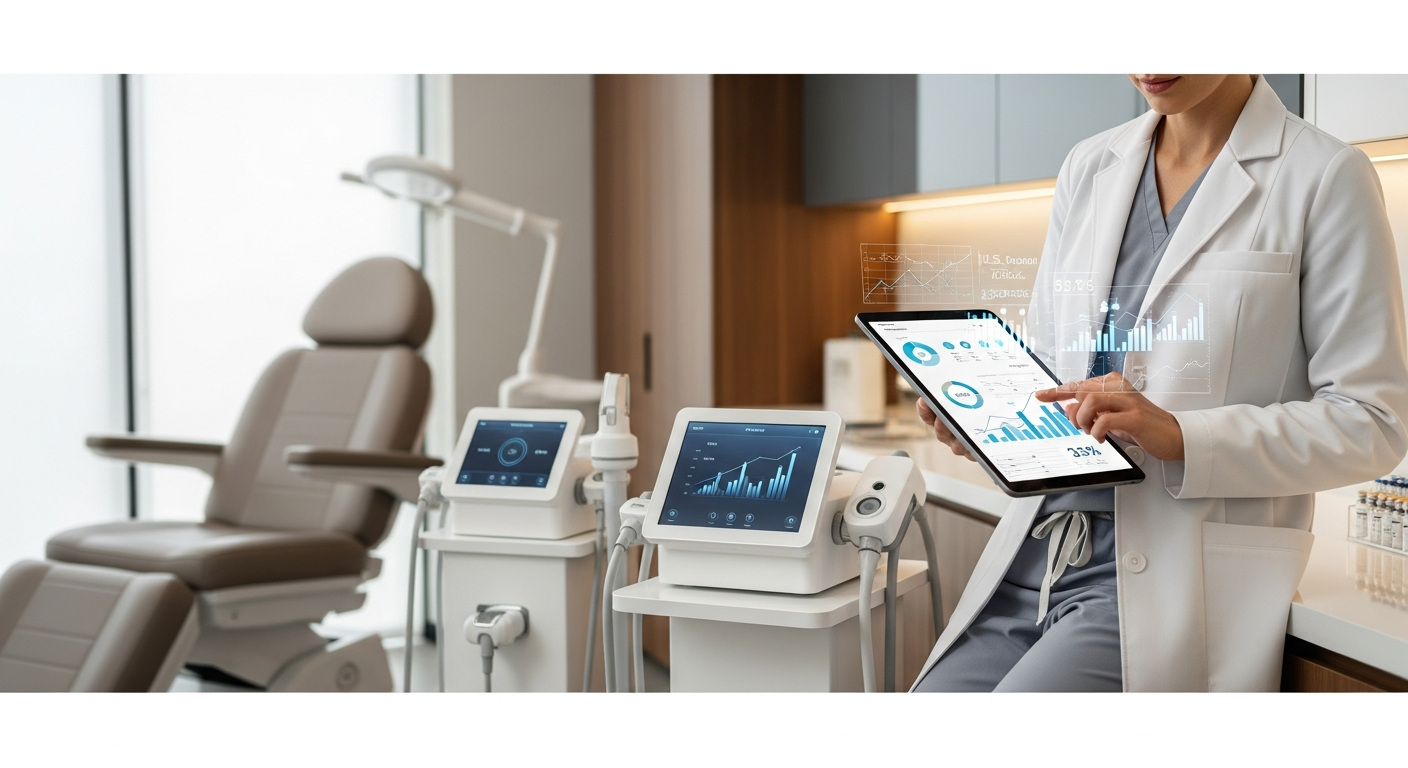
U.S. Med Spa Industry Statistics and Market Trends
U.S. med spa industry statistics indicate a robust market valuation exceeding $17 billion, with a projected compound annual growth rate of nearly 10% through 2030. This growth is sustained by rising consumer demand for non-surgical aesthetic treatments, including neuromodulators and advanced skin resurfacing, supported by increasing clinical standardization across the United States.
Market Valuation and Economic Growth
The United States med spa market has demonstrated consistent upward momentum. Average revenue per med spa location now exceeds $1.9 million annually, reflecting increased patient volume and higher average ticket prices for multi-modality treatment plans.
Investment trends show a significant rise in private equity involvement. Consolidation within the industry is increasing as investors seek to capitalize on the recurring revenue models found in subscription-based med spa memberships and long-term treatment protocols.
Geographically, the highest concentration of facilities remains in California, Texas, and Florida. However, per capita spending is rising rapidly in secondary markets, suggesting a broadening demographic appeal across diverse socioeconomic regions within the country.
Treatment Growth and Volume Analysis
Non-invasive procedures dominate the clinical volume within the U.S. market. Injectables, specifically neuromodulators and dermal fillers, remain the primary revenue drivers, accounting for a significant portion of total service performance across all facility sizes.
Neuromodulators and Dermal Fillers
Neuromodulator treatments have seen a steady annual volume increase of approximately 7%. This growth is supported by a widening patient demographic, including a measurable increase in male patients and younger consumers seeking preventative aesthetic interventions.
Dermal filler applications continue to evolve with the introduction of biostimulatory products. These treatments are increasingly integrated into comprehensive facial rejuvenation strategies, leading to higher utilization rates of calcium hydroxylapatite and poly-L-lactic acid formulations.
Energy-Based Devices and Body Contouring
Body contouring and non-surgical fat reduction represent the fastest-growing technology segment. Clinical data suggests that combination therapies, pairing cryolipolysis with muscle stimulation, are becoming the standard for patient results and clinic profitability.
Laser hair removal and skin resurfacing remain foundational services. Improvements in device efficiency and safety profiles for diverse skin types have stabilized the demand for these light-based modalities in the competitive med spa landscape.
Clinical Safety and Complication Rates
Maintaining low complication rates is critical for operational stability in any med spa. Statistical analysis of adverse events shows that vascular occlusions and thermal injuries remain the most significant risks associated with high-volume aesthetic procedures.
Industry benchmarks indicate that facilities with full-time onsite medical direction report fewer severe complications. Data-driven clinics are increasingly adopting ultrasound technology for filler delivery to enhance safety margins and improve clinical outcomes.
Standardized training protocols for mid-level practitioners have been linked to higher patient satisfaction scores. Monitoring these clinical metrics allows med spa owners to mitigate risk and reduce the longitudinal cost of medical malpractice insurance.
Regulatory Trends and Compliance Oversight
The regulatory environment for the U.S. med spa industry is currently undergoing a period of increased scrutiny. State medical boards are clarifying definitions regarding the “practice of medicine” as it relates to aesthetic procedures and facility ownership.
Oversight regarding “good faith exams” is a primary focus for state regulators. Data shows that compliance audits are increasingly targeting facilities where NP or PA practitioners perform initial consultations without documented physician oversight or standing orders.
Strict adherence to corporate practice of medicine (CPOM) doctrines remains a legal necessity in many states. Investors and owners must navigate these regional variations to ensure that the business structure aligns with specific state-level medical board requirements.
Industry Outlook and Professional Development
Future growth in the med spa sector is expected to be driven by regenerative medicine and longevity-focused treatments. The integration of IV therapy and hormonal optimization into the traditional aesthetic model is an emerging trend in high-performing clinics.
Operational data suggests that clinics focusing on staff retention and advanced clinical certification see a direct correlation with improved patient lifetime value. Professional development remains a core factor in maintaining a competitive advantage in saturated urban markets.
As the industry matures, data-driven decision-making regarding equipment procurement and service pricing will be essential. Owners who utilize market statistics to align their offerings with consumer demand will be best positioned for long-term fiscal stability.
