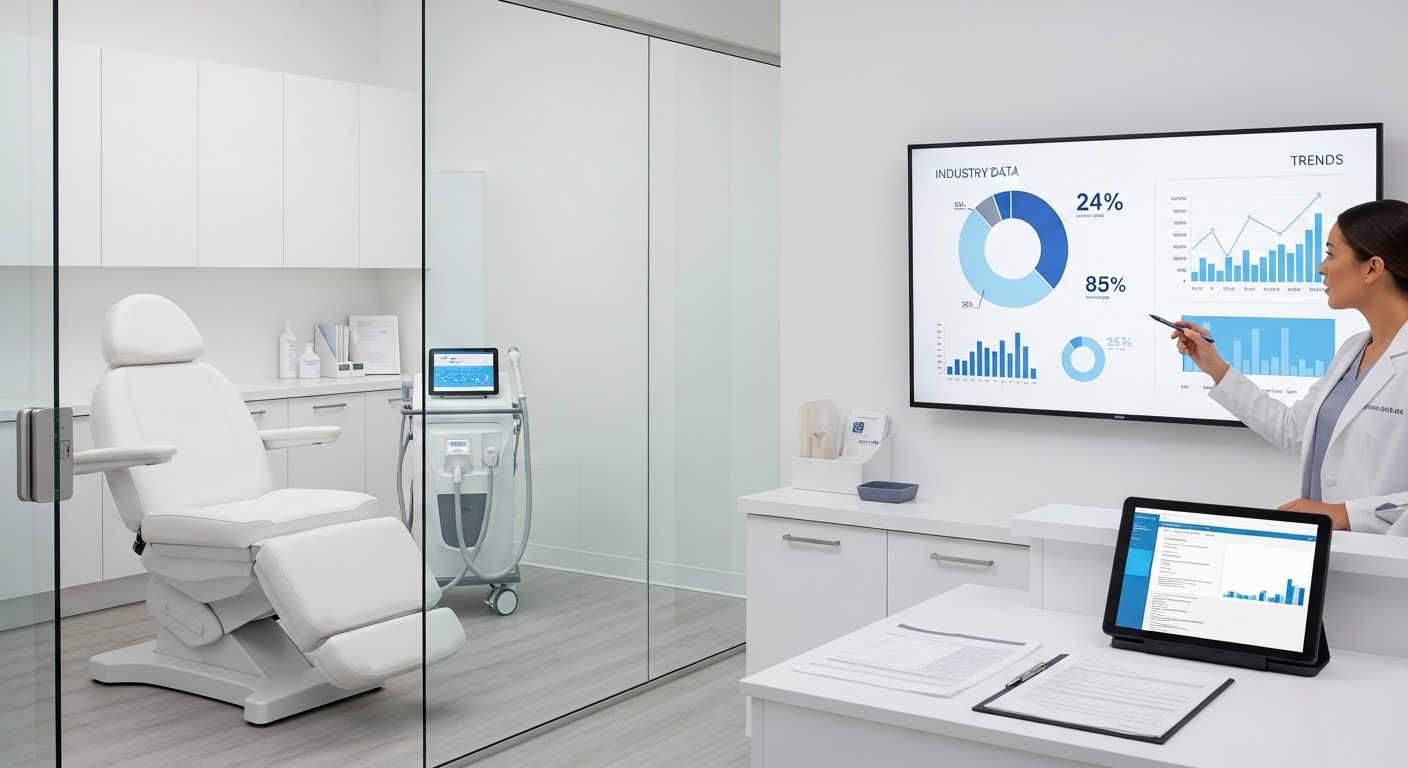
U.S. Med Spa Industry Statistics: Market Data and Trends
Current med spa industry statistics indicate the U.S. market exceeded $17 billion in 2023, with a projected annual growth rate of 10% through 2030. Key data points highlight that neuromodulators and dermal fillers remains the top revenue-generating treatments, while increased regulatory oversight focuses on practitioner licensing and facility safety standards.
U.S. Med Spa Market Valuation and Growth
The U.S. med spa sector continues to expand, with the number of facilities surpassing 9,000 nationwide.
Average revenue per med spa location has reached approximately $1.9 million annually.
Market growth is driven by a 15% year-over-year increase in male patient demographics.
Treatment Volume and Procedure Trends
Injectable Neuromodulators and Fillers
Neuromodulators represent the highest volume of non-surgical procedures in the United States.
Data shows that botulinum toxin injections account for over 45% of total injectable revenue.
Dermal fillers follow closely, with high demand for hyaluronic acid-based products for facial rejuvenation.
Energy-Based and Laser Treatments
Laser hair removal and skin resurfacing account for roughly 20% of facility service mixes.
Technology adoption rates show a shift toward multi-platform devices that treat various skin concerns.
The demand for non-invasive skin tightening has seen a 12% increase in suburban market areas.
Body Contouring and Wellness Services
Non-invasive fat reduction and body contouring services have stabilized as a core revenue pillar.
Emerging data indicates a rising integration of medically supervised weight loss programs within med spas.
These services often yield higher average ticket prices compared to standard aesthetic treatments.
Clinical Outcomes and Complication Analysis
Clinical data indicates that the overall complication rate for non-surgical aesthetics remains below 1%.
Vascular occlusions from dermal fillers represent the most significant risk, requiring strict clinical protocols.
Med spas with on-site medical directors report 30% fewer adverse events than those with remote supervision.
Laser-induced burns and post-inflammatory hyperpigmentation are the leading causes of clinical insurance claims.
Adherence to standardized skin typing and cooling protocols significantly mitigates these technical risks.
Regular clinical audits are becoming a standard practice for maintaining safety benchmarks across franchises.
Regulatory Trends and Compliance Shifts
State medical boards are increasing enforcement of Corporate Practice of Medicine (CPOM) doctrines.
Strict regulations regarding the “good faith examination” are now enforced in over 40 states.
This requires a licensed provider to evaluate patients before any prescriptive treatment is administered.
There is a growing trend toward mandating specific certifications for laser technicians and aesthetic nurses.
State legislatures are currently reviewing the scope of practice for estheticians regarding microneedling.
Facilities are increasingly adopting electronic health record (EHR) systems to ensure HIPAA-compliant data storage.
Regional Market Development Insights
- Western Region: Highest density of facilities and fastest adoption of new technology.
- Southeast: Leading growth in year-round skincare and sun-damage repair services.
- Northeast: Higher concentration of physician-owned facilities with specialized clinical focus.
- Midwest: Steady growth in membership-based recurring revenue models.
Investor interest in the med spa industry remains high due to strong EBITDA margins.
Private equity consolidation is a major trend, with large groups acquiring independent regional chains.
Operational stability is increasingly tied to clinician retention rates and documented safety protocols.
