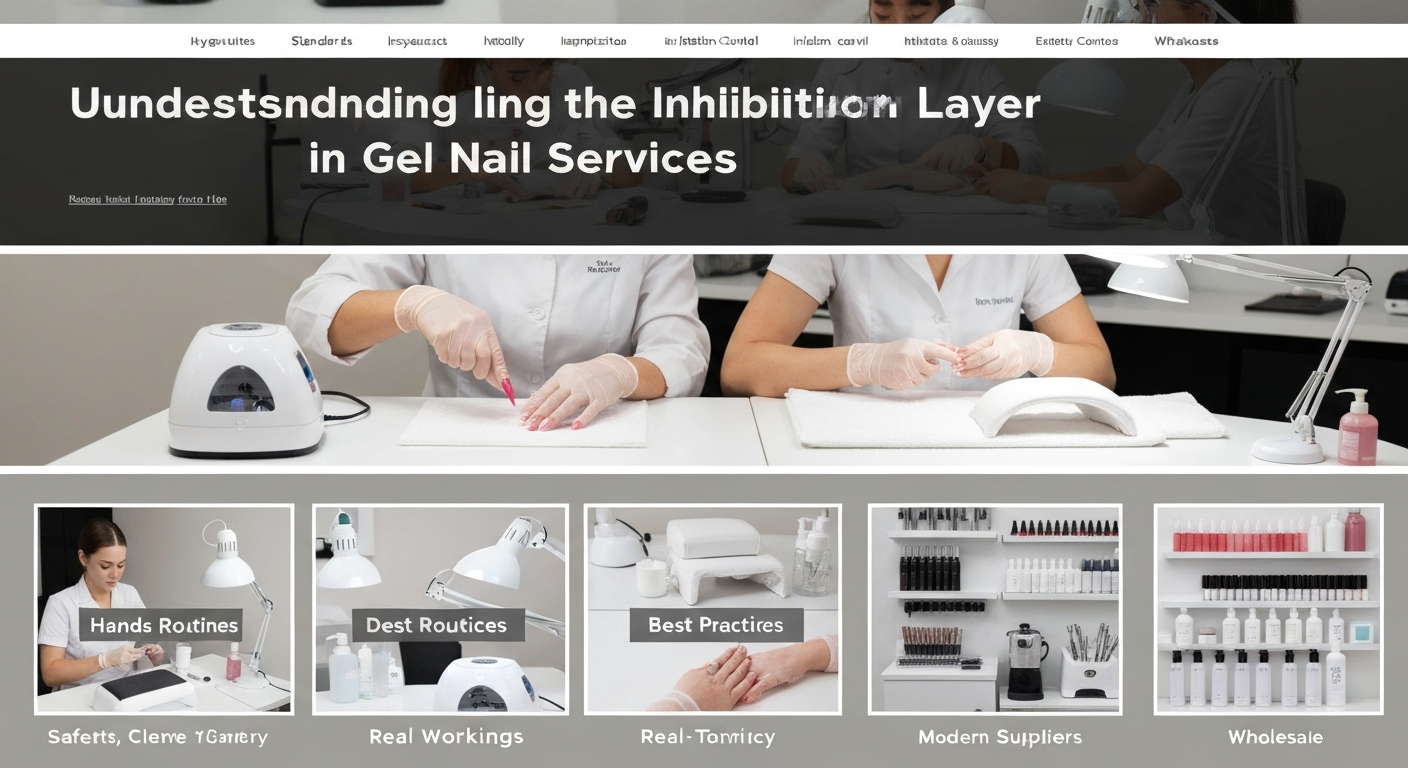
Understanding the Inhibition Layer in Gel Nail Services
Every professional nail technician works with the inhibition layer daily. Yet, it remains one of the most misunderstood aspects of gel chemistry.
Often referred to as the “sticky layer,” this residue is a byproduct of the curing process. Understanding how to manage it is crucial for lifting-free manicures.
This guide explains exactly what the inhibition layer is and how to handle it according to industry standards.
What Is the Inhibition Layer?
The inhibition layer is a tacky film that remains on the surface of UV or LED cured gel products after they have been exposed to light.
It occurs due to a chemical reaction known as oxygen inhibition. While the gel cures underneath, oxygen in the air prevents the very top surface from polymerizing completely.
This does not mean the nail is uncured. The product underneath the sticky layer is hard and stable, provided your lamp is functioning correctly.
The Function of the Sticky Layer
In a professional salon workflow, this sticky residue serves a vital purpose: adhesion.
Think of the inhibition layer as double-sided tape. It chemically bonds the current layer of product to the next layer you apply.
Removing this layer prematurely can compromise the structural integrity of the enhancement, leading to peeling or separation between coats.
When to Keep the Inhibition Layer
For most steps in a gel manicure or enhancement service, you must leave this layer intact.
Applying Base Coat and Color
After curing your base gel, do not wipe the nail. The sticky layer allows the gel polish color to adhere firmly to the base.
Similarly, when applying multiple coats of color, the inhibition layer from the first coat anchors the second coat.
Layering Builder Gels
If you are building an apex with hard gel or builder-in-a-bottle (BIAB), you need the sticky layer to bond multiple beads of product together.
Wiping between layers of the same product creates a smooth surface that new gel cannot grip, resulting in internal lifting.
Applying Specific Nail Art
Certain nail art techniques rely on the inhibition layer. Loose glitter, pigments, and some transfer foils require this tackiness to stick effectively.
When and How to Remove the Inhibition Layer
There are specific stages in the nail service workflow where removing the inhibition layer is mandatory.
Before Filing and Buffing
If you need to shape a builder gel application with a hand file or e-file, you must remove the sticky layer first.
Filing a tacky surface will clog your file grit immediately. This ruins your tools and creates friction heat, which can be painful for the client.
Always cleanse the nail thoroughly before performing any surface refining.
After Curing Wipe-Off Top Coats
Traditional top coats leave a residue. Once the final cure is complete, this layer must be removed to reveal the high-gloss shine.
Failure to remove it correctly can leave the nail looking dull or feeling greasy.
Best Practices for Removing the Layer
To maintain professional sanitation and finish quality, follow these protocols when cleansing the nail.
- Use 99% Isopropyl Alcohol (IPA): Lower concentrations contain water, which can dull the shine of the gel.
- Select Lint-Free Wipes: Cotton rounds leave fibers stuck in the gel. Always use high-quality lint-free squares.
- One Wipe Per Finger: Do not reuse a wipe on multiple nails. This transfers dissolved uncured gel across the hand, causing cloudiness.
- Wait Before Wiping: Allow the nails to cool for 30 seconds after removal from the lamp. Wiping hot gel can shock the polymer and reduce gloss.
Troubleshooting Sticky Layer Issues
Sometimes, a nail feels too sticky or the layer seems excessive. This can indicate a problem with your curing equipment.
If the layer is runny rather than tacky, your UV/LED lamp may have weak bulbs or the client’s hand placement was incorrect.
Always check that your lamp’s nanometer output matches your gel system’s requirements to ensure full polymerization.
