Understanding US Med Spa Regulations and Compliance
Med spa regulations are the state-specific legal frameworks governing aesthetic medical practices, including licensing requirements, physician supervision, and facility standards. These laws ensure patient safety by defining who can perform procedures like neurotoxin injections, mandated Corporate Practice of Medicine doctrines, and the required qualifications for medical directors.
State-Specific Regulatory Frameworks
Med spa operations are primarily governed at the state level by medical and nursing boards.
These bodies determine which treatments qualify as medical procedures versus cosmetic services.
Compliance requires strictly adhering to the laws of the state where the facility operates.
A critical concept in many states is the Corporate Practice of Medicine (CPOM) doctrine.
This legal principle often prohibits non-physicians from owning a medical practice or employing doctors.
Many owners utilize a Management Services Organization (MSO) model to remain compliant with these rules.
Licensing and Supervision Requirements
The Role of the Medical Director
A medical director is a licensed physician who oversees the clinical operations of a med spa.
They are responsible for establishing medical protocols and ensuring all treatments meet safety standards.
The required level of physician proximity and availability varies significantly between different states.
Scope of Practice for Providers
State boards define the scope of practice for Registered Nurses, Nurse Practitioners, and PAs.
Regulations specify which providers can perform laser hair removal, chemical peels, or injectables.
Delegation of these medical tasks must be documented and follow specific supervision guidelines.
Legal Scope of Aesthetic Practice
Aesthetic procedures like Botox, fillers, and IV hydration are legally classified as medical treatments.
This classification means they require a formal “good faith examination” before the first treatment.
Only a qualified practitioner can perform this initial assessment to determine patient suitability.
Practitioners must also ensure that all devices used are FDA-cleared for their intended purpose.
Using medical-grade equipment outside of its approved scope can lead to regulatory disciplinary actions.
Compliance depends on matching the provider’s license to the specific complexity of the procedure.
Essential Compliance Documentation Basics
Accurate documentation is the foundation of a legally protected med spa practice.
Clinics must maintain comprehensive medical records for every patient, including treatment notes and dosages.
Standardized Operating Procedures (SOPs) must be written and signed by the medical director.
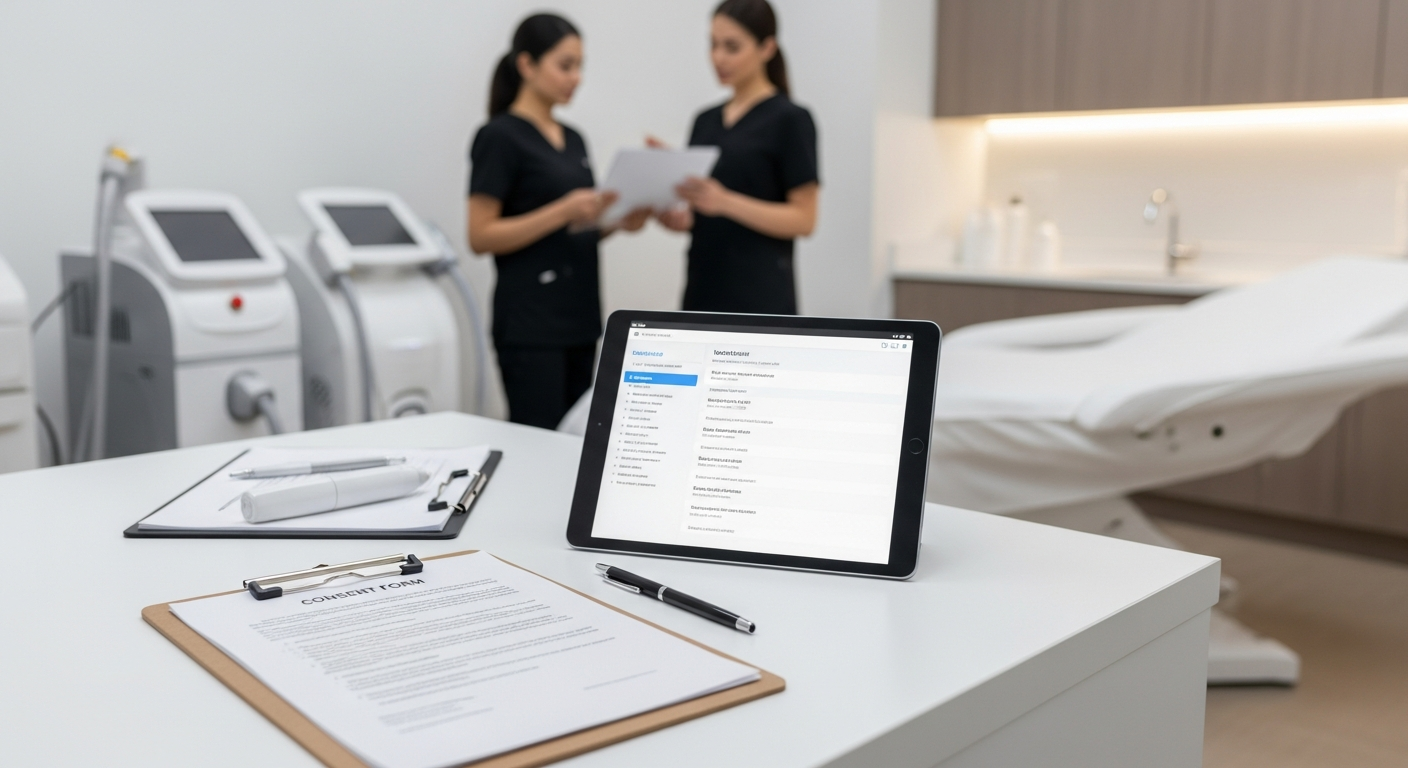
Informed consent forms are mandatory for every medical procedure performed in the facility.
These documents must clearly outline the risks, benefits, and alternatives to the treatment.
Proper record-keeping also includes maintaining logs for equipment maintenance and drug inventory.
Inspection Readiness Standards
Health Department and Medical Board Audits
Med spas must be prepared for unannounced inspections by state health departments or medical boards.
Inspectors typically review facility cleanliness, sterilization protocols, and practitioner licenses.
Displaying all required state licenses in a prominent public area is a universal requirement.
Safety and Emergency Protocols
Compliance includes having established protocols for handling adverse events or medical emergencies.
Facilities must stock emergency kits containing necessary medications like hyaluronidase for filler complications.
Staff must be regularly trained on these protocols to ensure immediate action during a crisis.
