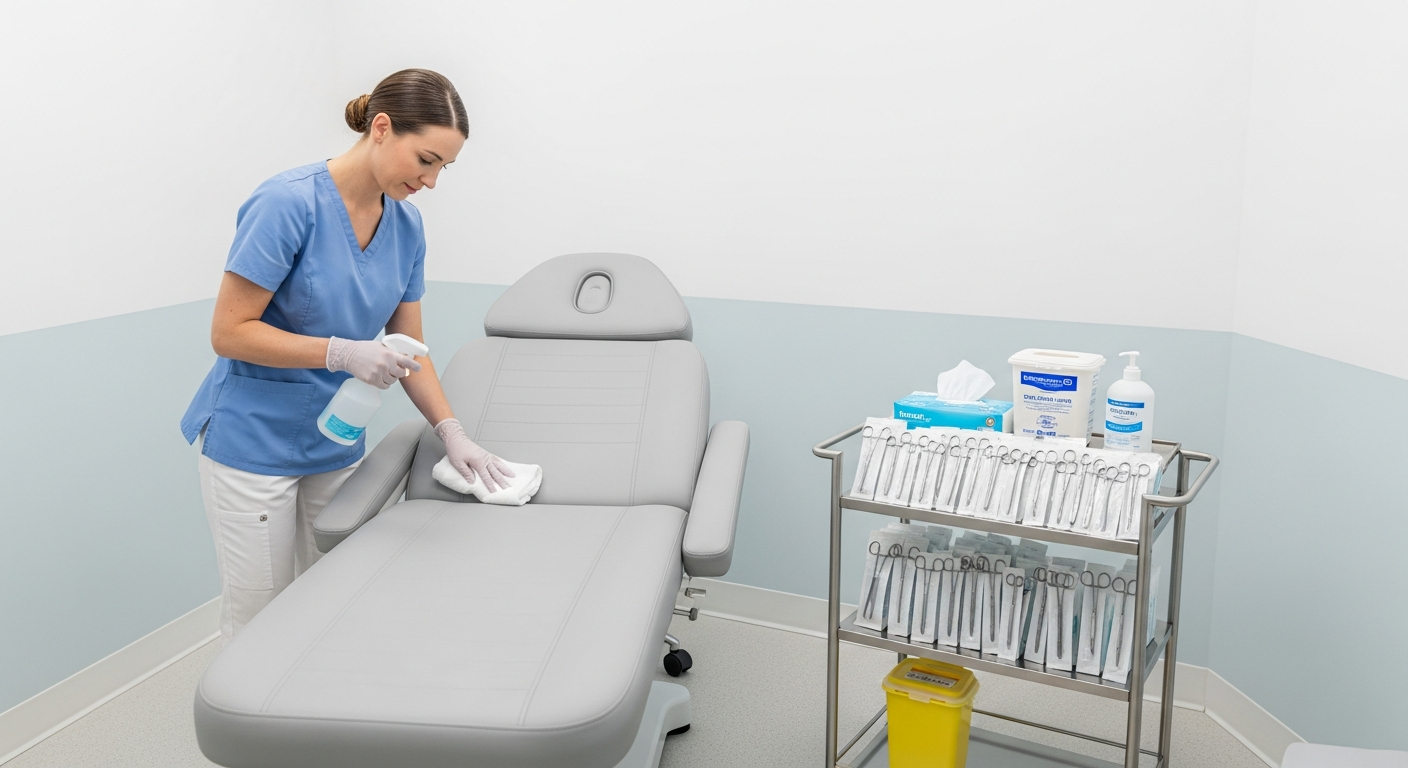
Med Spa Infection Control: Clinical Safety Protocols
Med spa infection control is the systematic application of sanitation, disinfection, and sterilization protocols designed to eliminate pathogen transmission within aesthetic clinics. These OSHA-aligned practices involve rigorous surface decontamination, proper use of personal protective equipment, and strict instrument processing to maintain a sterile environment for all non-invasive and minimally invasive treatments.
OSHA-Aligned Sanitation Practices
Every med spa must establish a written exposure control plan that follows OSHA standards to protect staff and clients from bloodborne pathogens.
Practitioners must utilize appropriate personal protective equipment, including medical-grade gloves, masks, and eye protection, during any procedure involving skin penetration.
Hand hygiene stations must be accessible, requiring clinicians to wash hands with antimicrobial soap before and after every client contact or glove change.
Treatment Room Disinfection Systems
Treatment rooms require a two-step cleaning and disinfection process between every client appointment to ensure a sterile clinical environment.
All environmental surfaces, including treatment tables, stools, and countertops, must be wiped down with EPA-registered, hospital-grade disinfectants after every use.
High-Touch Point Management
Frequent touchpoints such as door handles, light switches, and equipment control panels require consistent decontamination throughout the operating day.
Using disposable barriers on equipment interfaces can further reduce the risk of cross-contamination in high-traffic treatment zones.
Sterilization Standards for Reusable Instruments
Any reusable tool that penetrates the skin or contacts mucous membranes must undergo a rigorous multi-stage sterilization process.
Instruments must be cleaned of organic debris, packaged in sterilization pouches, and processed through a validated autoclave system using heat and pressure.
Facilities must maintain detailed logs of every sterilization cycle, including biological indicator test results, to verify that the equipment is functioning correctly.
Cross-Contamination Prevention Strategies
Preventing cross-contamination requires a strict physical separation between clean supply storage and contaminated work zones.
Single-use items, such as needles, lancets, and certain applicators, must be disposed of immediately in puncture-resistant sharps containers or biohazard bins.
Product dispensing should always be performed using sterile spatulas or pour-off methods to prevent the contamination of bulk product containers.
Clinical Waste Disposal
Regulated medical waste must be handled according to local and federal safety guidelines to prevent environmental contamination.
All biohazardous material should be stored in labeled, leak-proof containers and collected by licensed medical waste disposal services at regular intervals.
