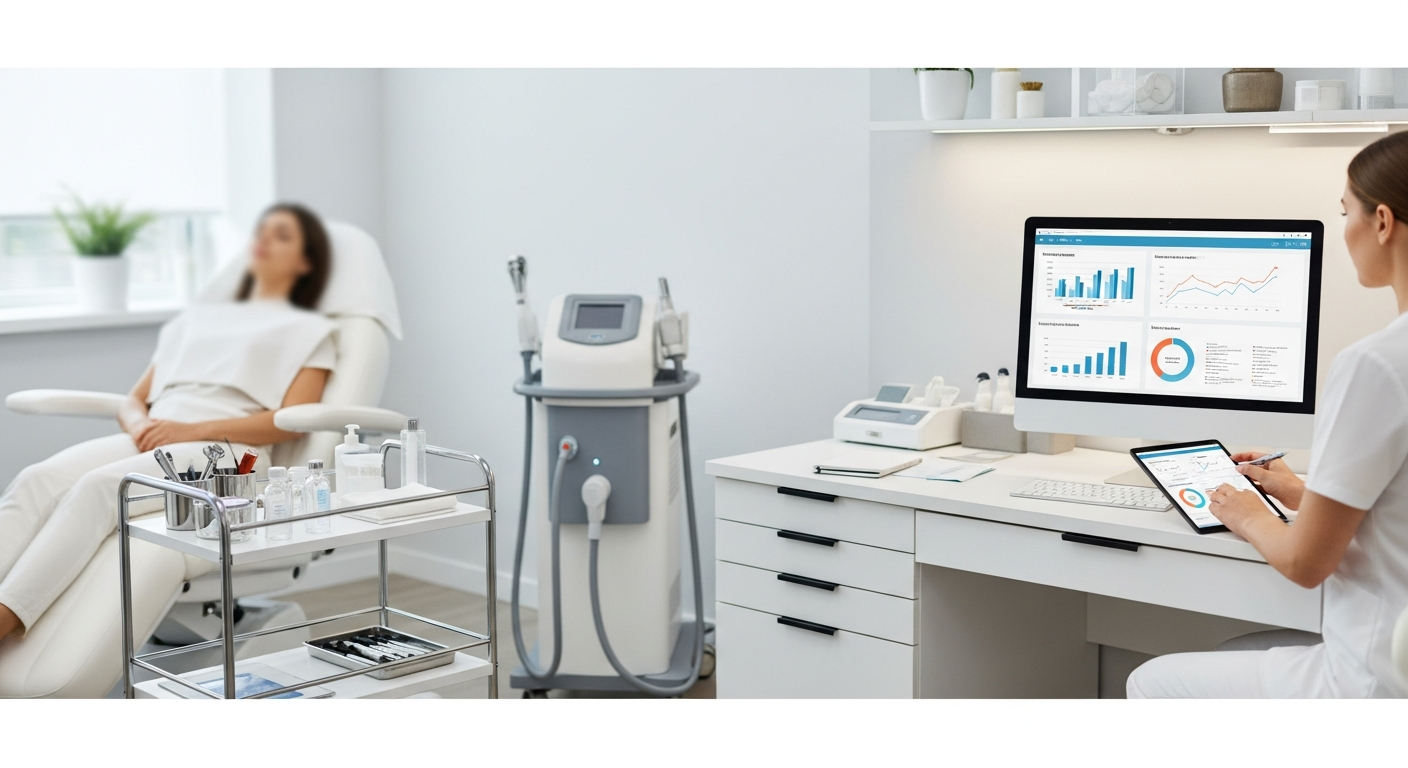
U.S. Med Spa Industry Statistics and Market Analysis
U.S. med spa industry statistics reflect a rapidly expanding market valued at over $15 billion, characterized by consistent year-over-year growth exceeding 10%. Key data points include rising demand for non-surgical aesthetic procedures, increased per-visit spending, and tightening regulatory oversight regarding clinical supervision and professional licensing across most states.
Current Market Valuation and Growth Projections
The United States med spa market has demonstrated significant resilience, with a compound annual growth rate (CAGR) projected to remain between 10% and 15% through 2030.
Current data indicates that the average revenue for a single-location med spa exceeds $1.9 million annually, reflecting increased consumer adoption of preventative aesthetic treatments.
Investment trends show a rise in private equity involvement, as consolidated groups and franchises capture a larger share of the fragmented independent clinic landscape.
Treatment Volume and Clinical Growth Trends
Injectable treatments remain the primary revenue driver for the U.S. med spa industry, accounting for a significant percentage of total service volume.
Neuromodulators and dermal fillers have seen consistent volume increases, with a notable shift toward younger demographics seeking “pre-juvenation” services.
Energy-based devices, including laser hair removal and skin resurfacing, constitute the second-largest category of growth, supported by technological advancements in safety and efficacy.
Top Performing Non-Surgical Procedures
- Neuromodulators: Sustained growth driven by high patient retention rates.
- Dermal Fillers: Expansion into mid-face and jawline contouring applications.
- Body Contouring: Increased demand for non-invasive fat reduction and muscle stimulation.
- Chemical Peels and Microneedling: Growth in skin texture and pigment management.
Clinical Safety and Complication Rate Analysis
As the volume of procedures increases, industry data tracks the correlation between clinician training and adverse event frequency.
Statistical analysis of complications suggests that vascular occlusions and skin burns are the most critical risks managed within the med spa environment.
Standardized reporting protocols are becoming more prevalent, aimed at reducing the estimated 1% to 3% complication rate associated with high-intensity aesthetic devices.
Regulatory Landscape and Compliance Shifts
Regulatory oversight is tightening across the United States, with a focus on “good faith exams” and the physical presence of medical directors.
State medical boards are increasingly refining the scope of practice for mid-level providers and aesthetician assistants to ensure patient safety.
Non-compliance penalties are rising, prompting med spa owners to invest more heavily in legal infrastructure and clinical supervision models.
Market Development and Investor Insights
Operational data shows that successful med spas maintain a high percentage of recurring revenue through membership models and subscription-based service packages.
Geographically, market saturation is highest in metropolitan hubs, while secondary markets represent the fastest-growing regions for new clinic openings.
Profit margins in the med spa sector typically range from 20% to 25%, depending on labor costs and the efficiency of consumable inventory management.
