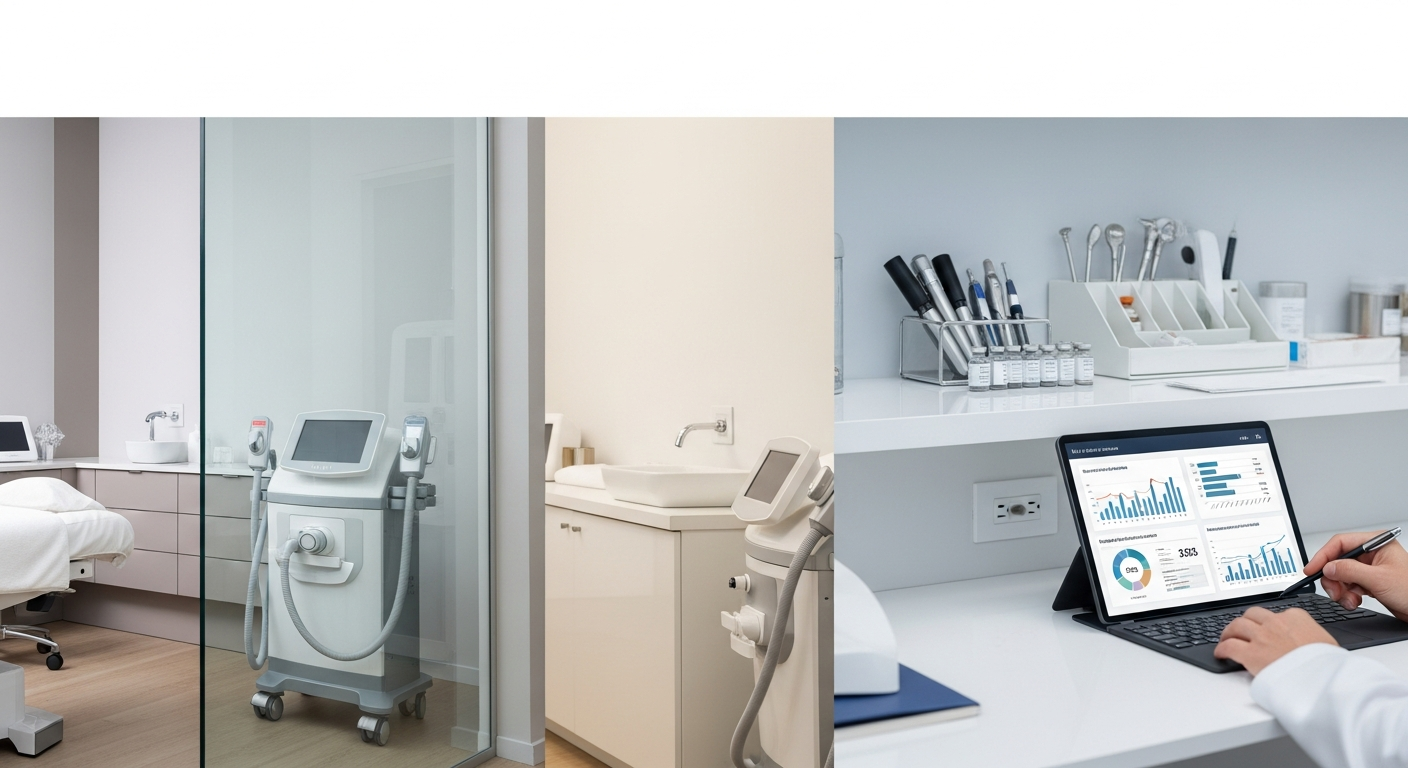
U.S. Med Spa Industry Statistics: Data and Market Insights
U.S. med spa industry statistics reveal a market valued at approximately $18.6 billion in 2023, with a projected annual growth rate exceeding 14%. Key drivers include the rising demand for minimally invasive aesthetic procedures, such as neurotoxins and dermal fillers, alongside increased regulatory oversight and clinical standardization across all states.
Market Valuation and Economic Growth
The United States represents the largest segment of the global aesthetic market.
Current data suggests the industry will reach a valuation of $45 billion by 2030.
This expansion is supported by high average revenue per location, often exceeding $1.9 million.
Single-location facilities currently dominate the landscape, accounting for over 60% of the market.
However, private equity consolidation is increasing, leading to the rise of multi-state regional brands.
Average profit margins for established facilities remain stable between 20% and 25%.
Top Performing Treatment Categories
Service mix data indicates that non-surgical injectables remain the primary revenue driver.
These treatments account for approximately 35% to 40% of total facility turnover.
Patient retention rates for these services are significantly higher than for one-time corrective procedures.
Injectables and Neurotoxins
- Neurotoxins: Volume increased by 25% year-over-year in the 25–34 age demographic.
- Dermal Fillers: Biostimulatory fillers are seeing the fastest growth within the category.
- Patient Frequency: Average injectable patients visit 3.2 times per year for maintenance.
Energy-Based Devices and Body Contouring
Laser and light-based treatments contribute approximately 20% of annual med spa revenue.
Body contouring, specifically non-invasive fat reduction, has seen a 15% increase in utilization.
These services typically require higher initial capital expenditure but offer significant long-term ROI.
Regulatory Trends and Compliance Oversight
State medical boards are implementing stricter oversight regarding “Who Can Do What.”
More states are clarifying the role of the Medical Director and required onsite presence.
Non-compliance with Corporate Practice of Medicine (CPOM) doctrines remains a significant legal risk.
Legislative shifts are currently focused on the supervision of mid-level practitioners.
Standardized training requirements for laser technicians are becoming mandatory in more jurisdictions.
Documentation and charting audits are increasing as part of routine facility inspections.
Clinical Outcome and Complication Analysis
While the safety profile of the med spa industry is high, data-driven clinics track adverse events.
Vascular occlusions from dermal fillers occur in approximately 0.05% to 0.1% of recorded cases.
The majority of complications are related to bruising, swelling, or temporary asymmetry.
Reporting transparency is becoming an industry standard to improve clinical protocols.
Facilities utilizing ultrasound for filler placement report a reduction in severe vascular incidents.
Adverse event tracking is now a primary requirement for clinical malpractice insurance renewals.
Demographic Development Insights
The male patient demographic has grown to represent roughly 12% of the total market share.
Gen Z patients are entering the market earlier, focusing on “pre-juvenation” and skin health.
The average spend per visit has increased by 10% due to multi-modality treatment plans.
Geographically, the Sun Belt states show the highest density of new facility openings.
Urban centers maintain higher price points, while suburban markets lead in patient volume growth.
Diversity in patient backgrounds is driving demand for specialized laser settings for darker skin tones.
