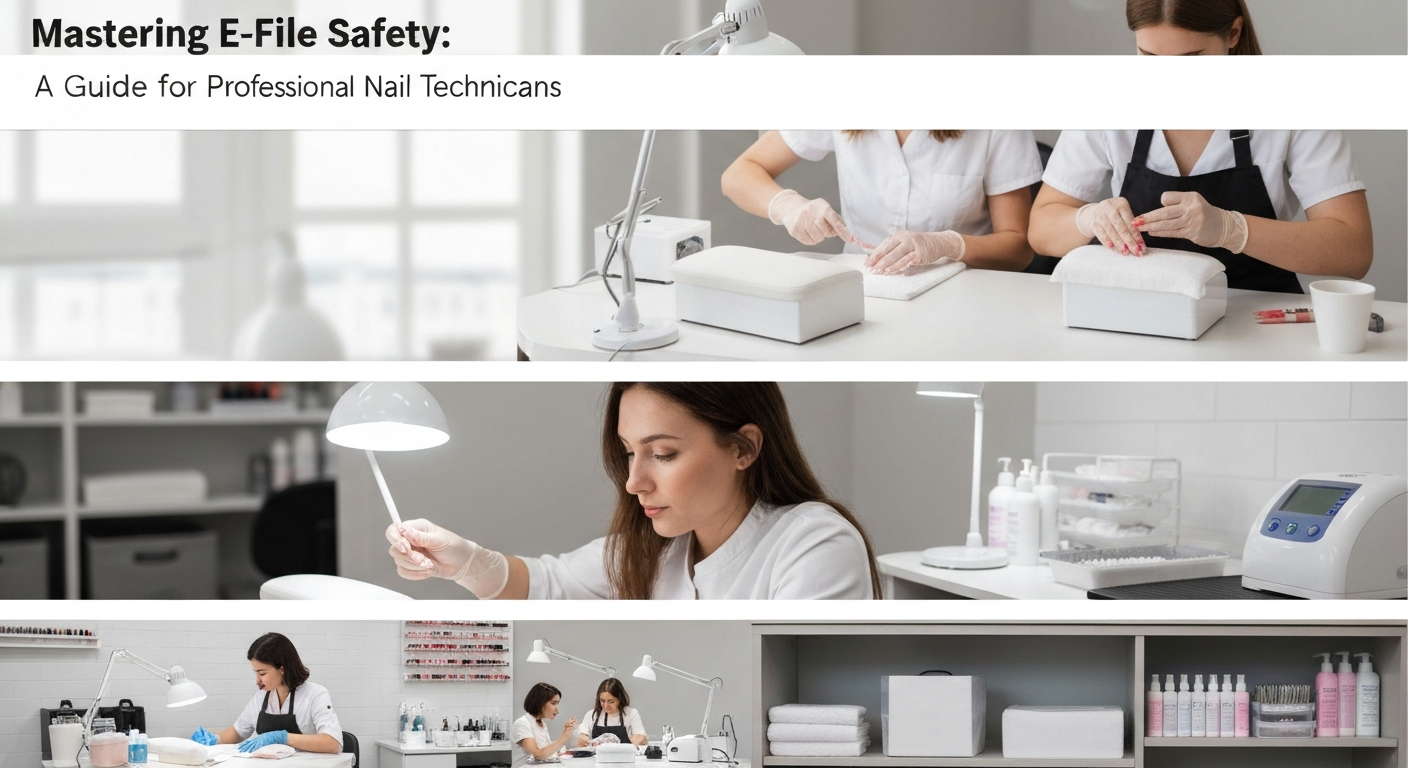
Mastering E-File Safety: A Guide for Professional Nail Technicians
The electric file, or e-file, is the most powerful tool in a nail technician’s arsenal. It increases efficiency and reduces physical strain on the wrist and shoulder.
However, without proper knowledge of torque, RPMs, and bit selection, an e-file can cause severe damage to the natural nail plate.
This guide establishes industry standards for safe electric filing operations within a professional nail salon environment.
Understanding Torque vs. Speed (RPM)
Many nail technicians mistake high speed for high power. Understanding the difference between torque and RPM is critical for safety.
RPM (Revolutions Per Minute) refers to how fast the bit spins. High speed does not always equal better cutting ability.
Torque is the power of the machine to keep the bit spinning when resistance (pressure) is applied against the nail product.
A high-quality professional e-file offers high torque, allowing you to work at lower speeds without the bit stalling or skipping.
Essential Nail Drill Bits and Their Uses
Selecting the correct bit for the specific service step is the first line of defense against nail damage. Using the wrong bit leads to heat spikes and over-filing.
Mandrels and Sanding Bands
Sanding bands are single-use abrasives used strictly for natural nail preparation or surface refining. They must never be reused between clients.
Fine Grit (240): Ideal for gently removing shine from the natural nail plate without thinning the keratin layers.
Medium Grit (150-180): Best for refining the surface of acrylic or hard gel enhancements before top coat application.
Carbide and Ceramic Bits
These bits are designed with flutes to shave off product. They should generally be used for removing bulk, reducing length, or rebalancing enhancements.
Carbide Bits: Made of metal. They are durable and sharp but can heat up quickly if held in one spot.
Ceramic Bits: Disperse heat more efficiently than metal, making them a safer choice for debulking large amounts of product.
Safety Warning: coarse carbide or ceramic bits should rarely touch the natural nail plate. Stop filing before you reach the base layer.
Diamond Bits for Cuticle Prep
Diamond bits are used for dry manicures (Russian manicures) and cuticle exfoliation. They grind rather than cut.
Flame Bit: Used to lift the proximal nail fold and clear the cuticle from the nail plate.
Ball Bit: Used to exfoliate dry skin and smooth the eponychium after lifting.
RPM Standards for Different Services
Operating at the incorrect speed is a primary cause of “rings of fire” and friction burns. Follow these general RPM guidelines for safe operation.
- Natural Nail Prep (Sanding Band): 3,000 – 5,000 RPM.
- Cuticle Work (Diamond Bit): 5,000 – 10,000 RPM (depending on bit size).
- Refining Surface (Gel/Acrylic): 10,000 – 15,000 RPM.
- Debulking/Removal (Carbide/Ceramic): 15,000 – 25,000 RPM.
Preventing the “Ring of Fire”
The “Ring of Fire” is a painful, red indentation on the nail plate caused by the bit digging into the natural nail, typically near the cuticle area.
Angle matters: Always keep the bit parallel to the nail surface. Never angle the tip of the bit down into the nail plate.
Keep moving: Never allow the bit to remain stationary on one spot of the nail. Use smooth, fluid strokes.
Pressure control: Let the machine do the work. If you have a high-torque machine and a sharp bit, you need very little downward pressure.
Sanitation and Disinfection of Drill Bits
Proper infection control for drill bits is a non-negotiable standard in salon operations.
Step 1: Cleaning. Remove dust and debris using a wire brush and warm soapy water. Debris prevents disinfectant from contacting the surface.
Step 2: Disinfection. Fully submerge cleaned metal and ceramic bits in an EPA-registered hospital-grade disinfectant for the required contact time (usually 10 minutes).
Step 3: Drying and Storage. Allow bits to air dry completely before storing them in a closed, clean container to prevent rust and contamination.
Note: Sanding bands and buffing bits are porous and must be discarded after every single use.
