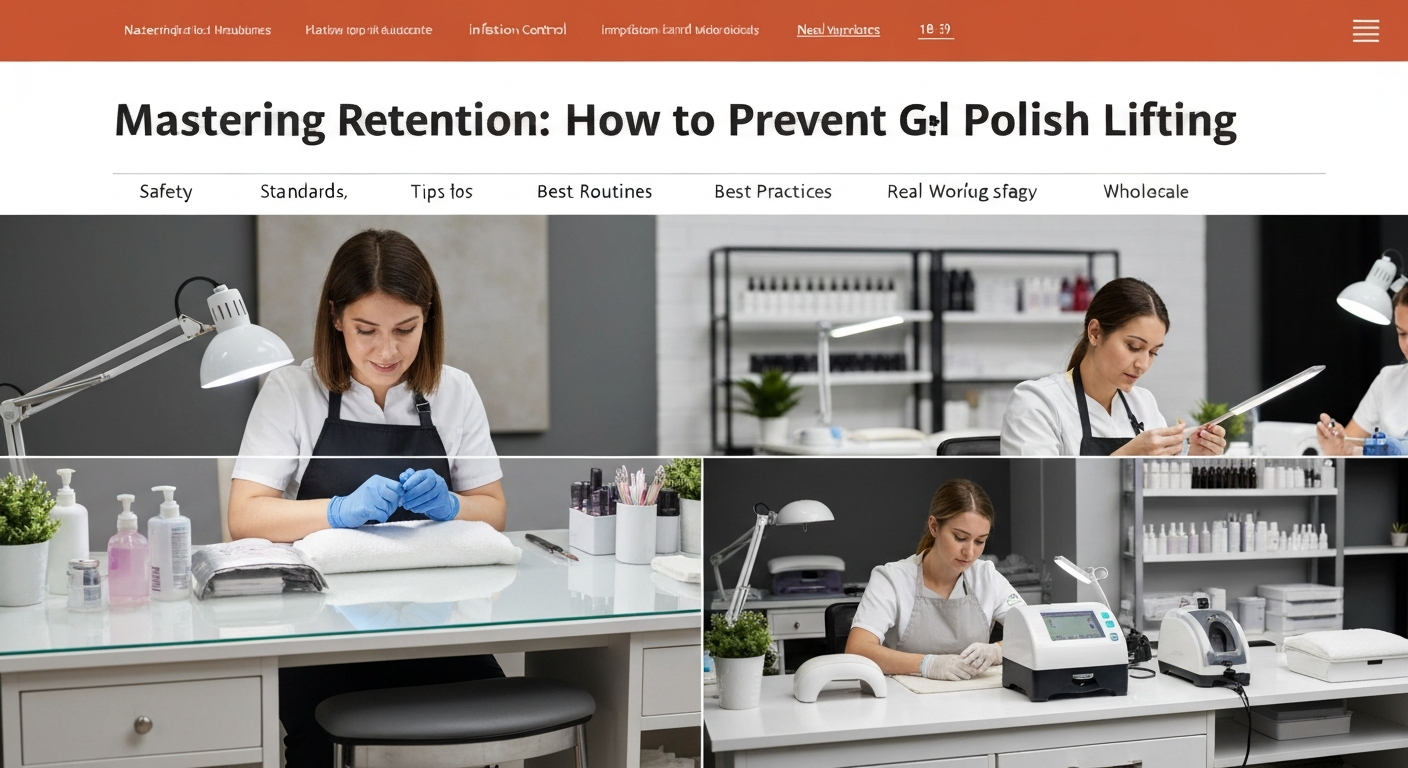
Mastering Retention: How to Prevent Gel Polish Lifting
For any professional nail technician, nothing is more frustrating than a client returning after three days with lifted gel polish.
Lifting causes service breakdowns, damages the natural nail plate, and hurts your salon’s reputation.
Mastering retention requires a strict adherence to chemical principles and mechanical preparation.
The Critical Role of Cuticle Work
The number one cause of lifting is product touching skin or non-living tissue remaining on the nail plate.
Many technicians remove the eponychium but fail to address the true culprit: the cuticle (pterygium).
Removing the Invisible Cuticle
The cuticle is the thin layer of dead skin cells stuck to the nail plate. It is often invisible to the naked eye.
If gel is applied over this tissue, the product will bond to the skin, not the keratin of the nail.
As the skin sheds naturally, the product will detach, creating a pocket for water and bacteria.
Best Practice: Use a cuticle pusher or an e-file with a diamond bit to gently exfoliate the nail plate near the proximal fold.
Mechanical Preparation of the Nail Plate
Gel polish requires a textured surface to bond effectively. A perfectly smooth nail is the enemy of adhesion.
You must remove surface shine without thinning the natural nail plate.
Choosing the Right Grit
Using a file that is too coarse can damage the nail layers, leading to flexibility issues and eventual cracking.
Using a buffer that is too smooth will not create enough texture for the base coat to grip.
- Use a 180 or 240-grit soft file or sponge buffer.
- Focus on the sidewalls and near the cuticle area.
- Remove dust thoroughly with a stiff manicure brush and pure acetone.
Chemical Preparation: Dehydrators and Primers
Once the physical prep is done, you must alter the chemical environment of the nail plate.
Oil and moisture act as barriers between the natural keratin and the synthetic gel product.
Dehydrators (pH Bond)
Apply a dehydrator to strip temporary moisture and oils from the nail plate.
Watch for the nail to turn a chalky white color. If it remains shiny, oils are still present.
Primers (Bonding Agents)
Primer acts as double-sided tape. One side bonds to the keratin, and the other bonds to the gel polymer.
Acid-Free Primer: The industry standard. It acts like a magnet for the gel base.
Acid Primer: Use sparingly and only for clients with problematic, oily nail plates. Avoid skin contact to prevent burns.
Base Coat Application Techniques
The application of the base coat determines the longevity of the entire manicure.
Thick application is a common mistake that leads to under-curing and peeling.
The Scrubbing Method
Do not just float the base coat on the nail. You need to integrate it into the keratin structure.
Use your brush to “scrub” a very thin layer of base coat into the nail plate.
This ensures the product fills the micro-grooves created during your mechanical prep.
Capping the Free Edge
Shrinkage occurs during the polymerization (curing) process.
If the free edge is not sealed, the gel will pull back, exposing the natural nail tip.
This exposure leads to separation when the client types, texts, or uses their hands.
Technique: Run the brush along the distal edge of the nail with every layer: base, color, and top coat.
Proper Curing and Lamp Position
Even perfectly prepped nails will lift if the product is not fully cured.
Undercured gel remains soft near the nail plate, causing it to pull away effectively immediately.
Check Your Equipment
Ensure your LED or UV lamp matches the wavelength requirements of your gel system (usually 365nm to 405nm).
Instruct clients to place their hand flat, with fingers spread, to ensure light hits the sidewalls.
Pay special attention to the thumbs; cure them separately if necessary to prevent product running.
Summary for Maximum Retention
To eliminate lifting in your salon, audit your workflow against these standards.
- Clean: Remove all true cuticle tissue from the plate.
- Prep: Gently remove shine to create a mechanical bond.
- Dry: Dehydrate thoroughly to remove oils.
- Bond: Use the correct primer for the client’s nail type.
- Thin: Apply base coat thinly and scrub it in.
- Seal: Cap the free edge on every layer.
By strictly following these protocols, you ensure your clients enjoy 3+ weeks of wear without lifting.
