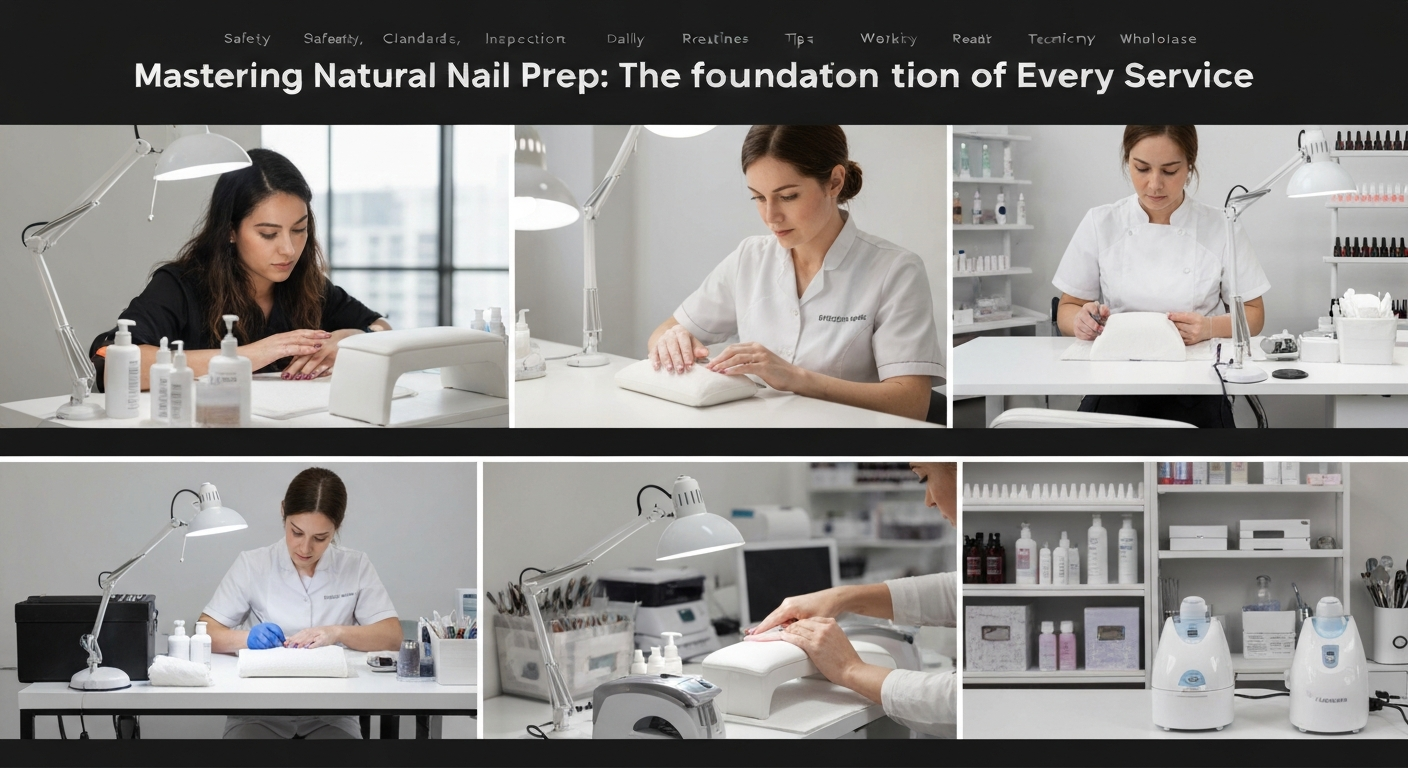
Mastering Natural Nail Prep: The Foundation of Every Service
For professional nail technicians, service longevity is the number one indicator of client retention. The most elaborate nail art or perfectly sculpted structure will fail if the foundation is weak.
Lifting, peeling, and service breakdown are almost exclusively caused by improper natural nail preparation. Understanding the science of adhesion is crucial for every nail pro.
This guide covers the industry standards for preparing the nail plate for gel, acrylic, and builder gel enhancements.
Understanding the Difference: Cuticle vs. Eponychium
Before touching a pusher or e-file, a nail technician must distinguish between living and non-living tissue. Confusion here leads to injury and poor adhesion.
The Eponychium is the living skin at the base of the nail. Cutting this tissue can cause infection, inflammation, and permanent damage to the matrix.
The Cuticle is the dead, non-living tissue that sheds from the eponychium and rides out on the nail plate. This transparent layer is the primary cause of product lifting.
If any cuticle remains on the nail plate, your product bonds to that skin cell rather than the keratin of the nail. As the skin sheds, the product lifts.
Step-by-Step Professional Prep Workflow
Follow this standardized workflow to ensure maximum adhesion for all nail systems.
1. Cleaning and Assessment
Begin by sanitizing both your hands and the client’s hands. Inspect the nails for any signs of greenies (pseudomonas), mold, or damage that would contraindicate a service.
Remove any existing polish or bulk product carefully. If performing a fill, ensure all lifted pockets are filed away completely to prevent trapping bacteria.
2. Exfoliating the Nail Plate
Push back the eponychium gently. Use a curette or a specialized e-file bit (like a diamond flame bit) to lift and exfoliate the true cuticle from the nail plate and lateral folds.
When using an e-file for prep, keep the RPM low (typically 5,000 to 10,000 RPM) and use a light hand to avoid creating “rings of fire” on the natural nail.
3. Removing Surface Shine
Adhesion relies on mechanical interlocking. The natural nail plate is smooth and contains oils that repel artificial products.
Using a 180-grit or 240-grit sponge buffer or file, gently remove the surface shine. You are not trying to thin the nail; you are creating a microscopic rough surface for the product to grip.
Pro Tip: Focus on the cuticle area and the lateral sidewalls, as these are the most common points of lifting.
4. Dust Removal and Cleansing
Dust is the enemy of adhesion. Use a stiff manicure brush to scrub dust downwards from the cuticle. Do not use your fingers to wipe dust, as this transfers oil back onto the plate.
Cleanse the nail thoroughly with pure acetone or a professional nail cleanser (99% Isopropyl Alcohol) using a lint-free wipe.
Chemical Preparation: Dehydrators and Primers
Once the physical prep is done, chemical prep balances the nail’s pH and prepares the keratin for bonding.
Using Nail Dehydrators
Apply a pH bond or dehydrator to the natural nail plate. This strips away surface moisture and oil instantly. You should see the nail turn a chalky white color, indicating it is dry.
Selecting the Right Primer
Primers act as double-sided tape, bonding the natural keratin to the artificial polymer.
- Acid-Based Primers: Highly effective for problematic lifters or acrylic systems, but can be corrosive to skin. Use sparingly.
- Non-Acid Primers: The industry standard for gel polish and soft gel systems. They act like a sticky layer and are safer for the surrounding skin.
Common Prep Mistakes That Cause Lifting
Even seasoned technicians can fall into bad habits. Avoid these common errors in the salon:
Touching the Nail: Once prep is finished, never touch the nail plate. Even a quick tap to check for dust transfers skin oils that act as a barrier to product.
Flooding the Cuticle: If primer or base coat touches the skin, it creates a ledge. As the nail grows, this ledge catches on hair and clothes, pulling the product away from the nail.
Over-filing: thinning the nail plate makes it flexible. If the natural nail bends more than the product on top of it, the bond will break, resulting in pocket lifting.
By adhering to these strict preparation standards, you ensure that your work lasts until the client’s next appointment, protecting both the client’s nail health and your professional reputation.
