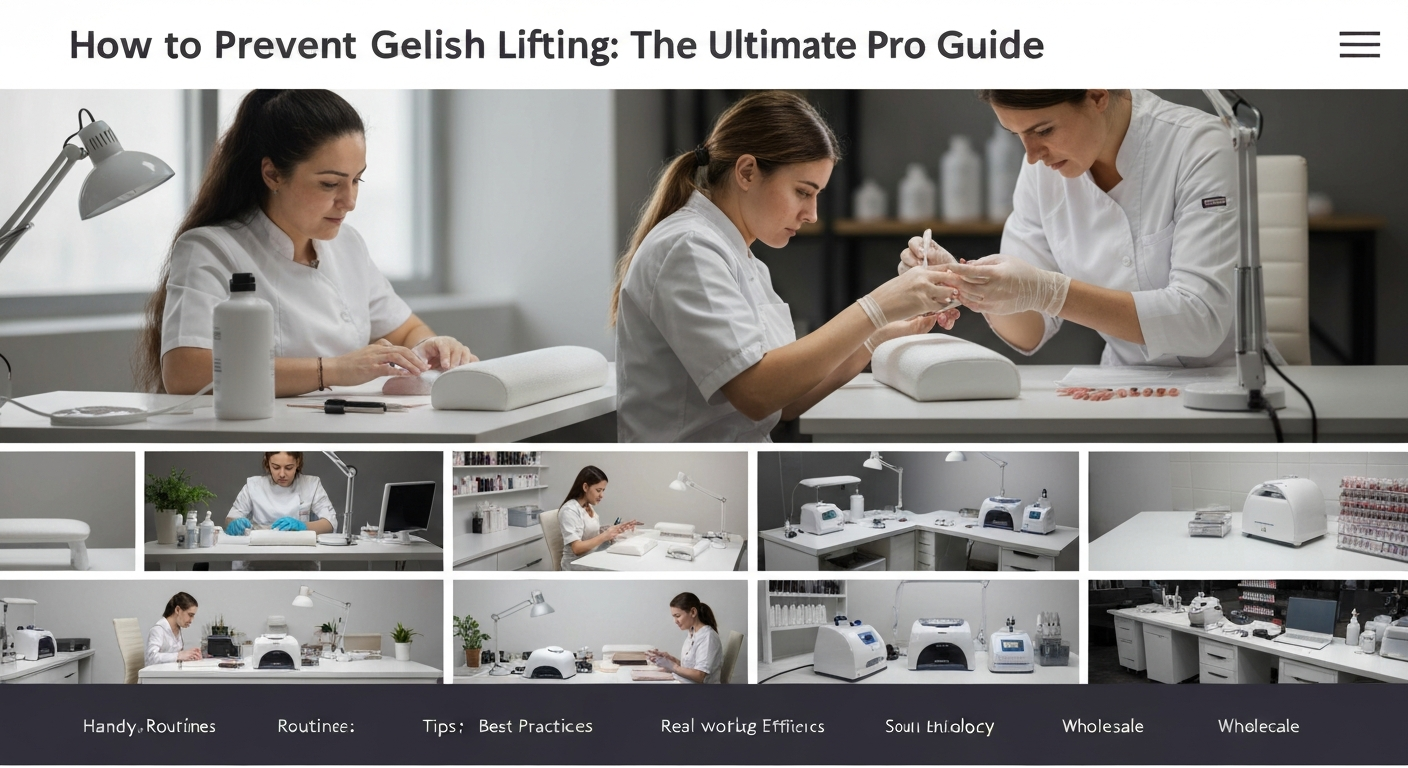
How to Prevent Gel Polish Lifting: The Ultimate Pro Guide
For any professional nail technician, client retention is the key to a successful business. Nothing damages that retention faster than premature lifting.
When a client returns after three days with peeling gel or hair catching at the cuticle area, it is usually a technical error.
Mastering adhesion requires understanding the chemistry of the nail plate and proper product application.
1. Perfecting the Nail Plate Preparation
90% of service breakdowns occur because of improper preparation. If the foundation is not clean, the product cannot bond.
You must remove true cuticle (pterygium) from the nail plate. Pushing back the eponychium is not enough.
Any invisible dead skin left on the nail plate acts as a barrier, preventing the gel from adhering to the keratin.
Mechanical Preparation Standards
Use a cuticle pusher or an e-file with a diamond bit to gently exfoliate dead tissue from the nail plate.
After cuticle work, gently buff the surface of the natural nail with a 180 or 240-grit buffer or file.
The goal is to remove surface shine and create texture for the product to grip, not to thin the natural nail.
2. Chemical Dehydration and Priming
Once the dust is removed, you must chemically prepare the surface. Water and oil are the enemies of gel polish.
Scrub the nail plate thoroughly with 99% Isopropyl Alcohol or a specialized cleanser using a lint-free wipe.
Do not simply wipe quickly; use friction to pull oils out of the nail layers.
Using Bonders and Primers
Apply a pH bonder (dehydrator) to the natural nail to strip remaining moisture. The nail should turn chalky white.
Follow with a primer suited for your specific gel system. Use a non-acid primer for standard gel manicures.
Use primer sparingly. Flooding the nail with primer can actually cause chemical burns or adhesion failure.
3. Controlling Product Application Near the Cuticle
Flooding the cuticle or sidewalls is the number one cause of immediate lifting.
If uncured gel touches the skin, it will lift as soon as the skin moves or produces oil.
Leave a tiny margin (hairline gap) between the product and the skin to create a seamless grow-out.
The Anchor Layer Technique
Apply your base coat very thinly. Scrub the base coat into the nail plate with your brush to create a mechanical bond.
If you see gel running into the sidewalls before curing, clean it immediately with a clean brush dipped in alcohol.
Never cure gel that is touching the skin. It creates a ledge that catches on clothes and hair.
4. Capping the Free Edge
Shrinkage happens when gel cures. If the free edge is not sealed, the gel will pull back, exposing the natural nail.
This exposure allows water to seep between the natural nail and the product, causing separation.
Cap the free edge with every layer: base coat, color coats, and top coat.
Pro Tip: Cap the edge first, then smooth out the surface of the nail to avoid a bulky ridge at the tip.
5. Optimizing the Curing Process
Undercured gel is a safety hazard and a major cause of lifting. If the gel is soft underneath, it will peel off.
Ensure your LED or UV lamp is compatible with your specific gel brand. Not all lamps cure all photo-initiators.
Check your lamp bulbs regularly and ensure clients place their hands correctly on the specialized indentations.
Checklist for Flawless Retention
- Exfoliate: Remove all dead tissue from the nail plate.
- Dehydrate: Scrub with alcohol and use a dehydrator.
- Thin Layers: Apply product thinly to ensure a full cure.
- Clean Margins: Keep product off the skin and sidewalls.
- Seal: Cap the free edge on every single coat.
By strictly following these professional protocols, you will significantly reduce service breakdowns.
Educate your clients on aftercare, but ensure your technical execution in the salon is flawless.
