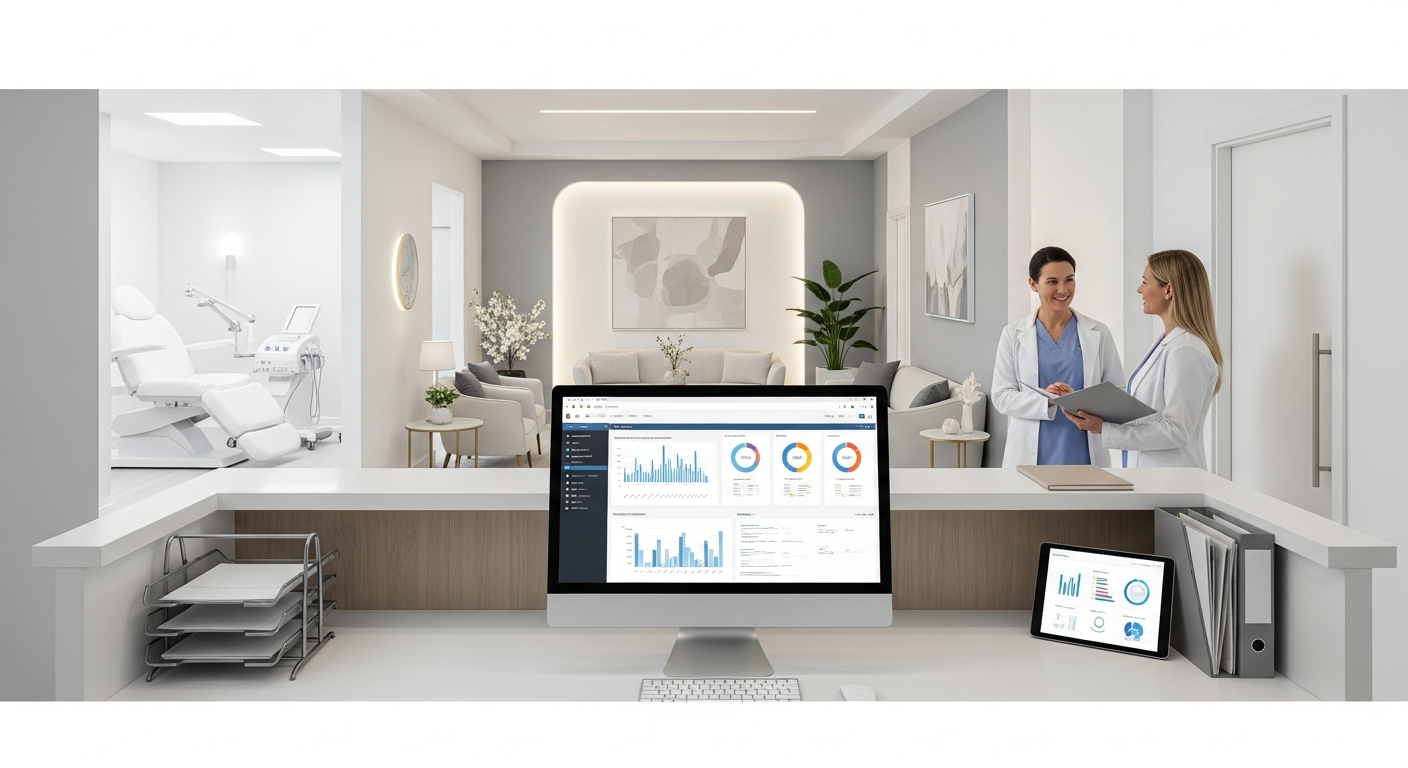
U.S. Med Spa Industry Statistics and Market Analysis
U.S. med spa industry statistics reveal a market valued at approximately $17.5 billion in 2023, with a projected compound annual growth rate exceeding 14% through 2030. Key data points indicate a surge in minimally invasive procedures, shifting regulatory frameworks for mid-level practitioners, and an increase in multi-location clinic ownership across the United States.
Market Valuation and Revenue Growth
The U.S. med spa sector continues to outperform broader healthcare service categories. Annual revenue per facility has increased by roughly 10% year-over-year, driven by patient retention and high-margin injectable treatments.
Recent financial data shows that the average med spa generates approximately $1.9 million in annual gross revenue. Single-location practices still dominate the landscape, though private equity investment is accelerating consolidation across the Sun Belt region.
Operational costs have risen due to labor shortages and specialized training requirements. However, profit margins remain stable at 20% to 25% for well-managed clinics utilizing data-driven inventory and staffing models.
Treatment Growth Trends and Patient Demographics
Injectable treatments, specifically neurotoxins and dermal fillers, account for over 50% of total service revenue. Data suggests a 15% increase in male patient participation, particularly in the “Brotox” and hair restoration segments.
Energy-based treatments, including laser hair removal and skin resurfacing, represent the second-largest revenue stream. Body contouring and non-invasive fat reduction technologies have seen a 12% uptick in utilization since 2022.
Preventative “pre-juvenation” trends among patients aged 25 to 34 are significantly shifting market dynamics. This demographic now seeks lower-intensity treatments with higher frequency, stabilizing monthly recurring revenue for many providers.
Clinical Outcome Analysis and Complication Rates
Safety data remains a critical metric for industry stability. Statistics indicate that adverse events are most frequently associated with dermal filler injections and high-intensity laser treatments performed by unsupervised technicians.
The rate of vascular occlusions remains low at approximately 0.05% of all filler procedures. However, the rise of “DIY” aesthetic trends has led to increased reporting of complications treated in legitimate medical settings.
Standardized training and the presence of an on-site medical director correlate directly with lower complication rates. Facilities employing Board Certified practitioners report 30% fewer clinical errors compared to those with remote oversight.
Regulatory Trend Shifts in the United States
State medical boards are increasingly scrutinizing the Corporate Practice of Medicine (CPOM) doctrine. Enforcement actions regarding the “good faith exam” and practitioner scope of practice have intensified in California, Texas, and Florida.
Current data shows that 42 states now require a formal physical examination by a physician or advanced practice nurse prior to initial aesthetic treatments. Compliance failure remains the leading cause of administrative fines in the sector.
Legislative shifts are also impacting mid-level autonomy. Several states are considering bills that would expand the independent practice authority of Nurse Practitioners, potentially lowering overhead for future med spa developments.
Market Development and Regional Insights
The Southeast and Southwest regions represent the fastest-growing markets in the United States. High population growth and favorable tax environments have made Florida and Texas the primary targets for large-scale clinical expansion.
Urban centers maintain the highest density of facilities, but suburban markets show higher patient loyalty and lower churn rates. Investors are increasingly targeting tertiary markets where competition is lower and operating costs are reduced.
Technological integration is now a standard requirement for market entry. Facilities leveraging advanced diagnostic imaging and longitudinal patient data reporting see a 15% higher conversion rate for multi-session treatment plans.
